
Mashed Potatoes
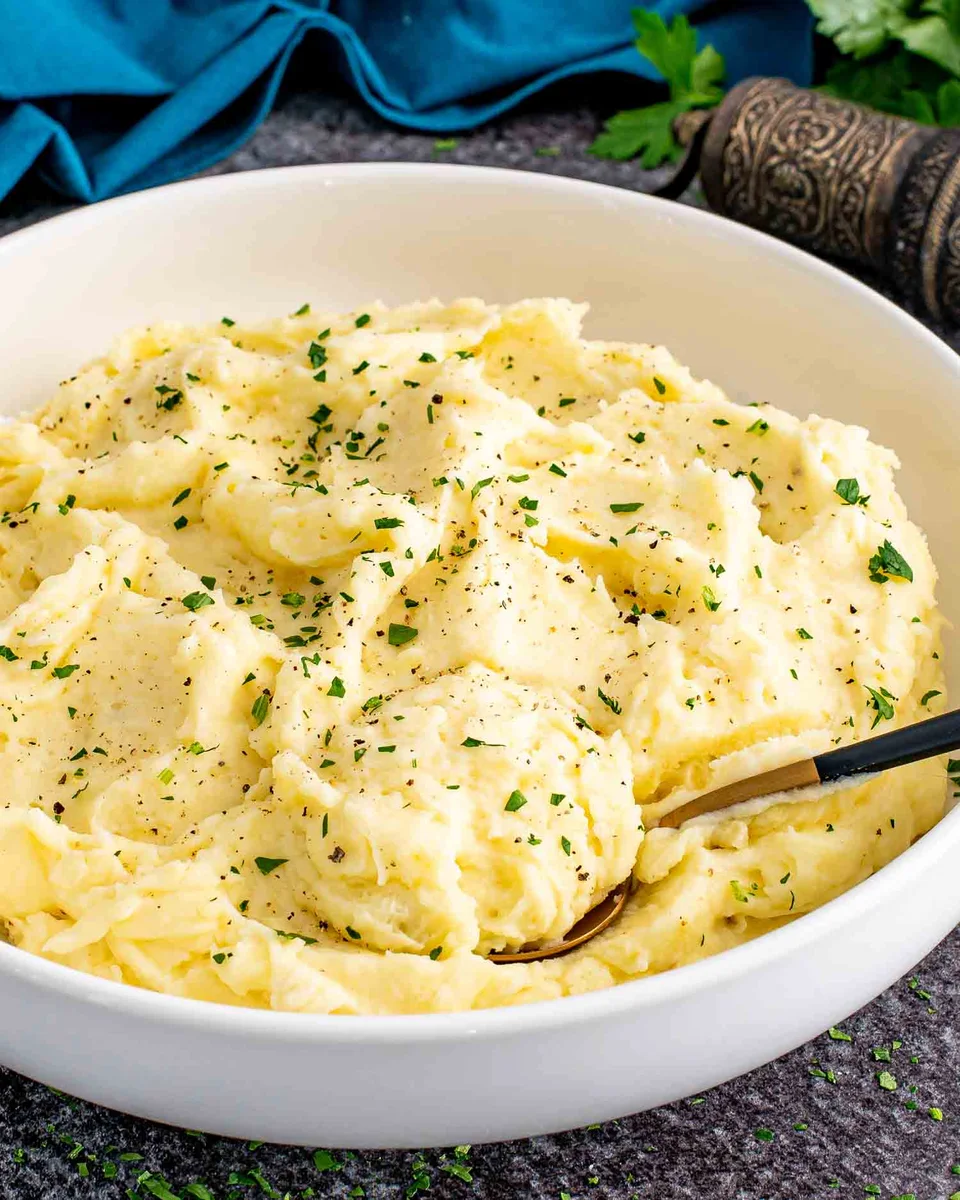
These homemade mashed potatoes are a creamy, buttery American-style side made with potatoes, warm milk and simple seasoning. They are easy to prepare and suit everything from a weeknight dinner to a celebratory roast.
Ingredients
- 1.81 kg (4 pounds)potatoes (Yukon Gold or Russet)
- 85 g (6 tablespoons)unsalted butter, at room temperature
- 240 ml (1 cup)milk or cream
- 5 g (1 teaspoon)salt
- 2.5 g (½ teaspoon)black or white pepper
Instructions
- 1
Prepare the potatoes
Peel the potatoes and cut them into evenly sized pieces so they cook at the same rate. Put them in a large pot, cover completely with cold water, add about 1 teaspoon of salt to the water and stir.
- 2
Cook until tender
Cook the potatoes uncovered for about 15 to 20 minutes, or until a fork passes through them easily.
- 3
Warm the milk
Heat the milk on the hob or in the microwave until warm, but not boiling.
- 4
Mash the potatoes
Drain the potatoes and transfer them to a bowl. Add the butter and mash, then pour in the milk and keep mashing until the potatoes reach your preferred consistency.
- 5
Season and serve
Season with salt and pepper, then serve while warm.
What are mashed potatoes?
Mashed potatoes are a familiar comfort-food side in American home cooking, made by boiling potatoes and mashing them with a liquid and fat. This version keeps the ingredients simple, using butter and milk or cream for a smooth, rich result.
The method is straightforward: cook the potatoes until tender, then mash them while adding the butter and warm milk. Cutting the potatoes evenly helps them finish cooking at roughly the same time.
Nutrition and macros by portion
The nutrition label shows one serving as written: 261 calories, 6g protein, 41g carbs, 9g fat.
| Portion | Adjustment | kcal | Protein | Carbs | Fat |
|---|---|---|---|---|---|
| Lighter | Use milk, less butter | 183 kcal | 4g | 29g | 6g |
| This serving | As written | 261 kcal | 6g | 41g | 9g |
| Hungry | Take a larger portion | 392 kcal | 9g | 62g | 14g |
The potatoes provide most of the carbohydrates, while the butter contributes much of the fat and the milk adds some protein as well as additional fat. For a balanced plate, serve a portion alongside a protein-rich main and vegetables.
Choosing the potatoes
Yukon Gold: These potatoes tend to give the mash a naturally buttery flavour and a creamy texture.
Russet: This flourier option makes a lighter, fluffier mash. Either variety works; the key is to cook the pieces until tender without letting them fall apart.
Why start in cold water?
Cold water gives the potato pieces time to heat through more evenly as the pot comes to a boil. Cover them fully and cut them to a similar size so the smaller pieces are not overcooked while larger ones are still firm.
The recipe adds about 1 teaspoon of salt to the cooking water. Drain the potatoes once a fork slips into them easily.
Getting a creamy texture
Warm milk: Adding warm rather than cold milk helps keep the potatoes hot as you mash them. Heat it only until warm; it should not boil.
Mash gently: Start with the butter, then add the milk and mash to your preferred consistency. Stop once the potatoes are smooth enough for you, as excessive mashing can make them gluey.
Butter, milk or cream
Butter brings richness and flavour, while milk loosens the mash and makes it easier to mix. The butter is specified at room temperature so it blends readily into the hot potatoes.
Cream can replace the milk for a richer result. Add the liquid gradually so you can stop when the texture is right.
When to serve them
Serve the mash warm, soon after seasoning, while it is soft and creamy. It pairs well with roast meats, sausages, gravy or a hearty vegetable dish.
For a balanced plate, pair a portion with a source of protein and plenty of vegetables. This also gives the buttery potatoes room to act as the comforting side rather than the whole meal.
Recipe notes & tips
- Cut the potatoes into evenly sized pieces so they cook at a similar pace.
- Make sure the potatoes are fully covered with cold water before cooking.
- Check for tenderness with a fork rather than relying only on the cooking time.
- Warm the milk gently and avoid bringing it to the boil.
- Add the milk a little at a time to control the final consistency.
- Season at the end and taste before serving.
Variations
- Use cream: Replace the milk with cream for a richer mash.
- Choose a potato style: Use Yukon Gold for a creamier result or Russet for a fluffier one.
- Try white pepper: Use white pepper for a milder-looking seasoning.
- Add garlic: Mash in cooked garlic for a savoury variation.
- Finish with herbs: Stir in chopped fresh chives or parsley just before serving.
Common mistakes to avoid
- Uneven pieces: Large and small chunks cook at different rates; cut the potatoes to a similar size.
- Starting in hot water: The outside can soften before the centres cook; begin with cold water as directed.
- Undercooking the potatoes: Firm centres are difficult to mash smoothly; cook until a fork slips in easily.
- Adding cold milk: It can cool the potatoes quickly; warm the milk before adding it.
- Pouring in all the milk at once: The mash may become too loose; add it gradually and stop at your preferred consistency.
- Mashing for too long: Overworking can make the texture gluey; stop once the potatoes are mashed to your liking.
How to store
Refrigerate leftover mashed potatoes in a covered container for up to 3 days. Reheat gently on the hob or in the microwave, stirring and adding a little milk if needed to loosen the texture.
Frequently asked questions
How do I know when the potatoes are cooked?
They are ready when a fork passes through a piece easily. The recipe gives an approximate cooking time of 15 to 20 minutes.
Can I use cream instead of milk?
Yes. The recipe allows either milk or cream; cream will make the mash richer.
Can I make these mashed potatoes ahead?
They are best served warm after mashing. If you do make them ahead, refrigerate them promptly and reheat gently, stirring in a little milk if needed.
Why should the milk be warm?
Warm milk blends into the potatoes without cooling them as much as cold milk would. Heat it until warm, but do not let it boil.
Can I leave the potato skins on?
The method calls for peeling the potatoes. Leaving the skins on would change the texture, but you can do so if you prefer a more rustic mash.
How can I make the mash less thick?
Add a little more warm milk and mash it in until you reach the consistency you want.
Cook it from the original
This recipe comes from cravinghomecooked.com. Their page has the author’s own photos, notes and tips — the best place to cook it from.
Open the recipe on cravinghomecooked.com