
Kale Paratha
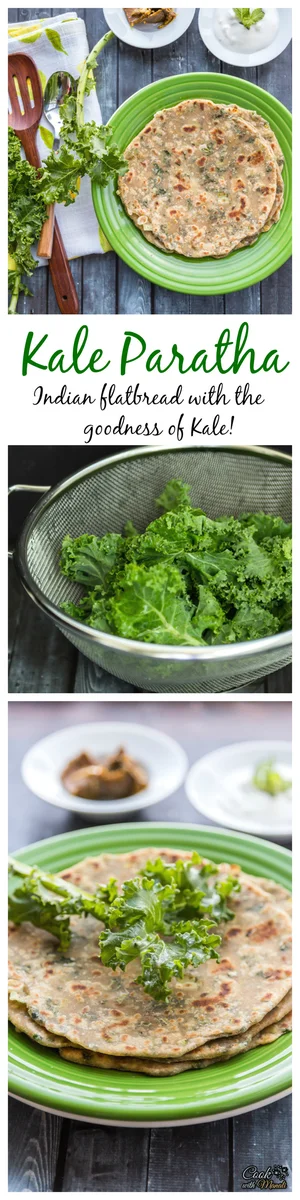
Kale paratha is a whole-wheat Indian flatbread with finely chopped kale, spring onion, chilli and ginger mixed through the dough. Cooked on a hot griddle, these thin parathas make a useful warm side or a simple meal with yoghurt and pickle.
Ingredients
- 240 ml (1 cup)finely chopped kale, prepared in a food processor
- 60 ml (1/4 cup)finely chopped spring onion, white part only
- 1green chilli, finely chopped
- 1.3 cm (1/2 inch)ginger, finely chopped
- 180 g (1.5 cups), plus extra for rollingwholemeal flour (atta)
- 5 ml (1 teaspoon)salt
- 1.25 ml (1/4 teaspoon)garam masala
- 7.5 ml (1.5 teaspoons), plus extra for cookingoil
- As neededwater, to knead the dough
Instructions
- 1
Chop the kale
Wash the kale leaves and dry them thoroughly. Finely chop them in a food processor.
- 2
Add the aromatics
Mix the chopped ginger, green chilli and white part of the spring onion into the kale.
- 3
Mix the dry ingredients
Add the wholemeal flour, salt and garam masala, then mix everything together.
- 4
Add the oil
Pour in 5 ml (1 teaspoon) of vegetable oil and mix it through.
- 5
Add the water
Add water a little at a time, mixing as you go.
- 6
Knead the dough
Knead by hand until the mixture comes together into a soft, smooth dough.
- 7
Rest the dough
Spread 2.5 ml (1/2 teaspoon) of oil over the dough and knead it in. Cover and leave the dough to rest for about 30 minutes, preferably in the refrigerator.
- 8
Divide the dough
Once rested, divide the dough into 6 equal portions and shape them into balls.
- 9
Prepare a portion
Dip one ball in a little atta and press it flat. Meanwhile, heat a tawa or griddle over medium heat.
- 10
Roll the paratha
Roll the dough into a circle about 20 cm (8 inches) across. These parathas are rolled thin; stuffed parathas are usually thicker.
- 11
Cook the first side
Transfer the rolled paratha to the hot griddle.
- 12
Turn and oil
When the underside has cooked a little and golden spots appear, flip the paratha. Wait a few seconds, then apply oil to the side facing up.
- 13
Cook the other side
Flip the paratha again and press it with a spatula to cook the oiled side. Apply oil to the second side, flip once more and repeat.
- 14
Cook the rest
Repeat the same process with the remaining 5 dough balls.
- 15
Serve warm
Serve the kale parathas warm, with yoghurt and pickle on the side.
What is kale paratha?
Paratha is a South Asian flatbread commonly made with wholemeal flour and cooked on a griddle. This version mixes finely chopped kale and aromatics directly into the dough rather than enclosing a filling.
The finely processed leaves help distribute the kale throughout each thin round. Ginger, chilli, spring onion and garam masala season the dough without obscuring the flatbread's earthy flavour.
Nutrition and macros by portion
The nutrition label shows one serving as written: 120 calories, 4g protein, 23g carbs, 1g fat.
| Portion | Adjustment | kcal | Protein | Carbs | Fat |
|---|---|---|---|---|---|
| Lighter | Use less cooking oil | 84 kcal | 3g | 16g | 1g |
| This serving | As written | 120 kcal | 4g | 23g | 1g |
| Hungry | Serve an extra paratha | 180 kcal | 6g | 35g | 2g |
The wholemeal flour supplies most of the carbohydrates and some protein, while kale adds further nutrients and a little protein. Oil is the main source of fat; serve a paratha with yoghurt and vegetables or lentils to make a more rounded plate.
The kale and aromatics
Fine chopping: use a food processor for the kale, as directed, so the pieces blend evenly into the dough. Dry the washed leaves thoroughly before chopping.
Building a smooth dough
Water: add it gradually while mixing, since the amount needed can vary with the kale and flour. Knead until the dough feels soft and smooth rather than leaving dry flour behind.
Rest: the dough rests for about 30 minutes, preferably in the refrigerator. This gives you time to prepare the griddle and makes the dough easier to handle.
Rolling thin rounds
Portions: divide the rested dough into 6 equal balls for even cooking. Dust each with a little atta before flattening and rolling.
Thickness: roll each round to about 20 cm (8 inches) and keep it thin, as in this version. If the dough sticks, use a little more atta for rolling.
Cooking on the griddle
Heat: start with a hot tawa or griddle over medium heat. The first side is ready to turn when it has cooked a little and golden spots show.
Oil: apply oil after the first turn, then flip and press with a spatula so the oiled side cooks. Oil the second side and repeat the same process.
Serving the parathas
Serve them warm with yoghurt and pickle, as suggested in the recipe. They also work as a side alongside a curry or lentils.
Recipe notes & tips
- Dry the kale well after washing so excess moisture does not make the dough difficult to handle.
- Chop the kale very finely in a food processor, as the recipe specifies.
- Add water in small amounts and stop when the dough is soft and smooth.
- Rest the covered dough for about 30 minutes before dividing it.
- Roll the rounds thin and use a hot griddle so golden spots develop.
- Make sure the parathas are cooked on both sides after applying oil.
Variations
- Adjust the chilli: use less or more green chilli to suit your preferred heat.
- Change the greens: replace some kale with another finely chopped leafy green.
- Add herbs: mix finely chopped fresh coriander into the dough.
- Serve with yoghurt: add plain yoghurt on the side for a cooling accompaniment.
- Serve with pickle: pair the warm parathas with your preferred pickle.
Common mistakes to avoid
- Coarse kale: large pieces can make the dough uneven; chop the leaves very finely in a food processor.
- Wet leaves: excess water can affect the dough; dry the kale thoroughly after washing.
- Adding water too quickly: the dough may become too wet; add water little by little.
- Skipping the rest: the dough may be harder to roll; cover it and leave it for about 30 minutes.
- A cool griddle: the paratha may not develop golden spots; heat the tawa over medium heat before cooking.
- Overcooking one side: the paratha can dry out; turn it once golden spots appear and continue cooking as directed.
How to store
Refrigerate leftover parathas in a covered container and use within 3 days. Reheat them on a hot griddle until warmed through.
Frequently asked questions
Can I make the dough ahead?
Yes. Cover it and rest it in the refrigerator as directed; the recipe specifies about 30 minutes of resting.
Why should the kale be finely chopped?
Fine pieces distribute more evenly through the dough and make the rounds easier to roll.
How do I know when to flip a paratha?
Turn it when the underside has cooked a little and golden spots appear.
Should these parathas be thick?
This version is rolled thin, to about 20 cm (8 inches) across. The method notes that stuffed parathas are usually thicker.
What should I serve with kale paratha?
Serve it warm with yoghurt and pickle on the side, as suggested in the recipe.
Cook it from the original
This recipe comes from cookwithmanali.com. Their page has the author’s own photos, notes and tips — the best place to cook it from.
Open the recipe on cookwithmanali.com