
Rava Kichadi
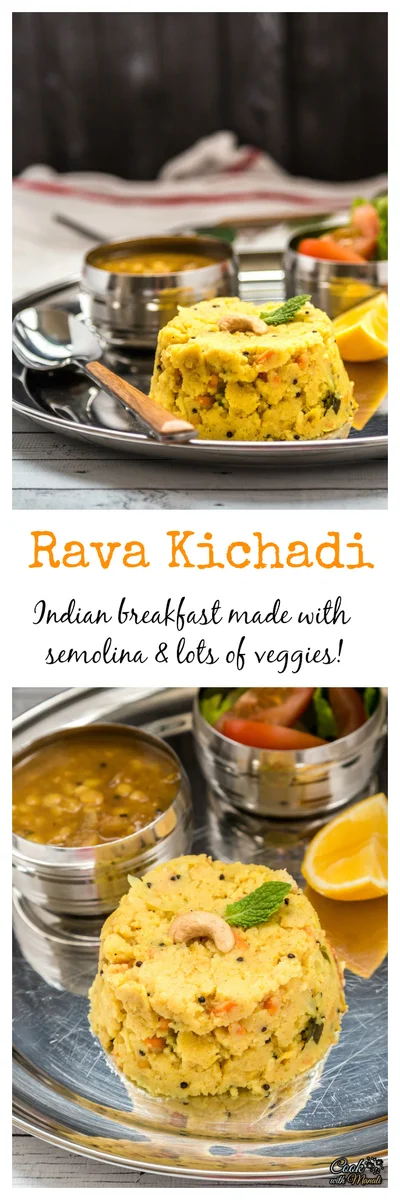
Rava kichadi is a comforting South Indian one-pot dish of roasted semolina cooked with vegetables, spices and lentils. It makes a filling meal, especially served hot with sambhar and chutney.
Ingredients
- 170 g (1 cup)fine semolina (rava or sooji)
- 960 ml (4 cups)water
- 7–8cashews, broken
- 1onion, thinly sliced
- 1tomato, thinly sliced
- 75 g (½ cup)frozen peas
- 75 g (½ cup)frozen carrots
- 1½ teaspoonsginger, finely chopped
- 1 teaspoonlemon juice
- ¼ teaspoonground turmeric
- 1green chilli, finely chopped
- ⅛ teaspoonasafoetida (hing)
- 7–8curry leaves
- ½ tablespoonsplit urad dal (skinned black gram)
- ½ tablespoonchana dal (split Bengal gram)
- 1 teaspoonmustard seeds
- 1 tablespoonoil
- 1½ tablespoonsghee
- ¼ teaspoonred chilli powder
- To tastesalt
- To tastefresh coriander, chopped
Instructions
- 1
Soak the lentils
Soak the urad dal and chana dal in enough water for about 20–30 minutes so they soften before cooking.
- 2
Fry the cashews
Heat ½ tablespoon of ghee in a pan over medium heat. Add the broken cashews and sauté until light golden, then set them aside.
- 3
Roast the semolina
Add the rava to the same pan and roast, stirring continuously.
- 4
Check the aroma
After about 6–7 minutes, when the semolina has changed colour and smells fragrant, take it out of the pan. Keep stirring and watch closely, as it can burn quickly.
- 5
Heat the tempering
In another pan over medium heat, heat 1 tablespoon of ghee with 1 tablespoon of oil. Add the mustard seeds and wait for them to start popping.
- 6
Cook the spices
Add the asafoetida, chana dal, urad dal and curry leaves. Sauté until the lentils begin to turn light golden, then add the ginger and cook until it starts to turn golden.
- 7
Boil the water
Meanwhile, heat 4 cups of water in a separate pan over medium-high heat and bring it to the boil.
- 8
Soften the onion
Add the sliced onion to the tempering pan and cook until translucent and its raw smell has gone.
- 9
Add the vegetables
Add the sliced tomato, carrots and peas. If using frozen vegetables, first place them in warm water for 5 minutes, then drain before adding.
- 10
Cook briefly
Cook the vegetables for 2 minutes. Let the tomatoes soften, but do not cook them until mushy; they will cook further once the boiling water is added.
- 11
Season the mixture
Add the salt, red chilli powder and turmeric, then mix until evenly combined.
- 12
Add boiling water
Pour in the 4 cups of boiling water.
- 13
Stir in the rava
Gradually add the roasted semolina, stirring continuously so it mixes in smoothly without forming lumps.
- 14
Absorb the water
Keep stirring until the semolina has absorbed all the water.
- 15
Simmer covered
Cover the pan and simmer over medium-low heat for 7–8 minutes.
- 16
Finish and garnish
Remove the lid, stir in the lemon juice, then garnish with the roasted cashews and chopped coriander.
- 17
Serve hot
Serve the kichadi hot, with sambhar and chutney on the side.
What is rava kichadi?
Rava kichadi is a South Indian savoury dish made by cooking semolina with vegetables and a spiced tempering. It is related to the family of semolina upma dishes, but this version combines a generous mix of vegetables with lentils, cashews and ghee.
Roasting the rava first helps it cook evenly, while adding it gradually to boiling water makes a smooth, soft mixture. Sambhar and chutney bring extra flavour and contrast at the table.
Nutrition and macros by portion
The nutrition label shows one serving as written: 596 calories, 16g protein, 82g carbs, 22g fat.
| Portion | Adjustment | kcal | Protein | Carbs | Fat |
|---|---|---|---|---|---|
| Lighter | Use less ghee | 417 kcal | 11g | 57g | 15g |
| This serving | As written | 596 kcal | 16g | 82g | 22g |
| Hungry | Serve a larger portion | 894 kcal | 24g | 123g | 33g |
The semolina supplies most of the carbohydrates, while ghee, oil and cashews contribute much of the fat. Peas, lentils and cashews provide some protein, with the vegetables adding variety to the plate. Serve with a generous portion of vegetables or sambhar alongside.
Roasting the semolina
Dry rava: Stir it continuously over the heat for about 6–7 minutes, until it changes colour slightly and smells toasted. The grains can scorch quickly, so take the pan off the heat as soon as they are fragrant.
Keep it separate: Set the roasted semolina aside while you prepare the tempering and vegetables. This keeps the rava from cooking unevenly in the pan.
Building the tempering
Mustard seeds: Add them to the hot ghee and oil, and wait for them to pop before adding the other ingredients. This signals that the oil is hot enough to release their flavour.
Lentils and aromatics: The soaked dals, curry leaves and ginger add savoury depth and texture. Let the lentils turn lightly golden, and cook the ginger until golden before adding the onion.
Keeping the vegetables tender
Onion first: Cook it until translucent and no longer raw-smelling so it softens before the quicker-cooking vegetables go in.
Brief cooking: Give the tomatoes, carrots and peas just 2 minutes in the pan. The tomato should soften without breaking down, as the vegetables continue cooking when the boiling water is added.
Adding rava without lumps
Hot water: Bring the water to the boil separately, then add it to the vegetables and seasonings. Adding the roasted semolina to boiling liquid helps it cook promptly.
Steady stirring: Sprinkle in the rava gradually while stirring all the time. Once it has absorbed the water, cover the pan and simmer on medium-low for 7–8 minutes.
How to serve it
Finish: Lemon juice added at the end gives the rich, savoury dish a fresh note. Top with the fried cashews and chopped coriander just before serving.
On the side: Serve hot with sambhar and chutney, as suggested. Their saucy texture pairs well with the soft semolina and vegetables.
Recipe notes & tips
- Stir the semolina continuously while roasting so it colours evenly and does not catch.
- Soak both dals for 20–30 minutes as directed to help them soften during cooking.
- Drain frozen vegetables after warming them in water for 5 minutes.
- Keep stirring as you add the roasted rava to prevent lumps.
- Use medium-low heat for the covered 7–8 minute simmer.
- Add the lemon juice and cashews at the end to keep their flavours distinct.
Variations
- More vegetables: Add extra peas or carrots while keeping the brief vegetable-cooking stage.
- Adjust the heat: Use less green chilli or red chilli powder for a milder bowl.
- Cashew-free: Leave out the cashews if you prefer to serve it without nuts.
- Extra tang: Add a little more lemon juice at the table to taste.
- Different vegetables: Replace the frozen peas or carrots with another quick-cooking vegetable.
Common mistakes to avoid
- Leaving the rava unattended: It can burn quickly, so stir constantly and remove it when fragrant.
- Skipping the dal soak: Give the lentils 20–30 minutes in water so they have time to soften.
- Overcooking the tomatoes: Cook the vegetables for only 2 minutes before adding the boiling water.
- Adding the rava all at once: Sprinkle it in slowly while stirring to avoid lumps.
- Using water that is not boiling: Bring the measured water to the boil before adding it to the pan.
- Skipping the covered simmer: Cook for 7–8 minutes on medium-low after the rava absorbs the water.
How to store
Cool leftovers promptly and store them in a covered container in the fridge for up to 2 days. Reheat in a pan or microwave until hot throughout, adding a small splash of water if the kichadi has firmed up.
Frequently asked questions
What does rava mean?
Rava, also called sooji, is semolina. This recipe uses fine semolina for a soft, spoonable kichadi.
Why should I roast the semolina first?
Roasting gives the rava a fragrant flavour and helps it cook evenly. Stir continuously because it can burn quickly.
How do I stop the kichadi from going lumpy?
Add the roasted rava gradually to the boiling liquid while stirring continuously. Avoid tipping it all in at once.
Can I use fresh vegetables instead of frozen?
Yes. Cut them into small pieces and add them at the same stage; the recipe gives them 2 minutes before the boiling water goes in.
What should I serve with rava kichadi?
Serve it hot with sambhar and chutney on the side. Chopped coriander and roasted cashews finish the dish.
Cook it from the original
This recipe comes from cookwithmanali.com. Their page has the author’s own photos, notes and tips — the best place to cook it from.
Open the recipe on cookwithmanali.com