
Cioppino
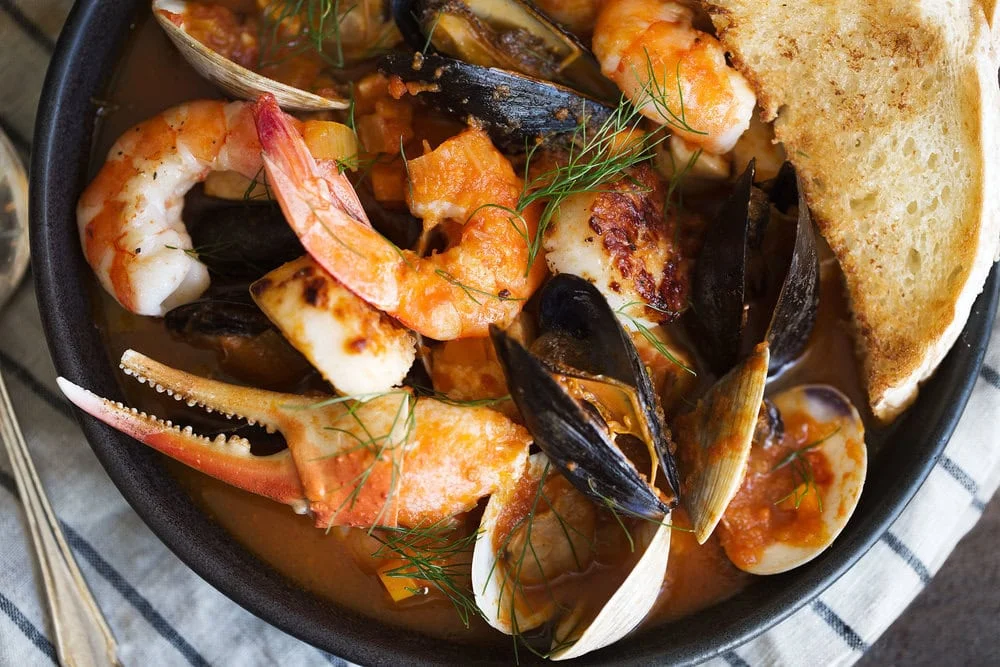
Cioppino is a San Francisco seafood stew with fish and shellfish simmered in a tomato and white wine broth. It makes a generous one-pot meal, with several kinds of seafood and sourdough for dipping.
Ingredients
- 60 ml (¼ cup), dividedextra-virgin olive oil
- 57 g (¼ cup), dividedunsalted butter
- 150 g (1 cup), choppedyellow onion
- 25 g (¼ cup), choppedcelery
- 1 medium, peeled and dicedcarrot
- 75 g (½ cup), whites only, choppedleek
- 25 g (¼ cup), choppedfennel bulb
- 3 cloves, choppedgarlic
- 15 ml (1 tablespoon)tomato paste
- 240 ml (1 cup)dry white wine
- 794 g (28 ounces), 1 cancrushed tomatoes
- 720 ml (3 cups)seafood stock
- 2.5 ml (½ teaspoon), choppedfresh oregano
- 2bay leaves
- As neededkosher salt
- As neededfreshly ground black pepper
- 225 g (½ pound), side muscle removedscallops
- 340 g (¾ pound), peeled and deveinedjumbo 21/25 shrimp
- 225 g (½ pound), cut into 2.5 cm (1-inch) pieceshalibut
- 225 g (½ pound), cut into 2.5 cm (1-inch) piecesswordfish
- 225 g (½ pound), scrubbedlittleneck clams
- 225 g (½ pound), scrubbed and debeardedmussels
- 4, cookedsnow crab claws
- 15 ml (1 tablespoon)fennel fronds
- As needed, warmed and sliced for servingsourdough bread
Instructions
- 1
Cook the vegetables
Set a large, heavy-based pot or Dutch oven over medium heat. Add 30 ml (2 tablespoons) of the olive oil and heat it, then add the butter and let it melt. Add the onion, celery, carrot, leek and fennel; sauté until tender, about 6 minutes. Stir in the garlic and sauté for another 30 seconds.
- 2
Simmer the broth
Stir in the tomato paste, then pour in the wine and scrape the bottom of the pot to deglaze it. Add the tomatoes, seafood stock, oregano and bay leaves. Reduce the heat and simmer until the broth has reduced and thickened slightly, about 45 minutes. Season with salt and pepper.
- 3
Heat a frying pan
Set a large sauté pan over medium heat. Add 15 ml (1 tablespoon) of olive oil and heat it, then add 1 tablespoon of butter and let it melt.
- 4
Cook the shrimp
Season both sides of the shrimp and scallops with salt and pepper. Add the shrimp to the pan and sauté until no longer pink and translucent, about 1 minute per side. Transfer to a plate and cover to keep warm.
- 5
Brown the scallops
Add the remaining oil and butter to the pan. Add the scallops and cook until lightly browned on both sides and just cooked through, about 2 minutes per side.
- 6
Deglaze the pan
Transfer the scallops to a plate and cover them. Return the pan to the heat and add 120 ml (½ cup) of water to deglaze it. Pour the liquid and browned bits into the pot of broth.
- 7
Add fish and shellfish
Add the halibut and swordfish to the broth and cook until the fish flakes easily, about 10 minutes. Add the clams and mussels, cover the pot and cook for another 5 to 7 minutes, until they open. Stir in the shrimp, scallops and cooked crab claws and cook for 2 minutes more.
- 8
Serve the stew
Discard the bay leaves. Ladle the stew into bowls and garnish with fennel fronds.
What is cioppino?
Cioppino is a seafood stew associated with San Francisco, where it developed among immigrant workers at the docks around Fisherman’s Wharf. Its defining combination is assorted seafood cooked in a tomato and white wine broth.
This version builds flavour with a base of softened vegetables and tomato paste, then adds several fish and shellfish for a varied bowl. Sourdough on the side is useful for soaking up the broth.
Nutrition and macros by portion
The nutrition label shows one serving as written: 622 calories, 55g protein, 14g carbs, 33g fat.
| Portion | Adjustment | kcal | Protein | Carbs | Fat |
|---|---|---|---|---|---|
| Lighter | Less butter and oil | 435 kcal | 39g | 10g | 23g |
| This serving | As written | 622 kcal | 55g | 14g | 33g |
| Hungry | Larger stew portion | 933 kcal | 83g | 21g | 50g |
The tomatoes and vegetables contribute most of the carbohydrates, while olive oil and butter provide much of the fat. The fish and shellfish supply most of the protein; bread served alongside adds more carbohydrates. To balance the plate, serve a moderate slice of sourdough with a side of vegetables or salad.
Building the broth
Vegetable base: Onion, celery, carrot, leek and fennel soften first, giving the broth a savoury, gently sweet foundation. Cook them until tender before adding the garlic, which needs only a short time in the pot.
Wine and tomatoes: Deglazing with wine lifts the browned flavour from the pot, while crushed tomatoes and seafood stock make the stew’s main liquid. Simmer until the broth is slightly reduced and thickened.
Cooking the seafood
Shrimp and scallops: They are cooked separately in a sauté pan, then set aside so they can be added back near the end. This helps avoid keeping them in the broth for the full cooking time.
Firm fish: Halibut and swordfish go into the broth first and cook until they flake easily. Clams and mussels follow under a lid; discard any that remain closed after cooking.
Getting the timing right
Broth first: Let the tomato mixture simmer before adding the seafood, as directed. Keep the heat low enough for a steady simmer rather than a vigorous boil.
Finish gently: Once the shrimp, scallops and crab claws are returned to the pot, cook them for just 2 minutes. This warms them through while limiting further cooking.
Checking texture and doneness
Fish: The halibut and swordfish are ready when they flake easily. Avoid stirring roughly once the fish is in the broth, since the pieces can break apart.
Shellfish: Clams and mussels should open during their covered cooking time. The shrimp should no longer look pink and translucent after sautéing, and the scallops should be lightly browned and just cooked through.
Serving cioppino
Bowl it up: Ladle broth and a mix of seafood into each serving, then finish with fennel fronds. A wide bowl makes it easier to include the larger pieces and shellfish.
On the side: Serve the stew with warmed, sliced sourdough. Its chewy crumb is well suited to dipping into the tomato-rich broth.
Recipe notes & tips
- Scrub the clams and mussels thoroughly before cooking.
- Remove the scallops’ side muscles before cooking, as specified in the ingredient list.
- Keep the vegetables moving as they sauté so they soften evenly without catching.
- Use the pan liquid and browned bits from the seafood to add their flavour to the broth.
- Have the seafood ready to add before the broth finishes simmering, as several ingredients go in near the end.
- Warm the sourdough just before serving so it is ready for dipping.
Variations
- Change the fish: Use another firm fish in place of halibut or swordfish, keeping the pieces similar in size.
- Adjust the shellfish: Use a different mix of clams and mussels while keeping the listed total quantities.
- Add heat: Stir in a little chilli with the garlic for a spicier broth.
- Herb finish: Add a little extra fennel frond at serving for a more pronounced fennel note.
- Skip the bread: Serve the stew on its own or with another bread for dipping.
Common mistakes to avoid
- Overcooking the garlic: Add it after the vegetables are tender and sauté for only 30 seconds.
- Boiling the broth hard: Keep it at a gentle simmer so it reduces without vigorous bubbling.
- Cooking all the seafood together: Follow the separate cooking stages so each type gets the timing specified.
- Stirring the fish roughly: Fold it into the broth gently to help the pieces hold their shape.
- Keeping closed shellfish: Discard clams or mussels that do not open during cooking.
- Skipping the pan deglaze: Add the water and browned bits to the broth for the flavour called for in the method.
How to store
Refrigerate leftovers promptly in a covered container and use within 2 days. Reheat gently in a saucepan until steaming hot, taking care not to boil the seafood for long; discard any shellfish that remained closed after cooking.
Frequently asked questions
Can I make the broth ahead?
You can prepare the broth before adding the seafood, then refrigerate it in a covered container. Reheat it to a simmer before continuing with the seafood stages.
Can I use frozen seafood?
Thaw it safely and drain it well before cooking. Follow the recipe’s visual doneness cues, as the exact cooking time can vary with the size and temperature of the seafood.
What should I do if a clam or mussel stays closed?
Discard it rather than serving it. The recipe calls for the clams and mussels to open during cooking.
How do I know when the fish is cooked?
The halibut and swordfish should flake easily when cooked. Add them for the stated 10 minutes, then check their texture before moving on.
What can I serve with cioppino?
The recipe suggests warmed, sliced sourdough for dipping. A simple salad or vegetables can also accompany the stew.
Cook it from the original
This recipe comes from cookingwithcocktailrings.com. Their page has the author’s own photos, notes and tips — the best place to cook it from.
Open the recipe on cookingwithcocktailrings.com