
Dubki Wale Aloo
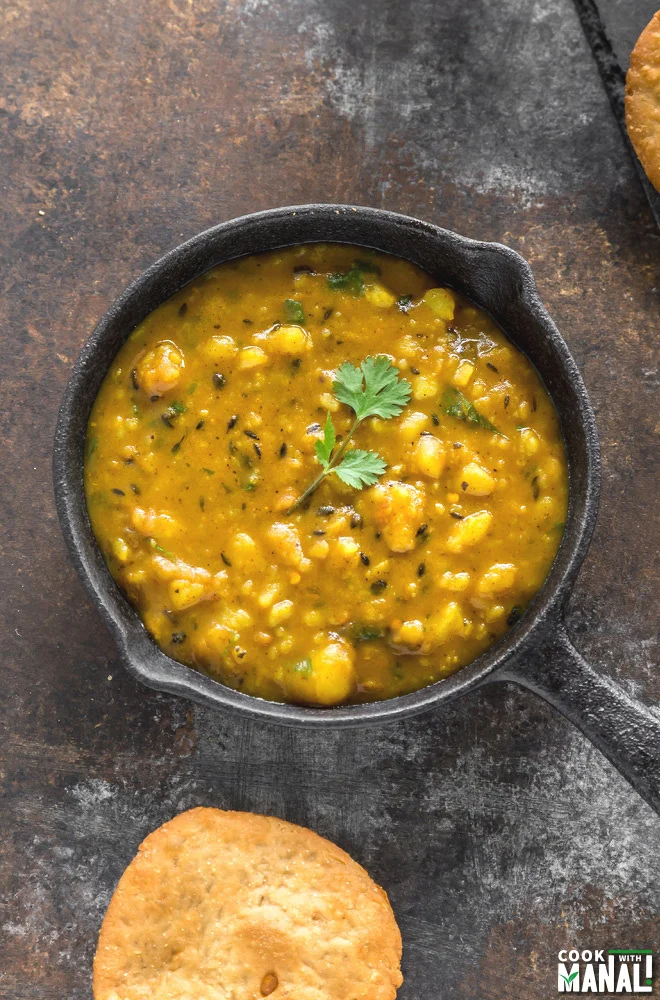
Dubki Wale Aloo is a lightly spiced potato curry with a savoury, gently thickened gravy. Make it for a simple meal or serve it alongside kachori, paratha or poori.
Ingredients
- 1 large or 2 mediumpotato, boiled and lightly crushed
- 15 ml (1 tablespoon)mustard oil
- 2.5 ml (1/2 teaspoon)cumin seeds
- 1.25 ml (1/4 teaspoon)methi seeds (fenugreek seeds)
- 1.25 ml (1/4 teaspoon)hing powder (asafoetida)
- 5 ml (1 teaspoon)finely chopped ginger
- 2dried red chillies, broken
- 1.7 ml (1/3 teaspoon)turmeric powder
- 1.25 ml (1/4 teaspoon)Kashmiri red chilli powder
- 1.25 ml (1/4 teaspoon)garam masala powder
- 1.25 ml (1/4 teaspoon)amchur powder (dried mango powder)
- 5 ml (1 teaspoon), mixed with 15–30 ml (1–2 tablespoons) watercornflour
- 15 ml (1 tablespoon)chopped coriander
- 600 ml (2.5 cups)water
- to tastesalt
Instructions
- 1
Heat the oil
Heat 15 ml (1 tablespoon) of mustard oil in a pan until very hot to avoid a bitter taste. Add the cumin and methi seeds; they should sizzle straight away.
- 2
Add aromatics
Stir in the hing, chopped ginger and dried red chillies, and sauté for a few seconds. For more heat, crush the chillies before adding; for a milder curry, leave them uncrushed.
- 3
Add the potatoes
Add the boiled, lightly crushed potatoes to the pan.
- 4
Season the potatoes
Add the turmeric, amchur, garam masala and Kashmiri red chilli powder. Mix well and cook for 30 seconds.
- 5
Add water
Pour in the water, add salt and stir well. Reduce the heat to medium.
- 6
Simmer and mash
Let the curry simmer, then use a potato masher to crush the potatoes a little more. They should be quite broken down, but do not mash them completely.
- 7
Thicken the curry
While the curry simmers, dissolve 5 ml (1 teaspoon) of cornflour in 15–30 ml (1–2 tablespoons) of water. Stir this mixture into the curry to thicken it slightly.
- 8
Finish the curry
Simmer for around 15–20 minutes in total, until the flavours have come together. Stir in the chopped coriander and take the pan off the heat.
- 9
Serve with bread
Serve the dubki wale aloo with khasta kachori or a paratha of your choice.
What is Dubki Wale Aloo?
Dubki Wale Aloo is an Indian potato curry served with breads such as kachori, paratha and poori. The name suggests potatoes immersed in a loose, spiced gravy, rather than a dry potato dish.
This version builds flavour with mustard oil, whole spices, ginger and dried chillies, then lets the potato thicken the broth. Its simple ingredients make it a practical accompaniment or a modest main with bread.
Nutrition and macros by portion
The nutrition label shows one serving as written: 68 calories, 1g protein, 7g carbs, 3g fat.
| Portion | Adjustment | kcal | Protein | Carbs | Fat |
|---|---|---|---|---|---|
| Lighter | Less oil, more potato | 48 kcal | 1g | 5g | 2g |
| This serving | As written | 68 kcal | 1g | 7g | 3g |
| Hungry | Larger portion with paratha | 102 kcal | 2g | 11g | 5g |
The potato supplies most of the carbohydrates, while mustard oil contributes most of the fat. The recipe includes little protein, so serve it with a protein-rich side such as dal or yoghurt to balance the plate.
Build flavour with the spices
Mustard oil: Heat it well before adding the whole spices, as the method notes this helps avoid bitterness. Once the cumin and methi seeds sizzle, add the hing, ginger and chillies briefly so they flavour the oil without lingering too long in the pan.
Chilli choice: Kashmiri chilli powder brings colour, while the dried chillies can add more heat if crushed. Leave them whole for a milder result.
Crush, don't purée
Potato texture: Start with boiled potatoes that are already lightly crushed, then mash them a little more as the curry simmers. Keeping some pieces intact gives the gravy body while retaining a rustic texture.
Cornflour: Mix it with water before adding it so it can be stirred into the curry evenly. It is there to thicken the liquid slightly, not turn it into a paste.
Watch the simmer
Timing: The curry simmers for around 15–20 minutes in total after the water is added. Keep it at a steady simmer rather than a vigorous boil, and stir occasionally so the potato does not catch on the pan.
Doneness: The flavours should taste integrated, and the broth should be a little thicker than when first added. If it thickens more than you like, adjust the consistency with a small splash of water.
Serve it with Indian breads
Traditional pairing: Khasta kachori is suggested for a crisp, hearty accompaniment, while paratha or poori also works well for scooping up the gravy. Serve the curry hot so the bread can be dipped into it.
For a more complete plate, add a fresh vegetable side or a simple salad. Keep the curry as the saucy element and let the bread provide the more substantial base.
Adjust the heat and tang
Heat: The dried chillies are the easiest part to adjust. Crush them for more heat or add them whole, as directed, for a gentler chilli flavour.
Tang: Amchur gives the curry a dried-mango sharpness. Keep the measured amount for the intended balance, and taste the finished curry before serving.
Recipe notes & tips
- Have the boiled potato and measured spices ready before heating the mustard oil.
- Wait for the cumin and methi seeds to sizzle before adding the next ingredients.
- Crush the dried chillies only if you want the curry hotter.
- Dissolve the cornflour fully in water before stirring it into the pan.
- Mash the potato in stages so the curry keeps some texture.
- Stir occasionally during the simmer to prevent the potato from sticking.
Variations
- Milder chillies: Add the dried chillies whole rather than crushing them.
- More heat: Crush the dried chillies before adding them to the aromatics.
- Extra tang: Serve with a little additional amchur on the side.
- Thicker gravy: Mash a little more of the potato into the simmering curry.
- Looser gravy: Stir in a small splash of water if the curry thickens too much.
Common mistakes to avoid
- Underheated mustard oil: Heat it thoroughly before adding the seeds to help avoid a bitter taste.
- Burnt aromatics: Sauté the ginger, hing and chillies only for a few seconds.
- Whole, uncrushed potatoes: Break them down during simmering so they can thicken the gravy.
- Lumpy cornflour: Dissolve it in water before adding it to the curry.
- Over-mashing: Leave some potato pieces intact for a more rustic texture.
- Rushing the simmer: Allow around 15–20 minutes for the flavours to come together.
How to store
Cool leftovers promptly and store them in a covered container in the fridge for up to 3 days. Reheat gently in a pan until hot throughout, adding a little water if the gravy has thickened.
Frequently asked questions
Can I make Dubki Wale Aloo less spicy?
Yes. Add the dried chillies whole rather than crushing them, as the method recommends. You can also reduce the chilli powder to suit your taste.
Can I use leftover boiled potatoes?
Yes, provided they have been stored safely and are still in good condition. Lightly crush them before adding them to the pan.
How thick should the gravy be?
It should be lightly thickened, with some potato pieces still visible. Mash a little more potato for a thicker consistency, or add a splash of water if needed.
What can I serve with this curry?
The recipe suggests khasta kachori or paratha; poori is another good match. A fresh vegetable side or salad can round out the meal.
Can I prepare it ahead?
You can cook it ahead and refrigerate it in a covered container for up to 3 days. Reheat it gently and loosen the gravy with water if necessary.
Cook it from the original
This recipe comes from cookwithmanali.com. Their page has the author’s own photos, notes and tips — the best place to cook it from.
Open the recipe on cookwithmanali.com