
Baked Teriyaki Salmon
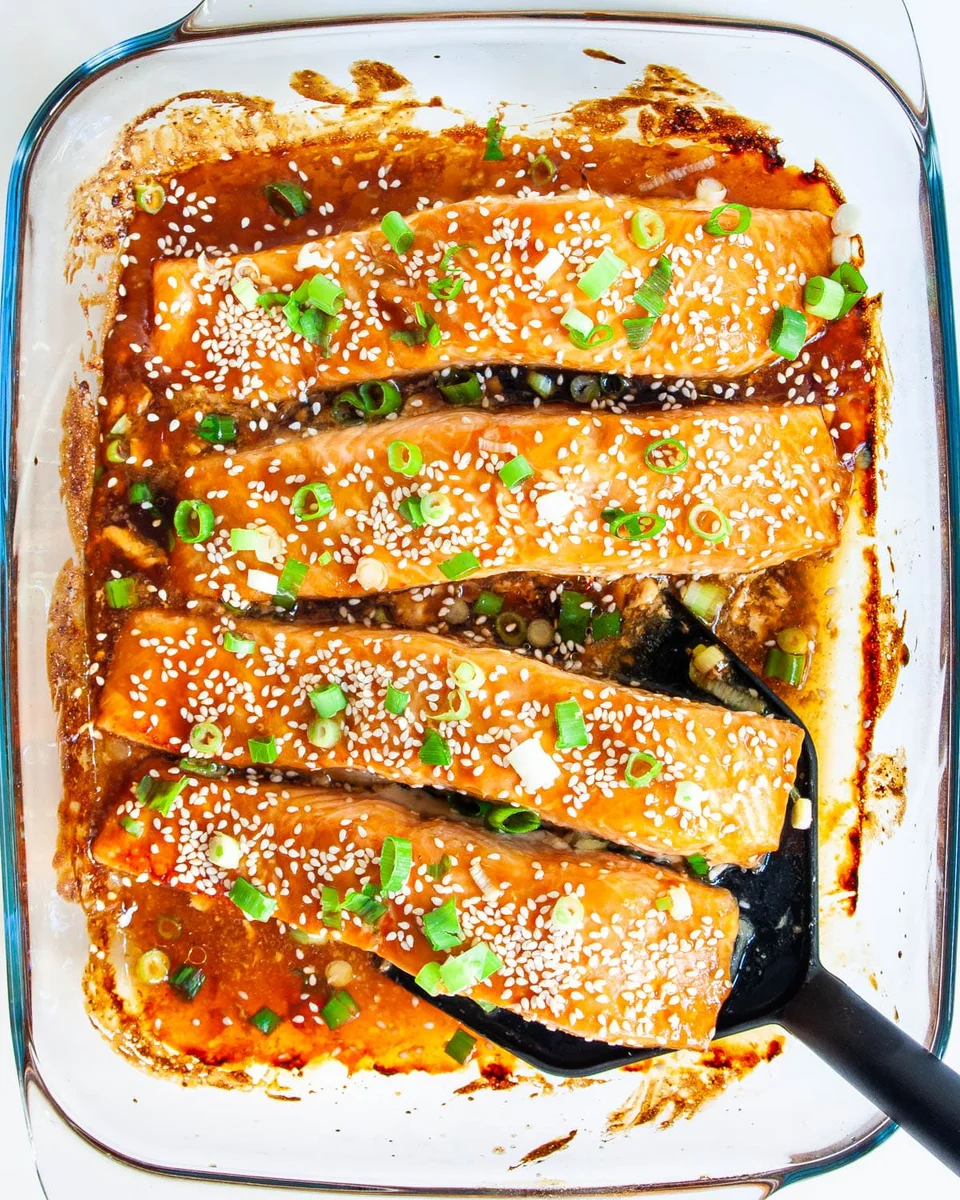
Baked teriyaki salmon pairs tender salmon fillets with a sweet-savoury sauce, then finishes with spring onions and toasted sesame seeds. It is a straightforward weeknight dinner that takes about 25 minutes and goes well with rice.
Ingredients
- 4 fillets (170 g each)salmon
- 180 ml (¾ cup)teriyaki sauce
- 2, choppedspring onions
- 9 g (1 tablespoon), toastedsesame seeds
- as neededcooking spray
Instructions
- 1
Prepare the salmon
Heat the oven to 200°C (400°F). Coat a 23 × 33 cm (9 × 13 inch) baking dish with cooking spray and place the salmon in it. Pour over 120 ml (½ cup) of the teriyaki sauce, then cover the dish with foil.
- 2
Bake the salmon
Bake for 15 minutes, or until the salmon is opaque in the centre. Remove the foil for the final 5 minutes to brown the tops, then take the dish out of the oven.
- 3
Garnish and serve
Brush the salmon with the remaining 60 ml (¼ cup) of teriyaki sauce. Scatter over the spring onions and sesame seeds, and serve over rice.
What is baked teriyaki salmon?
This American-style weeknight dish brings together salmon and teriyaki sauce, a Japanese-inspired sweet-savoury glaze. Baking the fish with some of the sauce keeps the method simple, while a final coating adds a fresh layer of flavour.
Spring onions and toasted sesame seeds provide a sharp, savoury finish and a little contrast to the glossy sauce.
Nutrition and macros by portion
The nutrition label shows one serving as written: 304 calories, 37g protein, 9g carbs, 12g fat.
| Portion | Adjustment | kcal | Protein | Carbs | Fat |
|---|---|---|---|---|---|
| Lighter | Less sauce, more vegetables | 213 kcal | 26g | 6g | 8g |
| This serving | As written | 304 kcal | 37g | 9g | 12g |
| Hungry | Larger salmon portion | 456 kcal | 56g | 14g | 18g |
The salmon supplies most of the protein and much of the fat, while the teriyaki sauce contributes most of the carbohydrates. Serve with a moderate portion of rice and add vegetables to round out the plate.
Choosing the ingredients
Salmon: Use four fillets of similar thickness so they cook at roughly the same pace. If they have skin, place them skin-side down in the baking dish.
Teriyaki sauce: The sauce is used both during baking and as a final brush-on layer. Since brands vary in sweetness and saltiness, taste yours before serving and avoid adding extra seasoning unless needed.
Cover first, uncover later
Foil: Covering the dish for most of the bake helps the fish cook gently in the sauce. Remove the foil for the final five minutes, as directed, to let the tops brown.
Finishing sauce: Keep the last quarter cup aside rather than pouring it all over at the start. Brushing it on after baking gives the fillets a fresh, glossy finish.
Check for doneness
Visual cue: The recipe’s cue is salmon that looks opaque in the centre after 15 minutes. The exact time can vary with fillet thickness and how cold the fish was when it went into the oven.
Gentle handling: Lift the fillets carefully when serving, as cooked salmon can flake apart. If a particularly thick fillet needs more time, return it to the oven briefly and check again.
Serve with a simple side
Rice: The recipe suggests serving the salmon over rice, which catches the teriyaki sauce and makes the plate more substantial.
Vegetables: Add a side of steamed or quickly cooked vegetables if you want extra variety alongside the rich, savoury glaze.
Timing and preparation
Quick setup: Heat the oven and prepare the baking dish while you arrange the fillets, then measure out the sauce so the portion for finishing stays separate.
Final minutes: Chop the spring onions and have the toasted sesame seeds ready while the salmon bakes. This makes it easy to garnish and serve as soon as the fish comes out.
Recipe notes & tips
- Choose fillets of similar thickness to help them finish cooking together.
- Measure out the final 60 ml of teriyaki sauce before pouring sauce over the fish.
- Keep the fillets in a single layer so they bake evenly.
- Use a wide, thin spatula to transfer the cooked salmon without breaking it.
- Toast the sesame seeds ahead of time so the garnish is ready when the fish is done.
Variations
- Add ginger: Brush a little freshly grated ginger over the salmon before baking for extra aromatic flavour.
- Add garlic: Stir minced garlic into the teriyaki sauce before pouring it over the fillets.
- Add chilli: Finish with sliced fresh chilli for a sharper, hotter contrast.
- Use tamari sauce: Choose a teriyaki sauce made with tamari for a different savoury note.
- Add citrus: Serve with lemon or lime wedges for a bright squeeze at the table.
Common mistakes to avoid
- Using all the sauce at the start: Reserve 60 ml for brushing on after baking so there is a fresh glaze to finish.
- Leaving the foil on throughout: Remove it for the final five minutes, as directed, to brown the tops.
- Overbaking the fish: Start checking at 15 minutes, since thinner fillets may cook sooner.
- Crowding the dish: Arrange the fillets in one layer with a little room around them for more even cooking.
- Garnishing too early: Add the spring onions and sesame seeds after baking so they remain distinct and fresh.
How to store
Refrigerate leftover salmon in a covered container and use within 3 days. Reheat gently in the oven or microwave until hot throughout; avoid prolonged heating, which can dry out the fish.
Frequently asked questions
Can I use skin-on salmon?
Yes. Place the fillets skin-side down in the baking dish and follow the same method.
How do I know when the salmon is cooked?
The centre should look opaque, as described in the recipe. Check thick fillets carefully, since their cooking time may differ.
Can I prepare this ahead?
You can chop the spring onions and measure the sauce in advance. For the best texture, bake the salmon shortly before serving.
What should I serve with it?
Rice is the suggested accompaniment. Vegetables such as steamed greens also work well alongside the glazed salmon.
Can I use a different teriyaki sauce?
Yes, use your preferred teriyaki sauce. Its sweetness and saltiness can vary, so taste it before adding any extra seasoning.
Cook it from the original
This recipe comes from cravinghomecooked.com. Their page has the author’s own photos, notes and tips — the best place to cook it from.
Open the recipe on cravinghomecooked.com