
Pav Bhaji Recipe (Mumbai Style)
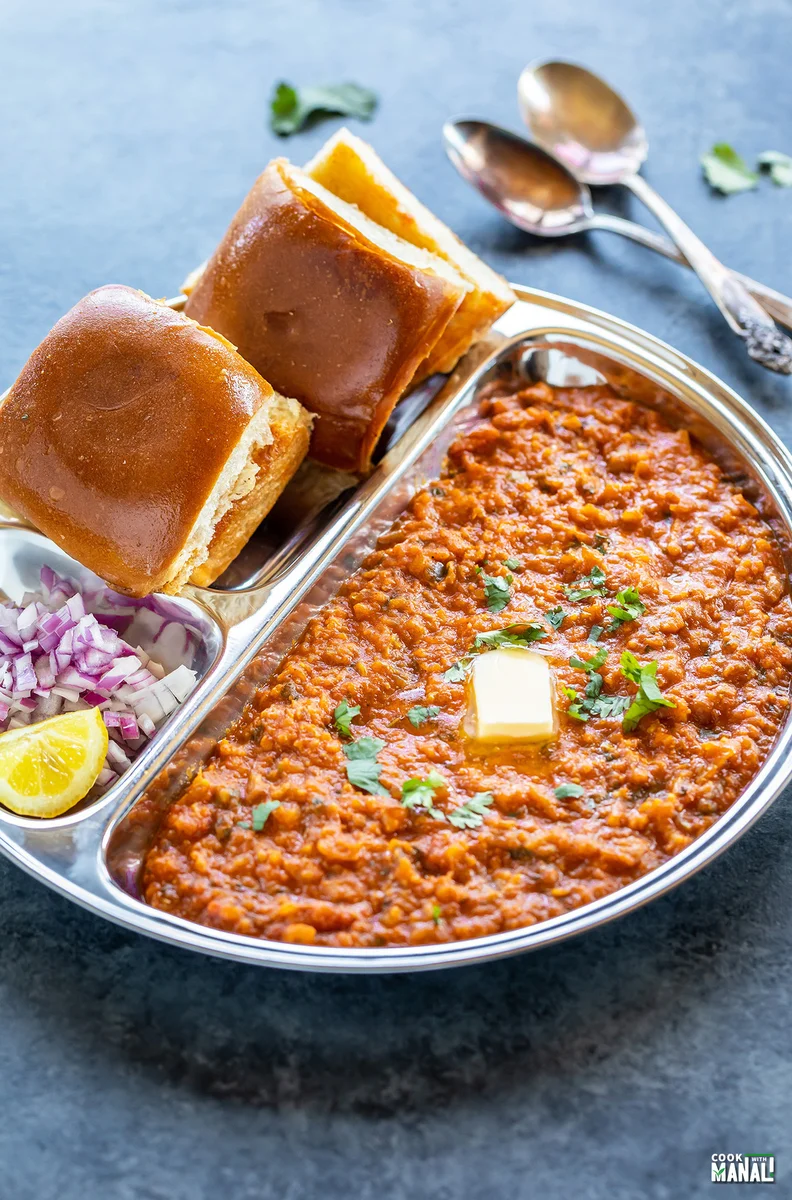
Mumbai-style pav bhaji is a spiced, mashed vegetable curry served with buttery toasted rolls. It makes a colourful, generous meal, with the vegetables and pav ready to serve together in about 45 minutes.
Ingredients
- 2 large (385 g), boiledpotatoes
- ½ head (215 g), boiledcauliflower
- ½ large (135 g), boiledgreen pepper
- ½ cup (boiled)frozen green peas
- 1 tablespoonvegetable oil
- 3 tablespoons, dividedunsalted butter
- 1 teaspooncumin seeds
- 2 medium (230 g), finely choppedred onions
- 2 inches (24 g), finely choppedginger
- 7 cloves (20 g), finely choppedgarlic
- 2, finely chopped; adjust to tastegreen chillies
- 3 large (425 g), finely choppedtomatoes
- ⅓ cuptomato purée
- 1¼ teaspoons, dividedsalt
- 1¼ cups, dividedwater
- 1 tablespoon plus 1 teaspoon, or to tastepav bhaji masala
- 2 teaspoonsKashmiri red chilli powder
- ½ teaspoon, or to tastered chilli powder
- 2 teaspoonskasuri methi (dried fenugreek leaves)
- 3 tablespoons, choppedcoriander
- Juice of 1 largelemon
- 12–14pav (eggless dinner rolls)
- To toast the pavbutter
- To sprinklepav bhaji masala
- ½ teaspoon (optional)sugar
- To servechopped onion
- To servelemon wedges
Instructions
- 1
Cook the vegetables
Boil the potatoes, cauliflower, green pepper and peas until soft and tender, using a pressure cooker or steamer. Set them aside.
- 2
Sizzle the cumin
Heat 1 tablespoon oil and 1 tablespoon butter in a large pot over medium heat. When the butter has melted and the oil is hot, add 1 teaspoon cumin seeds and let them sizzle.
- 3
Brown the onions
Add the chopped onions and cook for about 4 minutes, stirring, until golden brown.
- 4
Cook the aromatics
Stir in the finely chopped ginger, garlic and green chillies. Cook for 1 minute.
- 5
Soften the tomatoes
Add the chopped tomatoes and cook for 2 minutes. Stir in the tomato purée, ¼ cup water and ¼ teaspoon salt. Cover and cook for 6 minutes, until the tomatoes have softened and cooked through.
- 6
Season the masala
Add 1 tablespoon plus 1 teaspoon pav bhaji masala, the Kashmiri red chilli powder, red chilli powder and the remaining 1 teaspoon salt. Add ½ teaspoon sugar here if using, then mix in the kasuri methi.
- 7
Mash the vegetables
Stir in the boiled vegetables and mash them into the masala with a potato masher. Add the remaining ¾–1 cup water and mix. For a smoother, paste-like consistency, blend with an immersion blender; this is optional.
- 8
Simmer the bhaji
Cover the pot and simmer over low heat for 15 minutes. Stir in the remaining 2 tablespoons butter and the chopped coriander, then add the lemon juice. Simmer for 2 more minutes and take the pot off the heat.
- 9
Toast the pav
Melt butter in a pan over medium heat, using about 1 teaspoon per pav. Sprinkle pav bhaji masala over the butter, add the rolls and press them down. Toast until crisp and golden on both sides.
- 10
Serve the bhaji
Spoon the bhaji onto plates and top with a dollop of butter. Serve with 2 pav per person, chopped onion and a lemon wedge.
What is pav bhaji?
Pav bhaji is a Mumbai street-food dish: a richly spiced, mashed vegetable curry served with pav, or soft dinner rolls. The name pairs the bread with the bhaji, the vegetable preparation.
This version combines potatoes, cauliflower, pepper and peas with a tomato-based masala. Mashing the vegetables into the cooked spices gives the bhaji its familiar thick, cohesive texture.
Nutrition and macros by portion
The nutrition label shows one serving as written: 424 calories, 11g protein, 58g carbs, 16g fat.
| Portion | Adjustment | kcal | Protein | Carbs | Fat |
|---|---|---|---|---|---|
| Lighter | Less butter on pav | 297 kcal | 8g | 41g | 11g |
| This serving | As written | 424 kcal | 11g | 58g | 16g |
| Hungry | Extra pav and bhaji | 636 kcal | 17g | 87g | 24g |
The potatoes, peas and pav provide much of the carbohydrate, while butter and oil contribute most of the fat. Protein comes from the vegetables and rolls, with the full mixture combining them in each serving. For a more balanced plate, serve with extra vegetables alongside and keep the butter used for topping to a small dollop.
Build the flavour base
Cumin and onions: let the cumin sizzle in the oil and butter before adding the onions. Give the onions time to turn golden; they form a savoury base for the tomatoes and spices.
Ginger, garlic and chillies: a brief minute in the pan is enough to release their aroma before the tomatoes go in. Adjust the green chilli to suit your preferred heat.
Cook and mash the vegetables
Tender vegetables: boil or steam them until they are soft enough to mash easily. The method allows either a pressure cooker or a steamer.
Texture: a potato masher leaves some vegetable texture, while an immersion blender makes the bhaji more uniform. Either approach works; blend only if you want a smoother finish.
Get the tomato masala right
Tomatoes and purée: cook the chopped tomatoes first, then cover them with the purée, water and a little salt for 6 minutes. They should be softened and cooked through before you add the spice powders.
Spice and salt: pav bhaji masala brings the signature seasoning, while Kashmiri chilli powder adds colour and the other chilli powder contributes more heat. Taste and adjust the masala or chilli to your preference.
Allow time for the bhaji to simmer
Low heat: once the vegetables are mashed into the masala, simmer the covered pot for 15 minutes. This gives the flavours time to come together; stir in the remaining butter and coriander afterwards.
Finish: lemon juice goes in near the end, followed by 2 more minutes of simmering. Adding it at this stage keeps the bright citrus flavour noticeable.
Toast the pav just before serving
Buttered rolls: melt butter in a pan, sprinkle it with pav bhaji masala and press the pav into it. Toast both cut sides until crisp and golden.
To serve: spoon the hot bhaji onto plates and finish with a little butter. Pair each serving with 2 pav, chopped onion and a lemon wedge.
Recipe notes & tips
- Boil or steam the vegetables until they are tender enough to mash without effort.
- Chop the onions, ginger and garlic finely so they cook evenly into the bhaji.
- Let the onions turn golden before moving on to the aromatics.
- Use an immersion blender only if you prefer a smooth, paste-like bhaji.
- Toast the pav close to serving time so the rolls stay crisp.
- Adjust the green chillies and chilli powder to suit your heat preference.
Variations
- Smoother bhaji: blend the mashed vegetables with an immersion blender for a more uniform texture.
- More heat: increase the green chillies or red chilli powder to taste.
- Milder spice: reduce the chilli powders while keeping the pav bhaji masala for its distinctive seasoning.
- Less butter: use a lighter hand when finishing the bhaji and toasting the pav.
- Extra citrus: serve with additional lemon wedges for diners to squeeze over their portion.
Common mistakes to avoid
- Undercooked vegetables: boil or steam them until tender so they mash readily into the masala.
- Pale onions: cook them for about 4 minutes, until golden brown, before adding the ginger and garlic.
- Rushed tomatoes: keep the pan covered for 6 minutes so the tomatoes soften and cook through.
- Over-blending: use a potato masher if you want some texture rather than a smooth paste.
- Soggy pav: toast the rolls in the buttered pan until crisp and golden on both sides.
- Adding lemon too early: stir in the juice at the end, then simmer for 2 more minutes.
How to store
Refrigerate leftover bhaji in an airtight container and use within 3 days. Reheat it in a pan or microwave until hot throughout, adding a splash of water if it has thickened. Store the pav separately and toast them fresh before serving.
Frequently asked questions
Can I make the bhaji ahead?
Yes. Prepare the bhaji in advance, refrigerate it, then reheat until hot throughout. Toast the pav just before serving.
How smooth should the bhaji be?
It can be chunky or smooth, depending on your preference. Mash with a potato masher for some texture, or use an immersion blender for a paste-like consistency.
What can I use instead of a pressure cooker?
Steam the vegetables until soft and tender, as described in the method.
Is Kashmiri chilli powder very hot?
The recipe uses it mainly for colour and describes it as not hot. The green chillies and regular red chilli powder are the ingredients to adjust for more heat.
How many pav should I serve per person?
The method serves the bhaji with 2 pav per person. The recipe lists 12–14 rolls for 5 servings.
Can I skip blending the vegetables?
Yes. Blending is optional; mashing the vegetables with a potato masher is enough to mix them with the masala.
Cook it from the original
This recipe comes from cookwithmanali.com. Their page has the author’s own photos, notes and tips — the best place to cook it from.
Open the recipe on cookwithmanali.com