
Roasted Butternut Squash
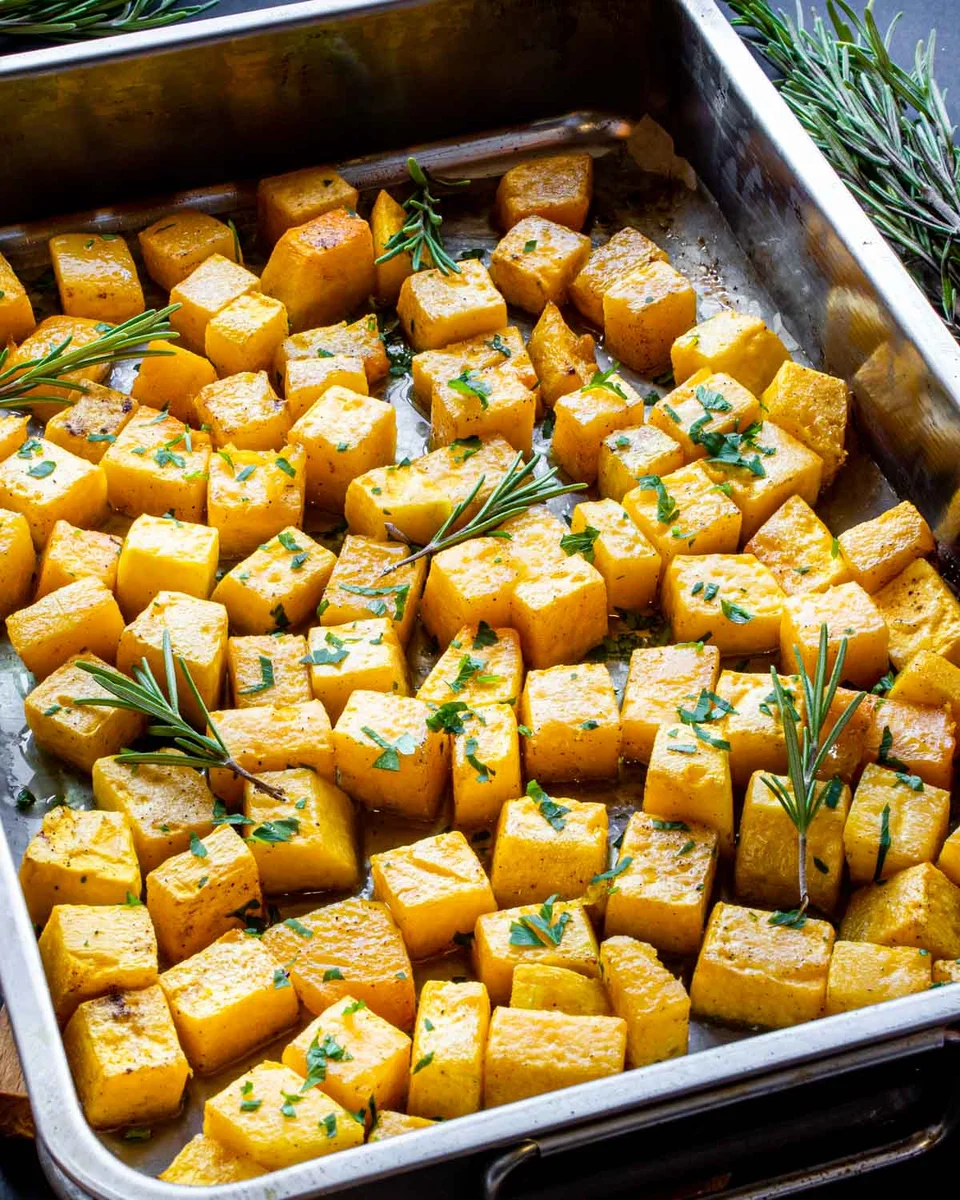
Roasted butternut squash is a straightforward side dish with tender, sweet cubes and lightly browned edges. Olive oil, salt and black pepper are all it takes to bring out its nutty flavour.
Ingredients
- 1 large, about 1.36 kg (3 pounds), peeled, seeded and cut into 2.5 cm (1-inch) cubesbutternut squash
- 60 ml (1/4 cup)extra-virgin olive oil
- 2 teaspoonssalt
- 1 teaspoonfreshly ground black pepper
Instructions
- 1
Preheat the oven
Heat the oven to 200°C (400°F).
- 2
Prepare the squash
Put the squash cubes on a baking sheet. Drizzle with the olive oil, then add the salt and pepper. Toss well and spread the cubes out in a single layer.
- 3
Roast until tender
Place the baking sheet in the oven and roast for 25 to 30 minutes, turning the squash halfway through, until it is tender when pierced with a fork.
What is roasted butternut squash?
Butternut squash is a winter squash with sweet, orange flesh and a mild, nutty flavour. Roasting is a simple American-style way to serve it as a side, letting the cubes soften and brown in the oven.
This version keeps the seasoning spare: olive oil helps the pieces roast, while salt and pepper balance the squash’s natural sweetness.
Nutrition and macros by portion
The nutrition label shows one serving as written: 205 calories, 2g protein, 22g carbs, 14g fat.
| Portion | Adjustment | kcal | Protein | Carbs | Fat |
|---|---|---|---|---|---|
| Lighter | Use less olive oil | 144 kcal | 1g | 15g | 10g |
| This serving | As written | 205 kcal | 2g | 22g | 14g |
| Hungry | Serve a larger portion | 308 kcal | 3g | 33g | 21g |
The squash supplies most of the carbohydrates, while the olive oil contributes most of the fat; the dish contains little protein. For a more balanced plate, pair a portion with a protein-rich main and another vegetable.
Choosing and cutting the squash
The recipe calls for one large squash, peeled and seeded before cutting. Aim for cubes around 2.5 cm so they cook at a similar rate.
Even pieces matter more than making every cube identical. Smaller pieces may finish sooner, while larger ones can need more time.
Coating the cubes
Oil and seasoning: Toss the squash thoroughly so the oil, salt and pepper are spread across the pieces. This helps the cubes roast evenly rather than leaving some dry and unseasoned.
Single layer: Arrange the squash with space between pieces where possible. If they are piled together, they are more likely to soften without browning as well.
Turning halfway through
Turn the cubes once during roasting, after roughly 12 to 15 minutes. This gives another side contact with the hot baking sheet and helps the pieces cook more evenly.
Use a spatula to turn them gently, as softened edges can break if handled roughly.
How to tell when it is done
Start checking at 25 minutes. The squash is ready when a fork slides into a cube easily and the pieces have begun to brown at the edges.
If the centres are still firm, return the tray to the oven and check again after a few minutes.
Serving ideas
Serve the squash warm alongside a main course, or add it to a plate with a protein-rich dish and a green vegetable for contrast. Its sweet, tender texture also works well with grains or a crisp salad.
Taste a piece before serving and adjust the seasoning if needed.
Recipe notes & tips
- Cut the squash into similarly sized cubes for more even cooking.
- Dry the cut squash if it is wet before adding the oil.
- Spread the cubes out in a single layer on the baking sheet.
- Turn the pieces gently halfway through roasting.
- Check for tenderness with a fork from the 25-minute mark.
Variations
- Add fresh herbs: Toss the roasted squash with chopped sage or thyme just before serving.
- Add garlic: Include minced garlic near the end of roasting so it does not burn.
- Add spice: Season with a pinch of chilli flakes before roasting for a little heat.
- Add warming spices: Sprinkle on ground cumin or paprika with the salt and pepper.
- Finish with lemon: Add a small squeeze of lemon juice after roasting for a bright contrast.
Common mistakes to avoid
- Uneven cubes: Cut the pieces to a similar size so they finish cooking together.
- Crowded tray: Spread the squash out in one layer to encourage roasting rather than steaming.
- Too little coating: Toss thoroughly so the oil and seasoning reach all the cubes.
- Skipping the turn: Turn the squash halfway through for more even browning.
- Roasting by the clock alone: Check that the centres are fork-tender before taking the tray out.
How to store
Cool leftovers promptly and store them in an airtight container in the fridge for up to 4 days. Reheat on a baking sheet in a 180°C oven until hot, or warm briefly in a frying pan; the microwave works too, though the squash will be softer.
Frequently asked questions
Can I leave the skin on?
This recipe specifies peeled squash. For a tender, consistent texture, peel it before cutting into cubes.
Can I prepare the squash ahead?
You can peel and cube it ahead of time, then keep the pieces covered in the fridge until ready to roast. Toss with the oil and seasonings just before baking.
Do I need to turn the squash?
Yes. The method calls for turning the pieces halfway through the 25 to 30 minutes of roasting to help them cook and brown more evenly.
How do I know the squash is tender?
Pierce a cube with a fork; it should slide in easily. If the centre is still firm, roast for a few more minutes and check again.
Can I use frozen butternut squash?
The recipe is written for peeled, seeded fresh squash cut into cubes. Frozen pieces may release more moisture, so follow their package guidance and check the texture as they roast.
Cook it from the original
This recipe comes from cravinghomecooked.com. Their page has the author’s own photos, notes and tips — the best place to cook it from.
Open the recipe on cravinghomecooked.com