
Sticky Toffee Pudding
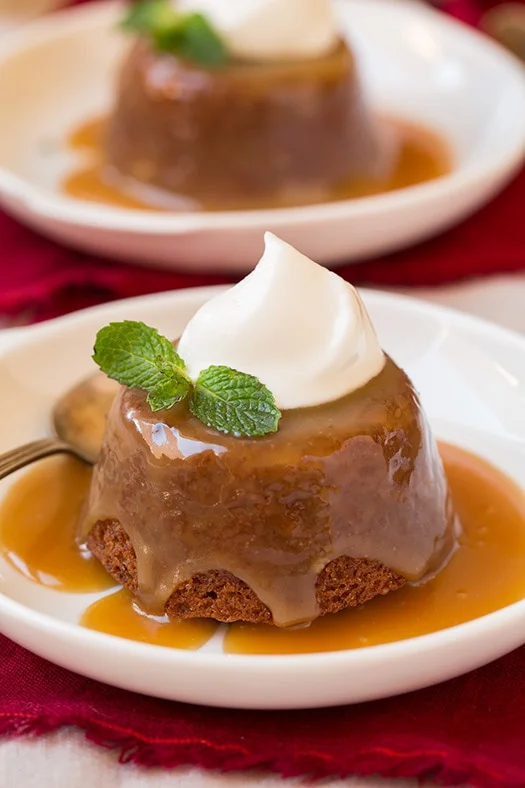
Sticky toffee pudding is a British date sponge served with warm, buttery toffee sauce. Baking individual portions makes it easy to serve at a celebration, with sauce that seeps into the soft cakes.
Ingredients
- 170 g (6 oz; about 12 dates)dried pitted Medjool dates
- 237 ml (1 cup)hot water
- ½ tspbicarbonate of soda
- 165 g (1¼ cups; 5.8 oz)plain flour
- 1 tspbaking powder
- ½ tspsalt
- 57 g (4 tbsp), softenedunsalted butter
- 162 g (¾ cup; 5.7 oz), packeddark brown sugar
- 1 largeegg
- 1 largeegg yolk
- 1½ tspvanilla extract
- 76 g (⅓ cup)unsalted butter
- 158 ml (⅔ cup)double cream
- 147 g (⅔ cup; 5.2 oz), packedlight brown sugar
- ½ tspvanilla extract
- ⅛ tspsalt
Instructions
- 1
Prepare the tin
Heat the oven to 175°C (350°F). Butter 10 wells of a muffin tin thoroughly, dust them with flour and tap out the excess.
- 2
Soak the dates
Put the dates and hot water in a medium saucepan and bring to the boil over a medium-high heat. Stir in the bicarbonate of soda and boil for 1 minute more, stirring occasionally. Take the pan off the heat, cover and leave for 10 minutes. Blend the dates and their liquid until smooth, then leave to cool.
- 3
Mix dry ingredients
Whisk the flour, baking powder and salt together for 20 seconds in a mixing bowl. In a stand mixer with the paddle attachment, beat the softened butter and dark brown sugar until the mixture looks lighter.
- 4
Make the batter
Beat in the egg, then the egg yolk and vanilla. With the mixer on low, add half the flour mixture and mix until combined. Mix in the puréed dates, then add the remaining flour mixture.
- 5
Bake the cakes
Divide the batter among the prepared wells, filling each about two-thirds full, roughly 80 ml (⅓ cup) per well. Bake for 17–19 minutes. Start making the toffee sauce about halfway through baking so it is warm when served.
- 6
Finish the puddings
Leave the cakes in the tin for 5 minutes, then loosen their edges with a butter knife and turn them out onto plates. Serve upright or turn them over; if turning them over, trim about 1 cm (½ inch) from the base if needed to make them sit flat. Prick the tops about 10 times with a toothpick and drizzle with toffee sauce. Serve warm.
- 7
Cook the sauce
Put the butter, cream, light brown sugar and salt in a small saucepan. Heat over a medium-high heat, stirring constantly until the mixture boils. Boil for 3 minutes, stirring occasionally, then remove from the heat and stir in the vanilla.
- 8
Serve and store
Serve the sauce warm over the cakes. Keep any leftovers in an airtight container in the fridge and reheat before serving.
What is sticky toffee pudding?
Sticky toffee pudding is a British dessert of tender sponge cake made with dates and served with a rich toffee sauce. Its familiar combination of dried fruit, brown sugar and cream makes it a natural choice for a festive meal.
This version bakes the batter in muffin-tin portions rather than one large dish. The dates are softened and blended first, helping them distribute through the sponge and giving the warm sauce plenty of soft cake to soak into.
Nutrition and macros by portion
The nutrition label shows one serving as written: 389 calories, 3g protein, 57g carbs, 18g fat.
| Portion | Adjustment | kcal | Protein | Carbs | Fat |
|---|---|---|---|---|---|
| Lighter | Use less toffee sauce | 272 kcal | 2g | 40g | 13g |
| This serving | As written | 389 kcal | 3g | 57g | 18g |
| Hungry | Serve a larger portion | 584 kcal | 5g | 86g | 27g |
The dates and flour provide most of the carbohydrates, while the butter and cream contribute much of the fat. The egg and yolk add some protein, though the pudding is not a major source of it. To balance the plate, serve one cake with fruit or a modest portion of unsweetened yoghurt alongside.
Why soften the dates?
Date base: simmering the dates briefly with water and bicarbonate of soda softens them before they go into the batter. Resting them for 10 minutes gives them more time to become tender.
Smooth texture: blending the dates with their cooking liquid makes a consistent purée. Let it cool before mixing it in so it does not go into the batter hot.
Build a tender sponge
Creaming: beat the softened butter and dark brown sugar until lighter in colour, then mix in the egg, yolk and vanilla. The recipe uses the yolk as well as a whole egg for its batter.
Alternating additions: mix in the flour in two additions, with the date purée between them. Stop once the remaining flour is combined rather than continuing to beat the finished batter.
Check the cakes as they bake
Even portions: divide the batter evenly among 10 prepared wells and fill each about two-thirds full. This leaves room for the cakes to rise.
Doneness: start checking at 17 minutes, the beginning of the stated baking window. The cakes should be set; avoid leaving them in the oven longer than needed, as they will be served with sauce.
Make the toffee sauce
Boiling: stir the butter, cream, light brown sugar and salt as they heat, then boil the mixture for 3 minutes, stirring occasionally. Keep an eye on the pan while it bubbles.
Vanilla: add it after taking the pan off the heat. Making the sauce partway through baking helps it stay warm for serving.
Serve while warm
Unmoulding: give the cakes 5 minutes in the tin, then loosen their sides carefully with a butter knife. If you turn them upside down, trim a little from the base only if needed to help them sit level.
Saucing: prick each cake about 10 times before drizzling over the warm sauce. Serve as they are, or pair with a cool spoonful of cream or a scoop of ice cream.
Recipe notes & tips
- Butter every muffin well and dust it with flour so the cakes release more easily.
- Let the date mixture cool before adding it to the batter.
- Scrape down the mixing bowl if needed so the butter and sugar mix evenly.
- Make the sauce while the cakes bake so it is warm at serving time.
- Prick the cakes before adding sauce to help it soak into the sponge.
- Reheat the sauce gently if it cools before serving.
Variations
- Add a little spice: Mix ground cinnamon into the dry ingredients for a gently spiced sponge.
- Serve with cream: Add a spoonful of cold cream alongside each warm pudding.
- Add ice cream: Serve with a scoop of vanilla ice cream for a hot-and-cold contrast.
- Make one pudding: Bake the batter in a single suitable tin, checking the centre for doneness before serving.
- Adjust the sauce: Pour on less sauce at first and offer the rest at the table.
Common mistakes to avoid
- Skipping the date rest: The dates need 10 minutes covered after boiling to soften before blending.
- Adding hot date purée: Let it cool first so it does not enter the batter hot.
- Overfilling the wells: Fill each only about two-thirds full to leave room for the cakes to rise.
- Overbaking: Check from 17 minutes and stop within the recipe's 17–19-minute window once the cakes are set.
- Forgetting to prick the tops: Make about 10 toothpick holes in each cake so the sauce can seep in.
- Leaving the sauce unattended: Stir as it heats and keep an eye on it during its 3-minute boil.
How to store
Keep leftover cakes and sauce in an airtight container in the fridge. Reheat before serving; warm the sauce gently and heat the cakes until warm through.
Frequently asked questions
Can I make the sauce ahead?
Yes. The recipe directs you to serve it warm, so reheat it gently before pouring it over the cakes.
Can I use a blender for the dates?
Yes. Blend the dates together with their cooking liquid using a food processor or blender, as described in the method.
How do I know when the cakes are baked?
Bake for 17–19 minutes and check that the cakes are set. Begin checking at 17 minutes to avoid baking them longer than necessary.
Do I have to turn the cakes upside down?
No. The recipe says they can be served upright or turned over. If you turn them over, trim about 1 cm from the base only if needed to help them sit flat.
Can I serve the cakes at room temperature?
They are intended to be served warm with warm sauce. If they have cooled, reheat them before serving.
How many portions does this recipe make?
It makes 10 individual puddings, using 10 wells of a muffin tin.
Cook it from the original
This recipe comes from cookingclassy.com. Their page has the author’s own photos, notes and tips — the best place to cook it from.
Open the recipe on cookingclassy.com