
Satay Sauce (Thai Peanut Sauce)
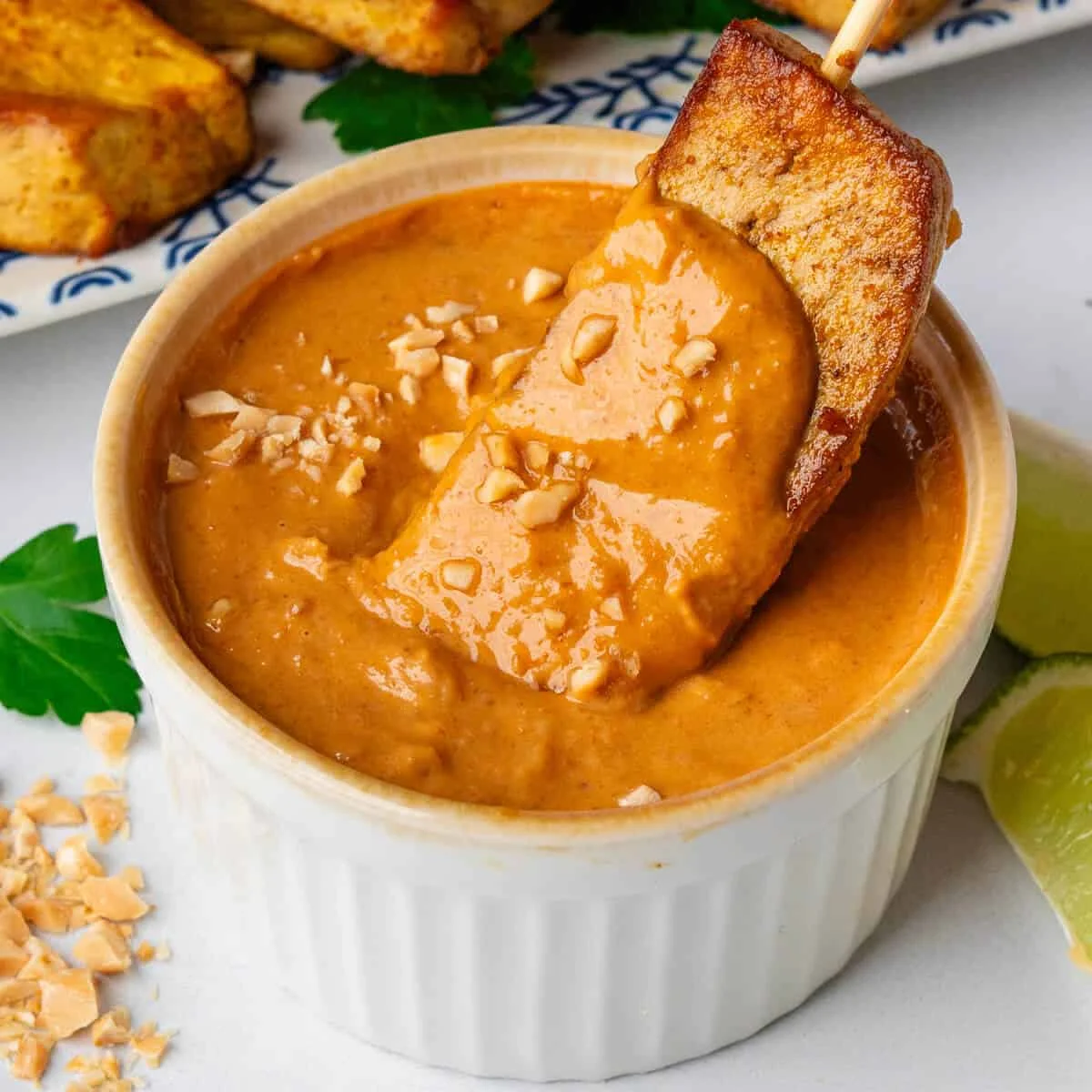
This Thai-inspired satay sauce combines peanut butter, coconut milk and red curry paste for a creamy, gently spicy dip or drizzle. It comes together in about eight minutes and is a natural partner for chicken or tofu skewers.
Ingredients
- 15 mlred curry paste
- 60 gnatural peanut butter
- 160 mlcanned coconut milk
- 15 mlsoy sauce
- 15 mlbrown sugar
- 15 mlrice vinegar
- 30 mlwater
- 2.5 mloil
- 15 ml, plus extra for garnishchopped roasted peanuts
- to servechicken or tofu satay skewers and lime wedges
Instructions
- 1
Fry the curry paste
Add a dash of oil or oil spray to a small saucepan, then stir in the red curry paste. Fry for 1–2 minutes to release its aromas.
- 2
Add the sauce ingredients
Add the coconut milk, peanut butter, soy sauce, brown sugar, rice vinegar and water. Simmer over low-medium heat, stirring continuously.
- 3
Thicken the sauce
Cook for 5–7 minutes, stirring as the sauce gradually thickens.
- 4
Finish and serve
When the sauce is slightly thick but still runny enough to drizzle and fall from the back of a spoon, take it off the heat. Stir in the chopped peanuts and serve with chicken or tofu satay skewers and lime wedges.
What is satay sauce?
Satay sauce is a peanut-based accompaniment served with satay, a style of skewered food associated with Southeast Asia. This Thai-inspired version brings together peanut butter, coconut milk and red curry paste for a rich, savoury sauce with a gentle kick.
The coconut milk loosens the peanut butter, while vinegar and lime bring a bright contrast. A scattering of roasted peanuts adds crunch to the smooth sauce.
Nutrition and macros by portion
The nutrition label shows one serving as written: 226 calories, 6g protein, 10g carbs, 20g fat.
| Portion | Adjustment | kcal | Protein | Carbs | Fat |
|---|---|---|---|---|---|
| Lighter | Use less peanut butter | 158 kcal | 4g | 7g | 14g |
| This serving | As written | 226 kcal | 6g | 10g | 20g |
| Hungry | Serve with extra skewers | 339 kcal | 9g | 15g | 30g |
The peanut butter and coconut milk provide most of the fat, while the peanut butter also contributes protein. The sugar and peanut butter account for much of the carbohydrate; serve the sauce with chicken or tofu and vegetables to make a more balanced plate.
Choosing the ingredients
Peanut butter: Natural peanut butter gives the sauce its main nutty flavour. Stir it well before measuring if the oil has separated.
Curry paste: Red curry paste provides the spice and aromatic base. Its strength varies by brand, so taste the finished sauce before serving.
Coconut milk: Canned coconut milk adds creaminess and helps make the sauce pourable. Stir the can before measuring for an even mixture.
Start by frying the paste
Heating the curry paste briefly in oil helps release its aromas before the other ingredients go in. Keep the heat moderate and stir it around the pan so it does not catch or burn.
Once you add the coconut milk and peanut butter, keep stirring as the sauce warms. This helps the ingredients combine smoothly.
Getting the consistency right
The sauce thickens as it simmers, so give it the full 5–7 minutes and stir regularly. It is ready when it coats a spoon but still flows off it easily.
If it becomes thicker than you like, loosen it with a little water. For a thicker dip, simmer it briefly longer, stirring constantly.
Serve it with
Chicken or tofu satay skewers are the suggested match, with lime wedges to squeeze over the top. The sauce also works as a drizzle for a plate of skewers.
Serve the sauce warm or at room temperature, with extra chopped roasted peanuts for garnish. Put the lime alongside so everyone can add it to taste.
Timing and preparation
The sauce takes about eight minutes in total, with just a few minutes of simmering. Measure the ingredients before you start so you can keep stirring once they are in the pan.
Because the sauce thickens as it cools, aim for a slightly looser consistency than you want at the table.
Recipe notes & tips
- Stir natural peanut butter thoroughly before measuring if it has separated.
- Keep the curry paste moving in the pan while it fries so it does not burn.
- Stir continuously as the sauce simmers to help the ingredients blend smoothly.
- Take the sauce off the heat while it is still pourable, as it will thicken as it cools.
- Taste before serving and offer lime wedges for a fresh, tangy finish.
Variations
- Adjust the heat: Add a little more red curry paste for a spicier sauce.
- Make it smoother: Leave out the chopped peanuts for a more even texture.
- Add more crunch: Sprinkle extra roasted peanuts over the sauce just before serving.
- Brighten the flavour: Squeeze in lime juice to taste before serving.
- Thin it out: Stir in a little water if you prefer a looser drizzle.
Common mistakes to avoid
- Burning the curry paste: Fry it over moderate heat and stir it for the full 1–2 minutes.
- Leaving the sauce unstirred: Stir continuously over low-medium heat to keep it blending evenly.
- Cooking it too long: Stop when it coats a spoon but still runs off easily.
- Serving it too thick: Stir in a little water to loosen the sauce.
- Adding peanuts too early: Stir them in after taking the saucepan off the heat to keep their texture.
How to store
Store leftover sauce in a covered container in the fridge for up to 3 days. Reheat gently in a saucepan, stirring and adding a splash of water if it has thickened; serve with fresh lime wedges.
Frequently asked questions
Can I make this sauce ahead?
Yes. Refrigerate it in a covered container and warm it gently before serving, adding a little water if needed to loosen it.
How can I make the sauce thinner?
Stir in water a little at a time until it reaches a pourable consistency.
Can I use crunchy peanut butter?
Yes, though the sauce will have a chunkier texture. You can still add the chopped roasted peanuts as a garnish.
What should I serve with satay sauce?
Serve it with chicken or tofu satay skewers and lime wedges, as suggested in the recipe.
Why has my sauce thickened after cooking?
The sauce naturally thickens as it cools. Warm it gently and stir in a splash of water to bring it back to a drizzling consistency.
Cook it from the original
This recipe comes from cookingwithayeh.com. Their page has the author’s own photos, notes and tips — the best place to cook it from.
Open the recipe on cookingwithayeh.com