
Roasted Spatchcock Chicken
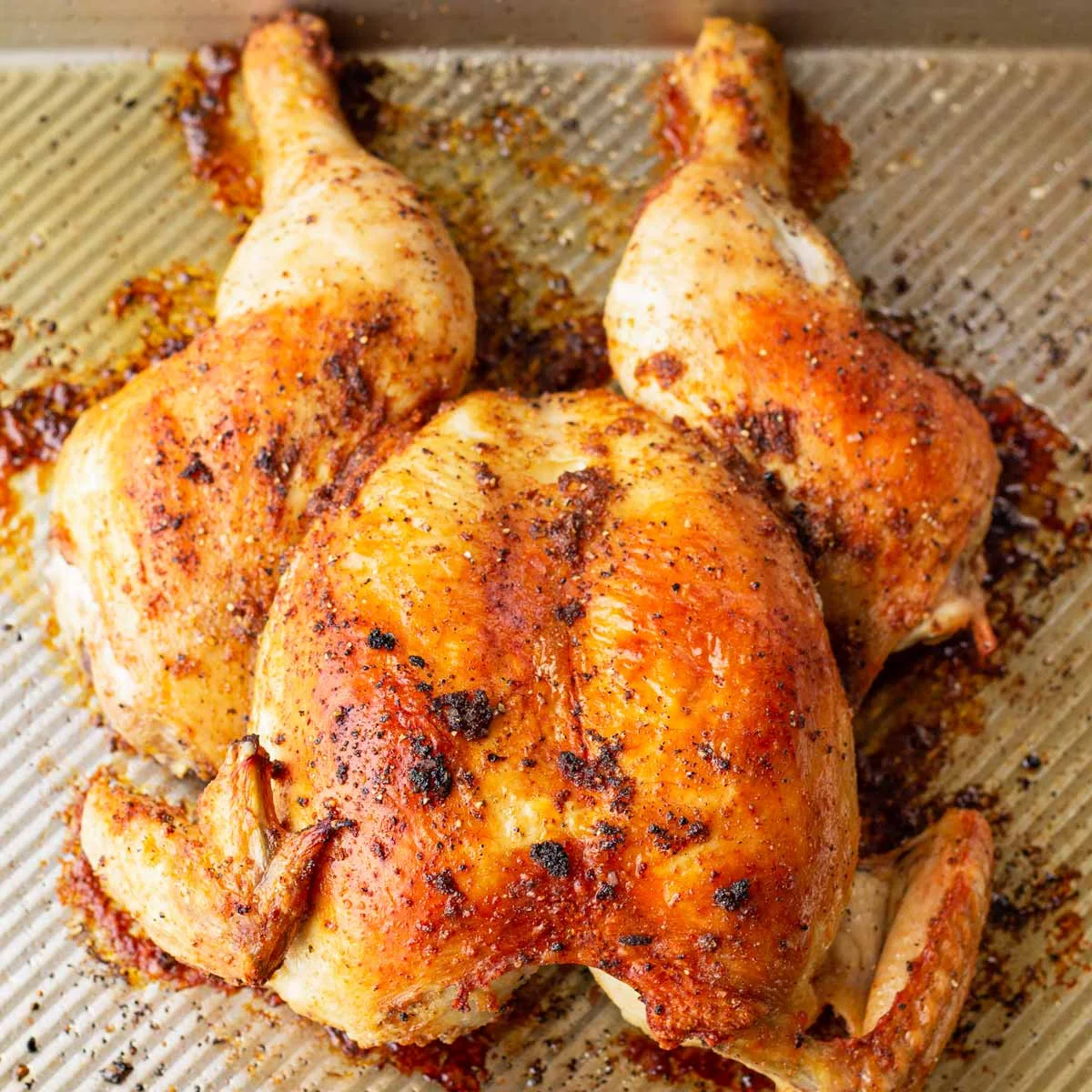
This American-style roast chicken is butterflied so it cooks more quickly and evenly, with juicy meat and crisp skin. It makes a satisfying centrepiece and leaves plenty of room to customise the seasoning.
Ingredients
- 2.04 kg (4.5 lb)whole chicken, neck and giblets removed
- A few generous drizzles, or to tastevegetable oil or light olive oil
- 10 g (2 teaspoons)kosher salt
- 1 g (½ teaspoon)ground black pepper
- 3 g (1 teaspoon)garlic powder
- 2–6 g (1–2 teaspoons)spices of your choice
Instructions
- 1
Preheat the oven
Heat the oven to 220°C (425°F) and position a rack in the middle.
- 2
Prepare the chicken
Take the chicken out of its packaging and discard the neck and giblets if they are still inside. Do not rinse the chicken, as splashing water can spread contamination.
- 3
Remove the backbone
Set the chicken on a large chopping board. With sturdy kitchen shears, cut down both sides of the backbone and remove it, along with any small protruding bones.
- 4
Flatten the chicken
Turn the chicken breast-side up. Press firmly with the heels of your hands until it lies flat.
- 5
Dry and season
Place the chicken skin-side up on a large baking tray or in a cast-iron frying pan. Pat it thoroughly dry with kitchen paper, then rub it all over with generous drizzles of oil, the salt, pepper, garlic powder and your chosen spices. Tuck the wings beneath the breast.
- 6
Roast until cooked
Roast for about 45–50 minutes, turning the tray halfway through. If the skin browns too quickly, loosely cover the chicken with foil. Roast until a thermometer in the thickest part of the thighs and breast reads 74°C (165°F), or 71°C (160°F) if allowing for a 3°C (5°F) rise as it rests.
- 7
Rest and carve
Take the chicken out of the oven and leave it to rest for 10–15 minutes before carving.
What is spatchcock chicken?
Spatchcocking means removing the backbone and flattening a whole bird before cooking. It is a practical preparation used for roasting and grilling because the chicken lies in a more even layer.
This American-style version keeps the seasoning simple, with oil, salt, pepper and garlic powder, plus optional spices. Flattening the bird helps the breast and thighs cook together while the exposed skin roasts.
Nutrition and macros by portion
The nutrition label shows one serving as written: 592 calories, 46g protein, 1g carbs, 44g fat.
| Portion | Adjustment | kcal | Protein | Carbs | Fat |
|---|---|---|---|---|---|
| Lighter | Less skin and oil | 414 kcal | 32g | 1g | 31g |
| This serving | As written | 592 kcal | 46g | 1g | 44g |
| Hungry | Larger chicken portion | 888 kcal | 69g | 2g | 66g |
The chicken supplies most of the protein and fat, while the oil and chicken skin contribute additional fat; the seasoning contributes very little carbohydrate. Pair a portion with vegetables and a measured serving of potatoes or bread for a more balanced plate.
Why flatten the chicken?
Backbone: Cut along both sides with strong kitchen shears, keeping the bird steady on a large board. Removing small protruding bones makes the chicken easier to flatten and carve.
Press: Turn it breast-side up and press down firmly until it lies flat. This helps avoid the legs and breast sitting at very different heights in the oven.
Getting crisp skin
Dry surface: Pat the chicken thoroughly with kitchen paper before adding oil and seasoning. Moisture on the skin can interfere with browning.
Even coating: Rub the oil and seasonings over the whole bird, then keep it skin-side up on the tray. Tuck the wings under the breast so their tips are less exposed to the heat.
Seasoning choices
Base: Salt, pepper and garlic powder provide a savoury foundation without masking the flavour of the chicken.
Extra spices: Use 1–2 teaspoons of spices you enjoy; smoked paprika is one option mentioned for this recipe. Keep the amount modest so the chicken remains the focus.
How to check doneness
Timing: Roast for about 45–50 minutes and rotate the tray halfway through. Oven performance and the shape of the bird can affect how quickly it cooks.
Temperature: Check the thickest parts of both the breast and thighs with a thermometer. The recipe gives 74°C (165°F) as the target, or 71°C (160°F) if accounting for a 3°C (5°F) rise during resting.
Resting and serving
Rest: Leave the cooked chicken for 10–15 minutes before carving. This gives the meat time to settle and makes carving easier.
On the plate: Serve with potatoes or bread for a heartier meal, and add a green vegetable or salad for freshness. Spoon any juices from the tray over the carved chicken.
Recipe notes & tips
- Use sturdy kitchen shears to cut cleanly along both sides of the backbone.
- Keep the chicken on a large, stable chopping board while flattening it.
- Pat the skin dry before rubbing on the oil and seasonings.
- Rotate the tray halfway through roasting for more even exposure to the oven.
- Check both the breast and thighs with a thermometer rather than relying only on the clock.
- Rest the chicken for 10–15 minutes before carving.
Variations
- Smoked paprika: Add it among the chosen spices for a smoky note.
- Herb seasoning: Use dried herbs you enjoy in place of some or all of the optional spices.
- Pepper-forward: Increase the emphasis on black pepper for a more pronounced bite.
- Light olive oil: Choose light olive oil instead of vegetable oil as the roasting fat.
- Garlic-led: Keep the garlic powder and pair it with a complementary spice of your choice.
Common mistakes to avoid
- Rinsing the chicken: Skip this, as splashes can spread contamination around the sink.
- Leaving the chicken rounded: Press it firmly breast-side up until it lies flat for more even roasting.
- Damp skin: Pat it thoroughly dry before seasoning to help it brown.
- Forgetting to rotate the tray: Turn it halfway through the cooking time for more even roasting.
- Guessing doneness: Check the thickest parts of both the breast and thighs with a thermometer.
- Carving immediately: Let the chicken rest for 10–15 minutes first.
How to store
Refrigerate leftover chicken in a covered container within 2 hours and use within 3–4 days. Reheat portions until piping hot, or serve the leftovers cold.
Frequently asked questions
Do I need to rinse the chicken?
No. The recipe advises against rinsing because splashing water can spread contamination. Pat the chicken dry with kitchen paper instead.
Can I use a baking tray instead of a cast-iron pan?
Yes. Use a large sheet pan or a cast-iron frying pan, as described in the method.
How long does spatchcock chicken take to roast?
Allow about 45–50 minutes at 220°C (425°F), rotating the tray halfway through. Check the thickest parts of the breast and thighs with a thermometer.
What temperature should the chicken reach?
The recipe gives 74°C (165°F) in the thickest parts of the breast and thighs. It also notes that you can take it out at 71°C (160°F) if allowing for a 3°C (5°F) rise while resting.
Why is my chicken skin not crisp?
The method stresses drying the skin thoroughly before adding oil and seasoning. Pat it dry with kitchen paper and roast it skin-side up.
Can I season the chicken with different spices?
Yes. The recipe allows about 1–2 teaspoons of spices of your choice; smoked paprika is one suggested option.
Cook it from the original
This recipe comes from cookingformysoul.com. Their page has the author’s own photos, notes and tips — the best place to cook it from.
Open the recipe on cookingformysoul.com