
Kabocha Squash Roasted With Thyme & Garlic
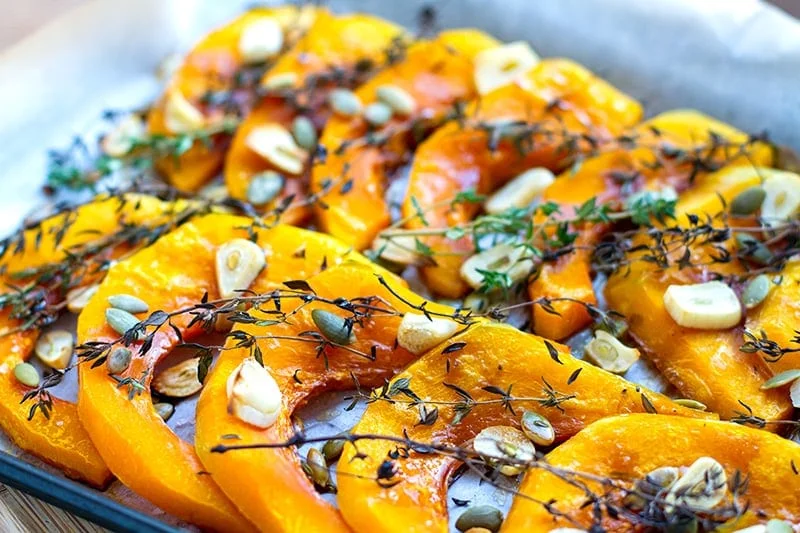
Kabocha squash is roasted with thyme and garlic until tender, with pumpkin seeds adding a little crunch. Serve it warm or cold as a simple side alongside protein, quinoa or salad.
Ingredients
- ½kabocha squash (Japanese pumpkin), seeds removed, peeled and sliced into half-moon wedges
- 45 ml (3 tablespoons)olive oil
- 5 ml (1 teaspoon)sea salt
- 10–12 sprigsfresh thyme (or dried thyme)
- 5 clovesgarlic, sliced
- 30 ml (2 tablespoons)pumpkin seeds
- 30 ml (2 tablespoons), optionalbalsamic vinegar (aged balsamic) or pomegranate molasses
Instructions
- 1
Preheat the oven
Heat the oven to 200°C (395°F).
- 2
Season the squash
Line a flat baking tray with baking parchment and arrange the squash slices on it. Drizzle with the olive oil, sprinkle evenly with the sea salt and add the thyme. Roast on the middle shelf for 15 minutes.
- 3
Add garlic and seeds
Take the tray out of the oven and scatter the sliced garlic and pumpkin seeds over the squash. If using, drizzle over 1–2 tablespoons of balsamic vinegar, then return the tray to the oven for 8–10 minutes. Serve hot or cold.
What is kabocha squash?
Kabocha is a Japanese variety of winter squash, sometimes called Japanese pumpkin. It has a firm flesh that softens as it cooks, making it well suited to roasting.
This version keeps the preparation simple: thyme and garlic season the squash, while pumpkin seeds add contrast. The optional balsamic vinegar or pomegranate molasses brings a tangy-sweet finish.
Nutrition and macros by portion
The nutrition label shows one serving as written: 116 calories, 2g protein, 9g carbs, 9g fat.
| Portion | Adjustment | kcal | Protein | Carbs | Fat |
|---|---|---|---|---|---|
| Lighter | Use less olive oil | 81 kcal | 1g | 6g | 6g |
| This serving | As written | 116 kcal | 2g | 9g | 9g |
| Hungry | Serve a larger portion | 174 kcal | 3g | 14g | 14g |
The squash supplies most of the carbohydrates, while olive oil carries much of the fat; the pumpkin seeds contribute a little protein and additional fat. For a more balanced plate, pair a serving with a protein-rich food and salad or another vegetable.
Choosing and preparing the squash
Kabocha: The recipe uses half a squash, with the seeds removed and the skin peeled before cutting it into half-moon wedges. Try to make the wedges a similar thickness so they roast at much the same rate.
Thyme: Fresh sprigs go onto the squash before the first roasting stage. Dried thyme can be used instead, though it is more concentrated, so scatter it lightly.
Roasting in two stages
First roast: The squash cooks with oil, salt and thyme for 15 minutes. This gives it a head start before the more delicate additions go on.
Second roast: Garlic and pumpkin seeds are added for the final 8–10 minutes. This shorter finish helps the garlic cook without spending the whole roasting time in the oven.
How to judge doneness
Tenderness: The squash should be soft enough to pierce with a knife after the second roasting stage. If a wedge still feels firm, return the tray to the oven briefly and check again.
Colour: Look for lightly browned, caramelised patches on the squash rather than expecting every slice to brown evenly. The pumpkin seeds should be toasted, not scorched.
Serving ideas
As a side: Serve the squash hot alongside your choice of protein, or pair it with quinoa or a salad for a more substantial plate.
Temperature: It can also be served cold, as the method suggests. If making it ahead, allow it to cool before storing.
Recipe notes & tips
- Cut the wedges to a similar thickness for more even roasting.
- Spread the squash out on the tray rather than piling the slices up.
- Add the garlic and pumpkin seeds only after the first 15 minutes.
- Check the squash with a knife at the end of the stated roasting time.
- Add the optional balsamic vinegar or pomegranate molasses to taste.
Variations
- Use dried thyme: Sprinkle it over the squash in place of fresh sprigs.
- Try pomegranate molasses: Use it instead of balsamic for a different tangy-sweet finish.
- Leave out the vinegar: Skip the optional drizzle for a simpler roasted flavour.
- Serve with quinoa: Add quinoa alongside the squash for a more filling meal.
Common mistakes to avoid
- Uneven wedges: Cut them to a similar thickness so they finish roasting together.
- Crowded tray: Spread the slices out so they roast rather than steam.
- Garlic added too early: Add it after the first 15 minutes to avoid overcooking it.
- Skipping the doneness check: Test a wedge with a knife and roast briefly longer if it is still firm.
- Scorched seeds: Add the pumpkin seeds for the final 8–10 minutes and keep an eye on them.
How to store
Refrigerate leftovers in a covered container and use within 3 days. Reheat in the oven until warmed through, or serve cold as suggested in the method.
Frequently asked questions
Can I use dried thyme instead of fresh?
Yes. The recipe allows dried thyme as an alternative; use it in place of the fresh sprigs.
Do I have to add balsamic vinegar?
No, it is optional. You can leave it out or use aged balsamic or pomegranate molasses instead.
How do I know when the squash is cooked?
Pierce a wedge with a knife: it should be tender. If it is still firm after the final 8–10 minutes, roast it a little longer and check again.
Can I serve this squash cold?
Yes. The recipe says it can be served hot or cold; cool it before refrigerating if you are preparing it ahead.
What can I serve with roasted kabocha?
Serve it as a side with your favourite protein, quinoa or salad.
Cook it from the original
This recipe comes from cookedandloved.com. Their page has the author’s own photos, notes and tips — the best place to cook it from.
Open the recipe on cookedandloved.com