
Creamy Saffron Risotto (Risotto alla Milanese)
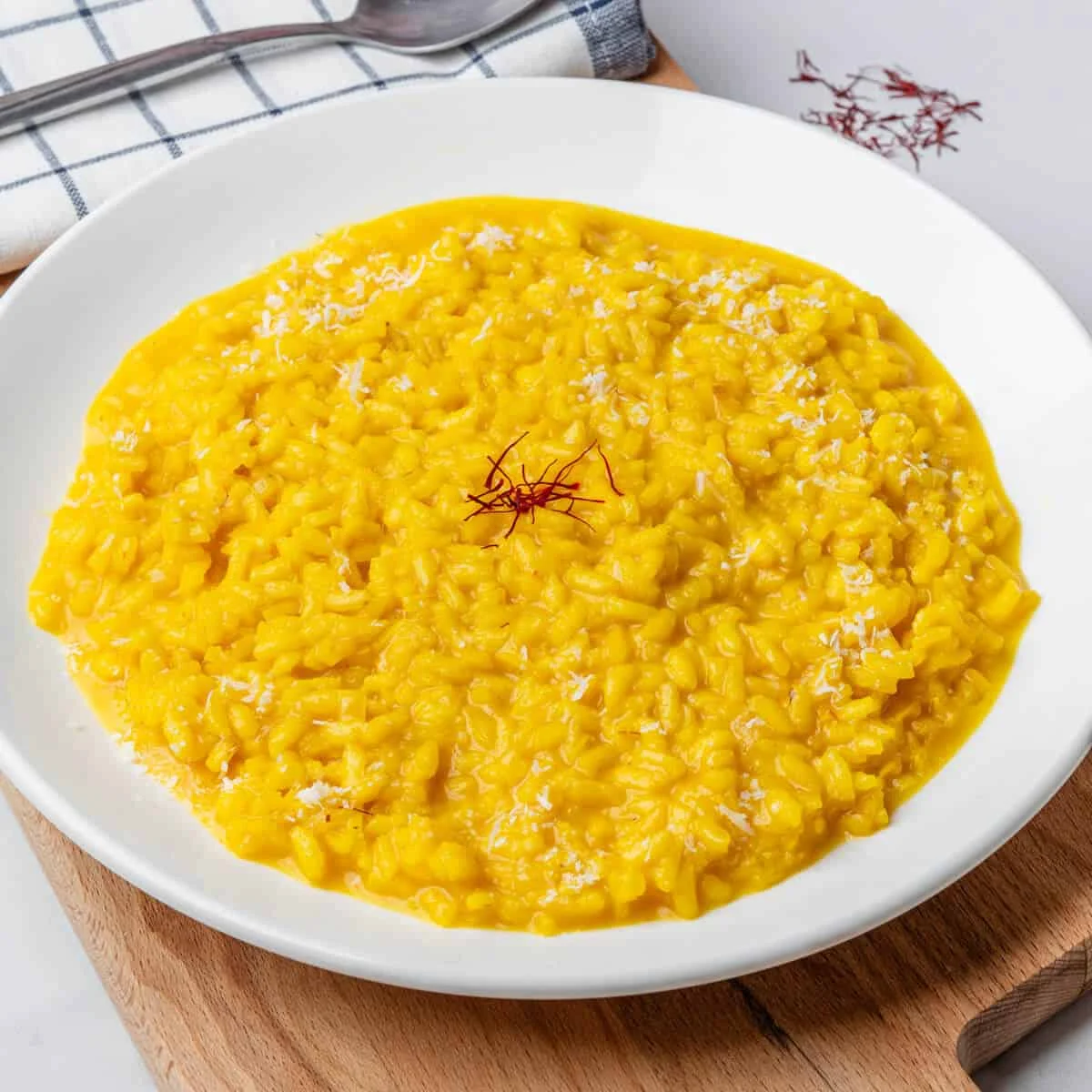
Risotto alla Milanese is a gently stirred Italian rice dish coloured and scented with saffron, finished with Parmesan for a silky texture. It makes a comforting main or a generous side, and comes together in about 30 minutes.
Ingredients
- A good pinch, or 1.25 ml (¼ tsp)saffron threads or saffron powder
- 300 g (1½ cups)Arborio rice
- ½white onion
- 120 ml (½ cup)white wine
- 1.4 litres (6 cups)vegetable stock or chicken stock
- 50 g (2 oz)finely grated Parmesan cheese
- 30–45 ml (2–3 tbsp)extra virgin olive oil
- To tastesalt
Instructions
- 1
Infuse the saffron
If using saffron threads, grind them with a mortar and pestle or a small blender until roughly powdered. Put ¼ teaspoon of the powder in a small glass or ramekin, pour over 3 tablespoons of boiling water and leave it to infuse.
- 2
Soften the onion
Finely dice the onion and cook it gently with olive oil in a large saucepan over low heat. Meanwhile, heat the stock in a separate pot on the hob.
- 3
Toast the rice
When the onion is translucent, add the Arborio rice and toast it for a few minutes.
- 4
Add wine and stock
Raise the heat to medium and stir in the white wine. Once most of it has evaporated, add 2 ladles of hot stock and a good pinch of salt, then stir.
- 5
Stir in stock
When most of the liquid has been absorbed, add the stock a ladle at a time, stirring continuously to cook the rice.
- 6
Add the saffron
Continue until about half of the stock has been used. Pour in the saffron-infused water and stir it through the risotto.
- 7
Finish with Parmesan
Keep adding stock one ladle at a time, tasting the rice as it cooks. When it is almost cooked, add the finely grated Parmesan and stir continuously for a few minutes until creamy, adding stock as needed.
- 8
Serve the risotto
When the risotto is silky and still slightly wet, rather than dry or mushy, drizzle it with a tablespoon of olive oil and serve.
What is risotto alla Milanese?
Risotto alla Milanese is a northern Italian rice dish associated with Milan, traditionally distinguished by saffron’s golden colour and aromatic flavour. This version builds that character into a simple risotto with white wine, stock and Parmesan.
Saffron water is added partway through cooking, so its colour and aroma spread through the rice. Gradual additions of warm stock and frequent stirring help create the dish’s characteristic creamy finish.
Nutrition and macros by portion
The nutrition label shows one serving as written: 413 calories, 9g protein, 67g carbs, 11g fat.
| Portion | Adjustment | kcal | Protein | Carbs | Fat |
|---|---|---|---|---|---|
| Lighter | Use less olive oil | 289 kcal | 6g | 47g | 8g |
| This serving | As written | 413 kcal | 9g | 67g | 11g |
| Hungry | Serve a larger portion | 620 kcal | 14g | 101g | 17g |
The rice provides most of the carbohydrates, while olive oil and Parmesan contribute much of the fat. Parmesan also supplies some protein, with smaller amounts coming from the rice and stock. Pair a serving with vegetables or salad for a more balanced plate.
Choosing the ingredients
Rice: Arborio is a starchy, short-grain rice that releases starch as it cooks. Keep it as the recipe specifies rather than rinsing it, which would wash away some of that surface starch.
Stock: Vegetable stock keeps the dish meat-free, while chicken stock gives it a different savoury base. Heat the stock before using it so each addition does not cool the rice.
Saffron: Threads need grinding and a short steep in boiling water to release their colour and flavour. Saffron powder can be used instead; measure out ¼ teaspoon for the infusion.
Why the stock goes in gradually
Small additions of hot stock give the rice time to absorb liquid as it cooks. Stir continuously as directed, and wait until most of each ladleful has been absorbed before adding the next.
The rice should remain in a fluid mixture rather than sitting in a dry pan. Keep the heat at a steady medium once the wine has gone in, adjusting it if the liquid boils too vigorously.
Getting the texture right
Doneness: Taste the rice regularly towards the end of cooking. It should be cooked through but not mushy; if it is still too firm, continue adding stock and tasting.
Finish: Parmesan and stirring help make the risotto creamy, while the final drizzle of olive oil adds gloss. Stop while it is still slightly loose and wet, as it thickens as it stands.
Timing the saffron and cheese
Saffron: Add the infused water when roughly half the stock has gone in, as the method specifies. This gives the rice time to take on its colour and aroma during the rest of the cooking.
Parmesan: Stir in the cheese when the rice is almost cooked, not at the start. Grating it finely helps it melt into the risotto as you stir.
What to serve with it
Serve the risotto as soon as it reaches its silky, slightly wet consistency. It works well as a first course or alongside simply cooked vegetables.
For a fuller plate, pair it with a green salad or a portion of roasted or steamed vegetables. Keep accompaniments straightforward so the saffron remains the focus.
Recipe notes & tips
- Warm the stock in a separate pot before you start adding it to the rice.
- Dice the onion finely so it softens evenly in the pan.
- Stir regularly and scrape around the base of the saucepan as you cook.
- Taste the rice as it approaches doneness rather than relying on a fixed cooking time.
- Keep a little extra hot stock ready in case the risotto needs loosening at the end.
Variations
- Use vegetable stock: Choose it for a meat-free version of the dish.
- Use chicken stock: Swap it for the vegetable stock if preferred.
- Adjust the saffron: Use threads or the stated amount of saffron powder.
- Add black pepper: Grind a little over the finished risotto for a gentle peppery note.
- Serve with greens: Pair the risotto with simply cooked seasonal vegetables.
Common mistakes to avoid
- Adding cold stock: It cools the rice and slows cooking; heat the stock in a separate pot first.
- Adding all the stock at once: The rice will not cook by the gradual method; use one ladle at a time after the first two.
- Stopping before tasting: Rice can remain firm even when the liquid is absorbed; taste and continue cooking with stock as needed.
- Cooking until dry: The risotto thickens as it stands; take it off the heat while it is still slightly wet.
- Adding Parmesan too early: It is intended for the final stage; stir it in when the rice is almost cooked.
How to store
Cool leftovers promptly, store them in a sealed container in the fridge and eat within 2 days. Reheat in a saucepan with a splash of water or stock, stirring until piping hot; the texture will be thicker than when freshly made.
Frequently asked questions
Can I use saffron powder instead of threads?
Yes. The recipe allows ¼ teaspoon of saffron powder; infuse it in 3 tablespoons of boiling water as directed.
Can I use chicken stock?
Yes. The recipe gives vegetable stock or chicken stock as options.
How do I know when the rice is cooked?
Taste it as you go. It should be cooked through but not mushy, and the finished risotto should remain silky and slightly wet.
Do I need to stir risotto constantly?
This recipe calls for continuous stirring as you add the stock. Follow that method, adding more only when most of the previous ladleful has been absorbed.
Can I make risotto alla Milanese ahead?
It is best served straight after cooking, when it is at its silkiest. Leftovers can be refrigerated and reheated with a splash of water or stock, though they will be thicker.
Cook it from the original
This recipe comes from cookingwithayeh.com. Their page has the author’s own photos, notes and tips — the best place to cook it from.
Open the recipe on cookingwithayeh.com