
Sweet Potato Glass Noodle Stir-Fry With Shrimp & Bok Choy
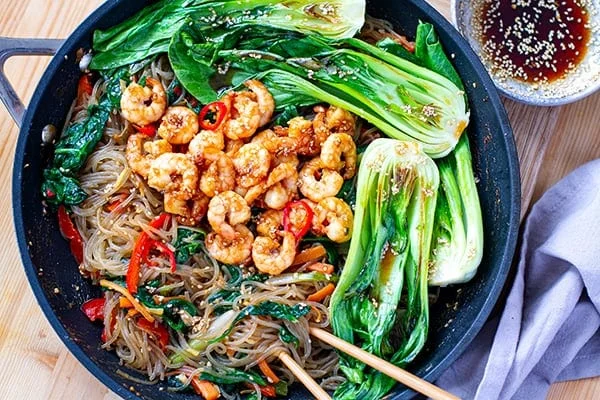
This japchae-inspired stir-fry pairs chewy sweet potato glass noodles with prawns, crisp vegetables and a glossy sesame sauce. It is a colourful one-pan meal, with the prawns and bok choy cooked separately so their textures stand out.
Ingredients
- 150 gsweet potato glass noodles
- 100 gbaby spinach leaves
- 1–2spring onions, cut into 2.5 cm strips
- 1 mediumcarrot, cut into strips
- ½ largered pepper, cut into strips
- 1 thumb-sized pieceginger, peeled and diced
- 1 teaspoonchopped red chilli
- 2–3bok choy, halved
- 225 graw large prawns, shelled
- 2 clovesgarlic, finely diced
- 80 ml (⅓ cup)tamari, gluten-free soy sauce or coconut aminos
- 60 ml (¼ cup)maple syrup, honey or sugar-free syrup
- 60 ml (4 tablespoons)sesame oil
- 3 tablespoonsroasted sesame seeds
- 30 ml (2 tablespoons)lemon juice
- 30 ml (2 tablespoons)olive oil, coconut oil or avocado oil, for cooking
Instructions
- 1
Cook the noodles
Bring enough water to cover the noodles to the boil in a large pan. Add about 120 g of the sweet potato glass noodles and a pinch of salt, then stir. Cook for 6–7 minutes.
- 2
Cool the noodles
Drain the noodles, reserving the hot water if you plan to use it for the spinach. Put the noodles in cold water to cool while you prepare the other ingredients.
- 3
Wilt the spinach
Bring a little more water to the boil. Cover the spinach with the boiling water in a pan and cook for 45–60 seconds, stirring. Drain, cool and gently squeeze out the excess liquid. Set aside.
- 4
Prepare the vegetables
Halve the carrot, then slice it into matchsticks or strips. Cut the spring onions and red pepper into strips. Thinly slice or chop the ginger and chilli, and chop the garlic for the sauce.
- 5
Prepare the bok choy
Wash the bok choy carefully between the leaves and cut each one in half. Leave the firm root end in place if you like, then set aside.
- 6
Mix the sauce
Mix the sauce ingredients in a bowl. Measure out 3 tablespoons into a second bowl to use for the prawns.
- 7
Prepare the prawns
If using frozen prawns, soak them in warm water for 5 minutes, then pat dry. If using fresh prawns in their shells, remove the shells and heads.
- 8
Char the bok choy
Heat a tablespoon of oil in a large frying pan over a high heat. When hot, add the bok choy cut-side down and cook for 1½–2 minutes until charred. Turn and cook for another minute, then transfer to a plate.
- 9
Stir-fry the vegetables
Add the onions, carrot, pepper, ginger and chilli to the same pan with another spoonful of oil. Stir-fry over a high heat for 1–2 minutes.
- 10
Glaze the noodles
Drain the noodles and add them to the pan with the wilted spinach. Pour in the sauce, keeping back the 3 tablespoons reserved for the prawns. Stir and cook over a medium-high heat for 2–3 minutes, continuing to stir as the sauce darkens and begins to caramelise. Taste, and if needed, add more tamari or coconut aminos and syrup in equal parts. Transfer the noodles and vegetables to a bowl or plate.
- 11
Cook and combine
Return the pan to a high heat and add the prawns. Pour over the reserved sauce and cook, stirring frequently, for 2–3 minutes until the sauce thickens and coats them. Return the noodles to the pan and toss to combine, or serve the prawns on top. Arrange the bok choy over the dish and finish with a little extra tamari or lemon juice and sesame oil.
What is japchae?
Japchae is a Korean noodle dish commonly made with chewy glass noodles, vegetables and a savoury-sweet seasoning. This version takes inspiration from that combination, using sweet potato glass noodles and adding prawns and bok choy.
The noodles, vegetables and prawns are cooked in stages, then brought together in the pan. That keeps the prawns glazed and the bok choy lightly charred rather than letting everything soften together.
Nutrition and macros by portion
The nutrition label shows one serving as written: 496 calories, 11g protein, 63g carbs, 25g fat.
| Portion | Adjustment | kcal | Protein | Carbs | Fat |
|---|---|---|---|---|---|
| Lighter | Use less sesame oil | 347 kcal | 8g | 44g | 18g |
| This serving | As written | 496 kcal | 11g | 63g | 25g |
| Hungry | Add more glass noodles | 744 kcal | 17g | 95g | 38g |
The glass noodles and maple syrup contribute most of the carbohydrate, while sesame and cooking oils make much of the fat. Prawns provide the main protein, with smaller amounts from the other ingredients. To balance the plate, serve a generous portion of the bok choy and other vegetables alongside the noodles.
Choose the right noodles
Sweet potato glass noodles: These are translucent and springy once cooked, and they take on the colour and flavour of the sauce. Follow the packet if its cooking instructions differ; drain and cool them before stir-frying.
Build the sauce
Tamari and syrup: Tamari brings saltiness, while maple syrup, honey or sugar-free syrup adds sweetness and helps create the sticky coating. If you adjust one of those flavours at the end, the method suggests balancing it with the other.
Sesame and lemon: Sesame oil and seeds give the sauce a toasted, nutty note, while lemon juice adds a sharper edge. Keep the reserved sauce separate for glazing the prawns.
Get the vegetables ready
Even strips: Cut the carrot, spring onions and pepper into similar-sized strips so they cook quickly over the high heat. Have the ginger and chilli ready before you start stir-frying.
Spinach: Briefly blanch it, then cool and squeeze it gently. Removing excess water helps keep the sauce from becoming diluted.
Char the bok choy
Place the halves cut-side down in the hot pan and leave them undisturbed for 1½–2 minutes to develop some colour. Turn them for another minute, then take them out so they do not overcook while the noodles and prawns finish.
Look for a glossy finish
Noodles: Stir over a medium-high heat for 2–3 minutes, until the sauce darkens and clings to the noodles. Keep the noodles moving so the syrupy sauce does not catch on the pan.
Prawns: Cook them with the reserved sauce for 2–3 minutes, stirring often, until the glaze thickens. Avoid cooking longer than needed; prawns can turn firm if left in the pan too long.
Serve it while hot
Divide the noodles and vegetables between plates, then top with the prawns and bok choy, or toss the prawns back through the noodles before serving. A little extra lemon juice or tamari can sharpen the finish, and sesame oil adds more aroma.
The dish already includes noodles, vegetables and prawns, so it can be served on its own. For a fuller spread, add a simple cucumber salad or another lightly dressed vegetable side.
Recipe notes & tips
- Prepare and cut all the vegetables before heating the frying pan, as the stir-frying stages move quickly.
- Make sure the spinach is well drained and gently squeezed before adding it to the noodles.
- Reserve the 3 tablespoons of sauce before pouring the rest over the noodles.
- Use a large frying pan so the vegetables and noodles can be stirred without spilling.
- Taste the noodles before adding extra tamari, since the sauce is already seasoned.
- Serve the bok choy soon after cooking to retain its charred edges and firm texture.
Variations
- Use honey: Swap it for the maple syrup to keep the sweet note in the sauce.
- Try coconut aminos: Use them in place of tamari for a different savoury flavour.
- Adjust the heat: Add more or less chopped red chilli to suit your preference.
- Change the cooking oil: Use coconut or avocado oil instead of olive oil.
- Use unroasted sesame seeds: Add them as listed, though they will have a milder toasted flavour.
- Add extra vegetables: Increase the carrot, pepper or bok choy while keeping the same stir-fry sequence.
Common mistakes to avoid
- Skipping the cold rinse: Cooling the drained noodles helps stop them cooking further while you prepare the rest.
- Leaving water in the spinach: Squeeze it gently after cooling so it does not water down the sauce.
- Crowding the pan: Use a large frying pan and cook the bok choy in batches if the halves do not fit in one layer.
- Forgetting the reserved sauce: Set aside 3 tablespoons before dressing the noodles so there is enough to glaze the prawns.
- Overcooking the prawns: Stir-fry for 2–3 minutes and take them off the heat once the sauce has thickened and coated them.
- Adding extra tamari without balancing it: If you add more salty seasoning, add syrup in equal parts as the method directs.
How to store
Cool leftovers promptly and store them in an airtight container in the fridge for up to 2 days. Reheat in a frying pan over a medium heat until piping hot, adding a small splash of water if the noodles have become sticky.
Frequently asked questions
Can I use frozen prawns?
Yes. Soak them in warm water for 5 minutes and pat them dry before cooking, as directed in the method.
Can I use a different type of noodle?
Sweet potato glass noodles give this dish its characteristic chewy, translucent texture. Another noodle can be used, but follow its packet instructions for cooking and draining.
Can I make the sauce ahead?
You can mix the sauce ingredients ahead and keep them covered in the fridge. Measure out the 3 tablespoons for the prawns before adding the rest to the noodles.
How do I stop the noodles from getting soggy?
Drain and cool them after boiling, and squeeze excess water from the spinach. Stir-fry the noodles only for the stated 2–3 minutes so they take up the sauce without cooking for too long.
Is this dish gluten-free?
The ingredient list offers tamari, gluten-free soy sauce or coconut aminos, but check the labels of your chosen products. Also confirm that the glass noodles are made from sweet potato starch and are labelled gluten-free.
Can I prepare the vegetables in advance?
Yes. Cut and wash them ahead, then store them covered in the fridge. For best texture, blanch the spinach and cook the stir-fry close to serving time.
Cook it from the original
This recipe comes from cookedandloved.com. Their page has the author’s own photos, notes and tips — the best place to cook it from.
Open the recipe on cookedandloved.com