
Pumpkin Sticky Date Pudding (Gluten-Free, Dairy-Free)
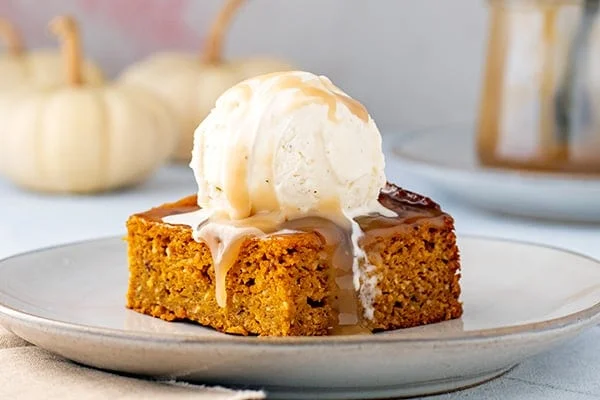
A warmly spiced, gluten-free take on British sticky date pudding, made with pumpkin purée and finished with a coconut-milk caramel sauce. It’s a comforting bake for autumn and winter gatherings, served warm with extra sauce.
Ingredients
- 10pitted Medjool dates
- 240 mlhot water
- 96 galmond meal or almond flour
- 60 gcassava flour or tapioca flour
- 28 gcoconut flour
- 1 teaspoonground cinnamon
- 1 teaspoonground ginger
- ½ teaspoonground nutmeg
- 1 teaspoonbicarbonate of soda
- 1 teaspoonbaking powder
- ½ teaspoonsea salt
- 80 ml, plus extra for greasingcoconut oil, at room temperature or slightly softened, or butter
- 3 largeeggs, at room temperature
- 1 tin (400–410 g)pumpkin purée
- 1 teaspoonvanilla extract
- 1 tinfull-fat coconut milk, refrigerated
- 6 tablespoons (90 ml)maple syrup
- 1 teaspoonvanilla extract
- A pinchsalt
Instructions
- 1
Prepare the dish
Heat the oven to 170°C. Line the base of a 2-litre baking dish (about 20 × 20 cm) with baking parchment and grease the sides with a little oil or butter.
- 2
Soak the dates
Put the pitted dates in a bowl, cover with boiling water and leave for 10–15 minutes to soften.
- 3
Mix the dry ingredients
Whisk the flours, cinnamon, ginger, nutmeg, baking powder, bicarbonate of soda and salt together in a large bowl.
- 4
Blend the dates
Put the dates and 120 ml of their soaking water in a food processor and pulse until fairly smooth. Transfer the paste to a clean bowl; a blender can also be used.
- 5
Beat the wet ingredients
Add 80 ml softened coconut oil, or soft butter, to the date paste and beat with an electric whisk until fluffy and well combined. Beat in the eggs one at a time on medium speed.
- 6
Finish the batter
Turn the mixer to low and beat in half the flour mixture. Add the pumpkin purée and vanilla, then beat in the remaining flour mixture just until combined; do not overmix.
- 7
Bake the pudding
Spoon the batter into the prepared dish and bake for about 40 minutes, until puffed and a skewer inserted in the centre comes out clean. The cake may feel wetter than a standard cake, but the skewer should still come out clean.
- 8
Cook the sauce
While the cake bakes, scoop the thickened cream from the refrigerated coconut milk; this should be about 120 ml. Put it in a small pan with 3–4 tablespoons of the more liquid coconut milk, the maple syrup, vanilla and salt. Cook over medium heat for 15–20 minutes, stirring constantly to prevent burning, until thicker and darker in colour. Set aside to cool; if making ahead, refrigerate in an airtight container.
- 9
Soak and serve
Take the cake out of the oven and pierce the top a few times with a skewer or fork. Warm half the sauce, pour it over the cake and leave to soak for 20 minutes. Serve warm with the remaining sauce and whipped coconut cream or dairy-free ice cream.
What is sticky date pudding?
Sticky date pudding is a British-style baked dessert in which dates give the cake a moist, rich texture, usually paired with a sweet sauce. This version keeps that familiar pudding-and-sauce combination while adding pumpkin and warming spices.
Pumpkin purée adds moisture and a mellow flavour, while almond, cassava and coconut flours make this a grain-free variation. The date paste helps bind the batter and brings sweetness throughout the cake.
Nutrition and macros by portion
The nutrition label shows one serving as written: 367 calories, 7g protein, 39g carbs, 23g fat.
| Portion | Adjustment | kcal | Protein | Carbs | Fat |
|---|---|---|---|---|---|
| Lighter | Smaller slice, less sauce | 257 kcal | 5g | 27g | 16g |
| This serving | As written | 367 kcal | 7g | 39g | 23g |
| Hungry | Larger slice, extra sauce | 551 kcal | 11g | 59g | 35g |
The dates, pumpkin and flours contribute most of the carbohydrates, while coconut oil and the coconut-milk sauce provide much of the fat. Eggs and almond meal contribute protein. Serve a slice with unsweetened coconut cream or dairy-free yoghurt and some fresh fruit for a more balanced plate.
The dates and flours
Soft dates: soaking them in boiling water makes them easier to blend into a smooth paste. Measure out 120 ml of the soaking water for blending, as directed.
Flour blend: almond meal, cassava flour and coconut flour each behave differently, so measure them carefully. Whisk them thoroughly with the raising agents and spices to distribute everything evenly.
Getting the batter right
Date paste: beat it with the softened coconut oil until the mixture looks fluffy and combined before adding the eggs one at a time. Room-temperature eggs are easier to incorporate evenly.
Pumpkin: add it with the vanilla between the two additions of flour. Stop mixing as soon as the last of the flour is incorporated to avoid overworking the batter.
Check the bake
Centre test: the pudding should look puffed, and a skewer inserted in the middle should come out clean after about 40 minutes. Its crumb can seem moister than a conventional cake, so use the skewer rather than judging by dryness alone.
Timing: oven performance and the baking dish can affect how quickly the centre sets. Begin checking around the stated baking time and give it a little longer if the skewer still has wet batter on it.
Make the coconut caramel
Separate the tin: chilling the coconut milk helps its thick cream rise and firm up, making it easier to scoop out. Use a few tablespoons of the thinner milk to loosen the sauce.
Keep stirring: cook the sauce over medium heat for 15–20 minutes, stirring constantly so it does not catch. It is ready when it thickens and darkens in colour, then can be cooled or warmed again for serving.
Soak and serve
Pouring half the warmed sauce over the pierced cake gives it time to soak in during the 20-minute rest. Keep the rest for serving so everyone can add more at the table.
Serve the pudding warm with whipped coconut cream or dairy-free ice cream, as suggested in the method. A cup of tea or coffee also suits its sweet, spiced flavour.
Recipe notes & tips
- Use pitted dates, then check each one before soaking in case any stones remain.
- Save 120 ml of the date-soaking water for blending the dates.
- Bring the eggs to room temperature before mixing for easier incorporation.
- Chill the coconut milk before opening so its thick cream is easier to scoop out.
- Stir the sauce continuously as it cooks to prevent it catching on the bottom of the pan.
- Warm the reserved sauce gently before serving so it pours easily.
Variations
- Butter option: use soft butter in place of the coconut oil if dairy is suitable for your table.
- Tapioca option: use tapioca flour in place of cassava flour as specified in the ingredient list.
- Serving cream: add whipped coconut cream alongside the pudding, as suggested in the method.
- Ice cream: serve with a dairy-free ice cream of your choice for a colder accompaniment.
Common mistakes to avoid
- Skipping the soak: dry dates can be difficult to blend; soften them in boiling water for 10–15 minutes first.
- Using all the soaking water: blend with 120 ml as instructed so the date paste is not made looser than intended.
- Overmixing: beating for too long after adding the flour can affect the texture; stop as soon as it is combined.
- Judging by a dry-looking crumb: this pudding is naturally moist; check that a skewer comes out clean instead.
- Leaving the sauce unattended: it can burn as it thickens; stir constantly over medium heat.
- Pouring on cold sauce: warm half before topping the cake so it can soak in more readily.
How to store
Cool leftovers, cover and refrigerate for up to 3 days. Store extra sauce in an airtight container in the fridge; reheat it gently, and warm individual portions of pudding before serving.
Frequently asked questions
Can I make the sauce ahead?
Yes. Cool it and keep it in an airtight container in the fridge, then warm it gently before serving.
How do I know when the pudding is done?
It should be puffed, and a skewer inserted into the centre should come out clean. The texture may still seem moister than a regular cake.
Can I use butter instead of coconut oil?
Yes. The method allows for soft butter in place of the coconut oil, although that will mean the pudding is no longer dairy-free.
Why is the coconut milk refrigerated?
Chilling helps the thick cream separate from the more liquid coconut milk, so you can scoop it out for the sauce.
Can I use tapioca flour instead of cassava flour?
Yes. Tapioca flour is listed as an alternative to cassava flour in the recipe.
What should I serve with the pudding?
Serve it warm with the remaining coconut caramel and whipped coconut cream or dairy-free ice cream.
Cook it from the original
This recipe comes from cookedandloved.com. Their page has the author’s own photos, notes and tips — the best place to cook it from.
Open the recipe on cookedandloved.com