
Dutch Oven Pot Roast
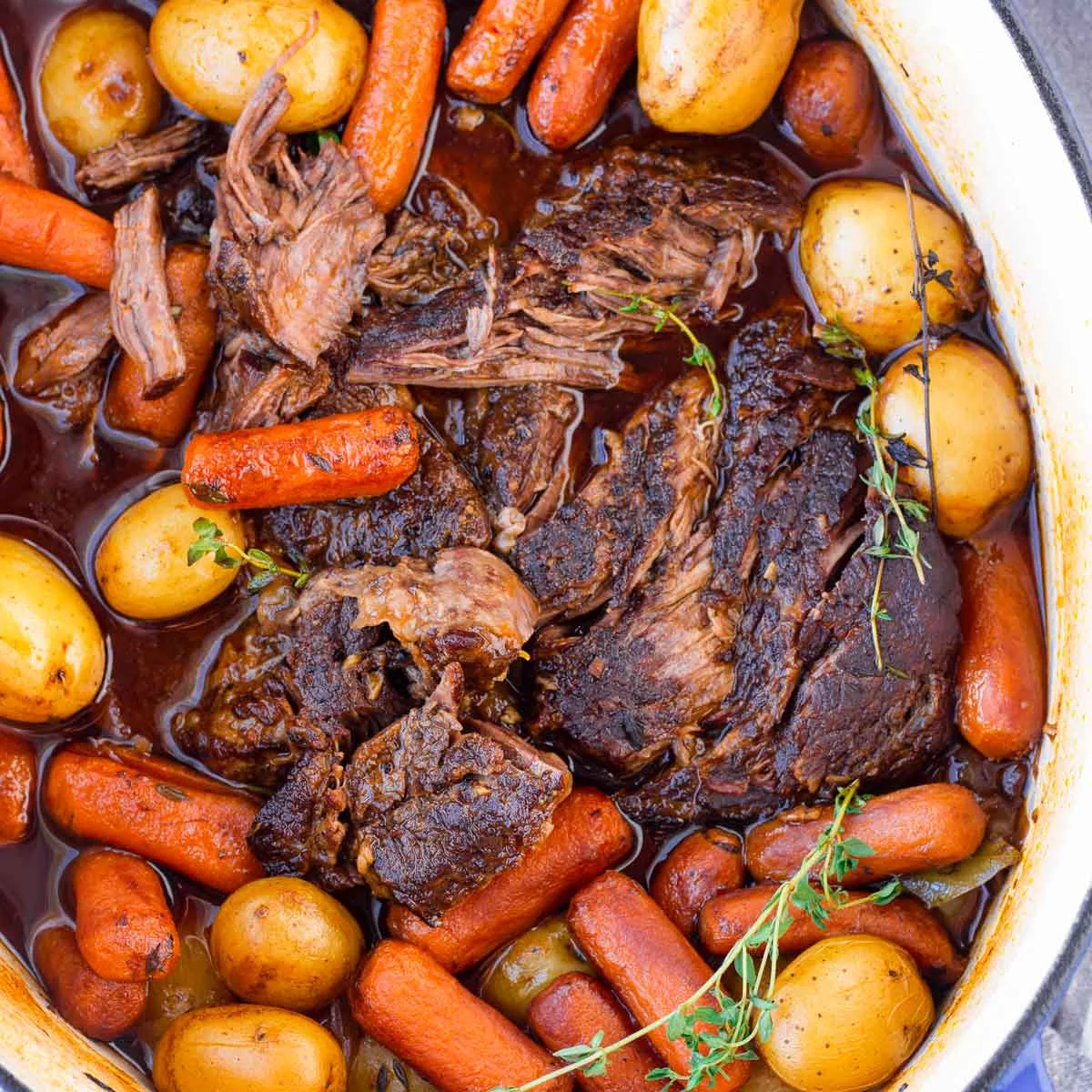
This American-style Dutch oven pot roast slow-cooks beef chuck with onions, herbs, baby carrots and potatoes until tender. It is a comforting one-pot meal, with a rich cooking liquid that brings everything together.
Ingredients
- 1.36 kg (3 lb)boneless beef chuck roast
- 1½ teaspoons, plus more to tastekosher salt
- 1 teaspoonground black pepper
- About 30 ml (2 tablespoons)olive oil
- 2 largeyellow onions, peeled and sliced
- 6 clovesgarlic, minced
- 2 tablespoonstomato paste
- 240 ml (1 cup)red wine (or beef broth)
- 480–720 ml (2–3 cups), plus more as neededbeef broth
- 2 teaspoonsWorcestershire sauce
- 4 sprigsfresh thyme
- 2 sprigsfresh rosemary
- 2dried bay leaves
- 450 g (1 lb)baby carrots
- 680 g (1½ lb)baby yellow potatoes
- To taste (optional)chopped Italian parsley, for garnish
Instructions
- 1
Heat the oven
Preheat the oven to 150°C (300°F).
- 2
Season the beef
Season the roast generously on every side with about 1½ teaspoons of kosher salt and 1 teaspoon of ground black pepper.
- 3
Sear the roast
Heat about 30 ml (2 tablespoons) olive oil in a large 7–8 quart Dutch oven over medium-high heat. Sear the beef for about 5–6 minutes per side, until golden brown, then remove it and set it aside. Leave the browned bits in the pot. Let the roast brown without moving it and turn it once a crust has formed; searing the edges is optional.
- 4
Cook the onions
Lower the heat to medium and add the onions. Cook for about 3 minutes, scraping the bottom and sides of the pot as their moisture loosens the browned bits. If the bits are browning too quickly, add a few splashes of broth. Stir in the minced garlic and cook for 1 minute, until fragrant. Use a wooden spoon to avoid scratching the cast iron.
- 5
Build the braising liquid
Pour in the red wine, or beef broth if substituting, and scrape the browned bits from the pot for a few seconds. Add 480 ml (2 cups) beef broth, Worcestershire sauce, tomato paste, thyme, rosemary and bay leaves. Stir to combine and bring to a low boil.
- 6
Braise the beef
Return the roast and any collected juices to the pot. The liquid should reach about halfway up the meat; add more beef broth if needed. Cover securely and bake at 150°C (300°F) for 1½ hours.
- 7
Add the vegetables
Take the pot out of the oven and add the baby carrots and potatoes. Adjust the seasoning with salt and pepper if needed. Cover and return it to the oven for 2 hours, or until the meat pulls apart easily with a fork and the vegetables are tender. For an even softer roast, cook for another 15–30 minutes.
- 8
Garnish and serve
If you like, garnish with chopped parsley. Serve from the Dutch oven or transfer the roast and vegetables to a large platter.
What is Dutch oven pot roast?
Pot roast is an American braised beef dish: a large cut cooks slowly in a covered pot with a little liquid until it becomes tender. The Dutch oven holds heat well and keeps the meat and vegetables surrounded by a gently simmering cooking liquid.
This version uses chuck roast, onions, wine, herbs, carrots and baby potatoes. Browning the beef first and adding the vegetables later helps build flavour while keeping them from spending the entire braising time in the pot.
Nutrition and macros by portion
The nutrition label shows one serving as written: 609 calories, 48g protein, 33g carbs, 29g fat.
| Portion | Adjustment | kcal | Protein | Carbs | Fat |
|---|---|---|---|---|---|
| Lighter | More carrots, less potato | 426 kcal | 34g | 23g | 20g |
| This serving | As written | 609 kcal | 48g | 33g | 29g |
| Hungry | Larger portion | 914 kcal | 72g | 50g | 44g |
The potatoes and carrots provide most of the carbohydrates, while the beef contributes much of the protein and fat. For a balanced plate, serve a generous portion of the vegetables alongside the roast and add a green salad or another green vegetable.
Choosing the beef and vegetables
Chuck roast: this well-marbled cut suits long, moist cooking, which softens its texture and makes it easy to pull apart. Keep it in one piece for the initial sear and braise.
Baby potatoes and carrots: their small size makes them convenient to add whole. Add them after the first 1½ hours so they have time to become tender without cooking through too early.
Why searing matters
Beef crust: give each side about 5–6 minutes over medium-high heat and wait for a golden-brown surface before turning. Avoid moving the roast around as it sears.
Browned bits: the residue left in the pot carries concentrated flavour. The onions, wine and broth loosen it, so scrape the base gently rather than leaving it behind.
Getting the braising liquid right
Liquid level: start with 480 ml (2 cups) of broth, then check that the liquid comes about halfway up the roast. Add more broth if required; the meat does not need to be fully submerged.
Covered pot: keep the lid securely in place while the roast cooks. This holds in moisture and lets the beef braise slowly rather than dry out.
Checking doneness
Beef: after the total cooking time, test it with a fork. It should pull apart easily; if it still feels firm, continue cooking for 15–30 minutes and check again.
Vegetables: they are ready when a fork goes through them easily but they still hold their shape. If the roast needs extra time, check the vegetables too so they do not become overly soft.
Serving the pot roast
Serve the beef with the carrots and potatoes, spooning some of the savoury cooking liquid over the top. Chopped parsley adds a fresh finish if you have it.
For a fuller plate, pair the dish with a green salad or steamed green vegetables. Crusty bread is another useful accompaniment for the remaining liquid.
Recipe notes & tips
- Pat the beef dry before seasoning to help it brown well.
- Let the roast sear undisturbed before turning it.
- Use a wooden spoon to scrape the pot without scratching the cast iron.
- Check that the braising liquid comes about halfway up the beef before covering the pot.
- Add the vegetables after the first 1½ hours of cooking.
- If the beef is not fork-tender after the stated time, cook it for another 15–30 minutes.
Variations
- Use broth instead of wine: replace the red wine with beef broth when you prefer not to cook with wine.
- Add parsnips: cut them into pieces similar in size to the carrots and add them with the other vegetables.
- Use other potatoes: substitute small waxy potatoes, keeping them whole if they are similarly sized.
- Add mushrooms: stir them in with the carrots and potatoes for an earthy addition.
- Finish with parsley: scatter chopped Italian parsley over the dish just before serving.
Common mistakes to avoid
- Moving the beef too soon: leave it in place until a golden crust forms so it sears instead of sticking and tearing.
- Letting the browned bits burn: lower the heat and loosen them with a splash of broth if they darken too quickly.
- Adding too little liquid: check the level before braising and add broth until it reaches about halfway up the roast.
- Adding the vegetables at the start: wait until the first 1½ hours have passed to help them keep their shape.
- Taking the roast out while it is firm: cook it for another 15–30 minutes and test again with a fork.
How to store
Cool leftovers promptly and refrigerate them in a covered container for up to 3 days. Reheat gently in a covered saucepan or Dutch oven with some of the cooking liquid, until piping hot throughout.
Frequently asked questions
Can I make this without red wine?
Yes. The recipe allows beef broth in place of the 240 ml (1 cup) red wine.
How do I know when the pot roast is done?
The beef should pull apart easily with a fork, and the carrots and potatoes should be tender. If the beef is still firm, return the covered pot to the oven for another 15–30 minutes.
Does the roast need to be covered by liquid?
No. The liquid should come about halfway up the meat. Add broth if needed before covering the pot.
Can I use a different cut of beef?
Chuck roast is the cut specified for this recipe. Other cuts may cook differently, so check for fork tenderness rather than relying only on the timing.
Can I prepare this ahead?
Yes. Refrigerate the cooked roast and vegetables with some cooking liquid, then reheat them gently in a covered pot until piping hot.
Can I cook it longer for softer beef?
Yes. If it is not tender enough after the stated cooking time, continue for another 15–30 minutes and test again.
Cook it from the original
This recipe comes from cookingformysoul.com. Their page has the author’s own photos, notes and tips — the best place to cook it from.
Open the recipe on cookingformysoul.com