
Butternut Squash Risotto
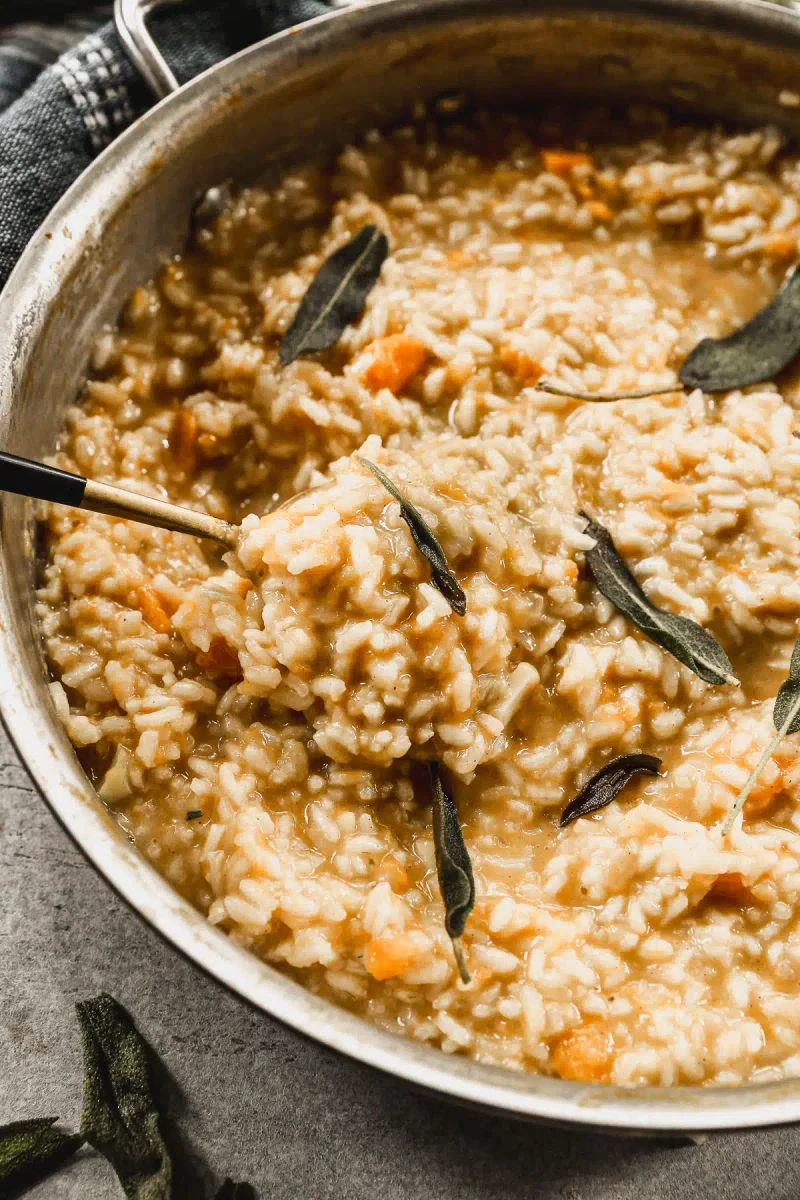
This Italian-inspired butternut squash risotto pairs creamy, slowly cooked rice with sweet roasted squash, nutty brown butter and crisp sage. It takes a little attention at the stove, but the ingredients turn it into a comforting and impressive meal.
Ingredients
- 1 tbspolive oil
- 3 cups (about 420 g)cubed butternut squash
- 2 tsp, dividedkosher salt
- 1/2 tspdried sage
- to tasteblack pepper
- 3butter
- 20fresh sage leaves
- 1 1/2 cups (about 300 g)arborio rice
- 1 largeshallot, minced
- 2 large clovesgarlic, minced
- 1 cup (240 ml)white wine
- 32 oz + 1 1/2 cups (about 1,300 ml)chicken broth
- 1Parmesan cheese rind
- 1 cup (about 100 g)Parmesan
- 2 tbsphoney
Instructions
- 1
Roast squash
Heat the oven to 220°C (425°F). Pour the chicken broth into a large stock pot and bring it to a low simmer. Line a large rimmed baking tray with parchment. Toss the squash with the olive oil, 3/4 tsp salt, pepper and dried sage, then spread it on the tray. Roast for 20–25 minutes, until soft and caramelised.
- 2
Brown butter
Set a large, high-sided frying pan over medium-high heat and add the butter. Once it has melted and begins browning at the edges, swirl the pan until the butter is deep brown and smells nutty. Add the sage leaves and fry for about 30 seconds. Lift them out with a slotted spoon, drain on kitchen paper and sprinkle with salt.
- 3
Toast rice
Return the pan with the brown butter to the hob over medium heat. Add the rice and cook for 2–3 minutes, stirring often, until hot and lightly toasted.
- 4
Soften aromatics
Add the shallot, garlic and 1/2 tsp salt to the rice. Cook for 3–4 minutes, until fragrant and slightly softened.
- 5
Add broth gradually
Pour in the wine, bring to the boil, then lower the heat and simmer until reduced by half. Stir in 1 cup of broth and 1/4 tsp salt with a wooden spoon. Simmer, stirring occasionally, until the liquid has nearly evaporated. Add another 1/2 cup of broth, then continue adding it in 1/2–3/4 cup portions, stirring frequently and letting each addition nearly evaporate before adding the next. Add another 1/4 tsp salt about halfway through cooking.
- 6
Mash in squash
When the squash is soft and caramelised, take it out of the oven. Add half to the partly cooked risotto and continue adding broth as before. Use the spoon to mash the squash into the rice.
- 7
Finish cooking
Continue adding broth and stirring until the risotto is very creamy, the broth is used up and the rice is soft with a slight al dente bite in the centre. If needed, add more chicken stock so the risotto is creamy rather than sticky.
- 8
Season and serve
Just before serving, season generously to taste with salt and pepper. Stir in the remaining squash, Parmesan and honey. Mix well, adjust the seasoning again, and top with the fried sage leaves.
What is butternut squash risotto?
Risotto is an Italian rice dish cooked gradually with liquid until the grains release starch and the mixture turns creamy. This version brings together roasted squash, Parmesan and honey for a sweet-savoury finish.
The method builds flavour in stages: roast the squash for caramelised edges, brown the butter for a nutty note, then cook the rice slowly with wine and broth. Some of the squash is mashed into the rice, while the rest stays in pieces.
Nutrition and macros by portion
The nutrition label shows one serving as written: 365 calories, 11g protein, 56g carbs, 8g fat.
| Portion | Adjustment | kcal | Protein | Carbs | Fat |
|---|---|---|---|---|---|
| Lighter | Less butter and Parmesan | 255 kcal | 8g | 39g | 6g |
| This serving | As written | 365 kcal | 11g | 56g | 8g |
| Hungry | Serve a larger portion | 548 kcal | 17g | 84g | 12g |
The rice and squash provide most of the carbohydrates, while butter and olive oil contribute much of the fat. Chicken broth and Parmesan provide protein, with Parmesan also adding richness. Balance the plate with a green salad or a portion of vegetables.
Choosing the key ingredients
Arborio rice: its short, starchy grains are suited to risotto and help create a creamy texture without needing cream. Keep the grains intact by stirring regularly rather than constantly.
Squash and sage: roasting concentrates the squash’s sweetness, while sage brings an earthy, aromatic contrast. Fresh leaves are fried separately for a crisp topping.
Roasting and browning
Roasted squash: spread the cubes in a single layer so they can soften and caramelise rather than steam. They are ready when tender and browned in spots.
Brown butter: watch closely once the butter starts to colour, swirling the pan to brown it evenly. Take care not to let it burn; its nutty aroma is a useful cue to add the sage.
Getting the risotto texture right
Broth additions: keep the stock at a low simmer so it does not cool the rice each time it is added. Add more when the previous portion has nearly been absorbed.
Doneness: the finished rice should be tender but retain a slight bite in the middle, and the risotto should flow creamy rather than sit in a sticky mass. Add a little more hot stock if it tightens before serving.
Timing the different parts
Roasting and stirring: the squash takes about 20–25 minutes in the oven while you get the risotto started. Keep the stock warm and work through the broth additions as the rice cooks.
Finishing: fold in the Parmesan, honey and reserved squash just before serving. This keeps the squash pieces distinct and gives you a chance to adjust the seasoning at the end.
What to serve with it
A crisp green salad or simply dressed greens add freshness alongside the creamy rice. Roasted or steamed green vegetables also make an easy accompaniment.
Serve the risotto soon after cooking, while it is loose and creamy. The fried sage leaves add a crisp, fragrant finish at the table.
Recipe notes & tips
- Keep the chicken broth at a low simmer while you cook the rice.
- Spread the squash out on the baking tray so it can caramelise.
- Swirl the pan and watch the butter closely as it browns.
- Stir frequently, but allow the rice to absorb each addition of broth before adding more.
- Taste the risotto near the end and adjust the salt and pepper before serving.
Variations
- Use vegetable broth: swap it for the chicken broth for a meat-free version.
- Add extra sage: use a few more leaves as a fragrant garnish.
- Adjust the sweetness: reduce or omit the honey for a less sweet finish.
- Change the cheese: use another hard, finely grated cheese in place of Parmesan.
- Add greens: fold in a handful of spinach near the end of cooking.
Common mistakes to avoid
- Crowding the squash: piled-up pieces tend to steam; spread them in a single layer.
- Burning the butter: it can darken quickly once browning begins; swirl the pan and add the sage as soon as it smells nutty.
- Adding cold broth: it can interrupt the cooking; keep the broth simmering in a separate pot.
- Pouring in too much broth at once: the rice cooks less evenly; add it in measured portions.
- Cooking until the rice is mushy: stop when it is tender with a slight bite in the centre.
How to store
Refrigerate leftovers in a covered container for up to 3 days. Reheat gently in a pan with a splash of broth or water, stirring until creamy and piping hot; the rice will be thicker after chilling.
Frequently asked questions
Can I use pre-cut butternut squash?
Yes. Use 3 cups of cubed squash as listed, and check the pieces towards the end of roasting since their size can affect how quickly they soften.
Can I make this without wine?
You can leave it out and use broth instead. The flavour will differ slightly, so taste and adjust the seasoning as you finish.
How do I know when the risotto is done?
The rice should be soft but still have a slight bite in the centre. The mixture should look creamy and loose, not sticky.
Can I make the risotto ahead?
It is best served freshly cooked, when its texture is creamiest. If you need to prepare ahead, roast the squash in advance and cook the risotto just before serving.
What can I use instead of chicken broth?
Use vegetable broth if you prefer. Keep it warm and add it to the rice in the same gradual way.
Why is the butter browned before cooking the rice?
Browning gives the butter a nutty flavour that complements the squash and sage. Swirl the pan and remove it from the heat if it starts to darken too quickly.
Cook it from the original
This recipe comes from cookingforkeeps.com. Their page has the author’s own photos, notes and tips — the best place to cook it from.
Open the recipe on cookingforkeeps.com