
Cinnamon Maple Scones
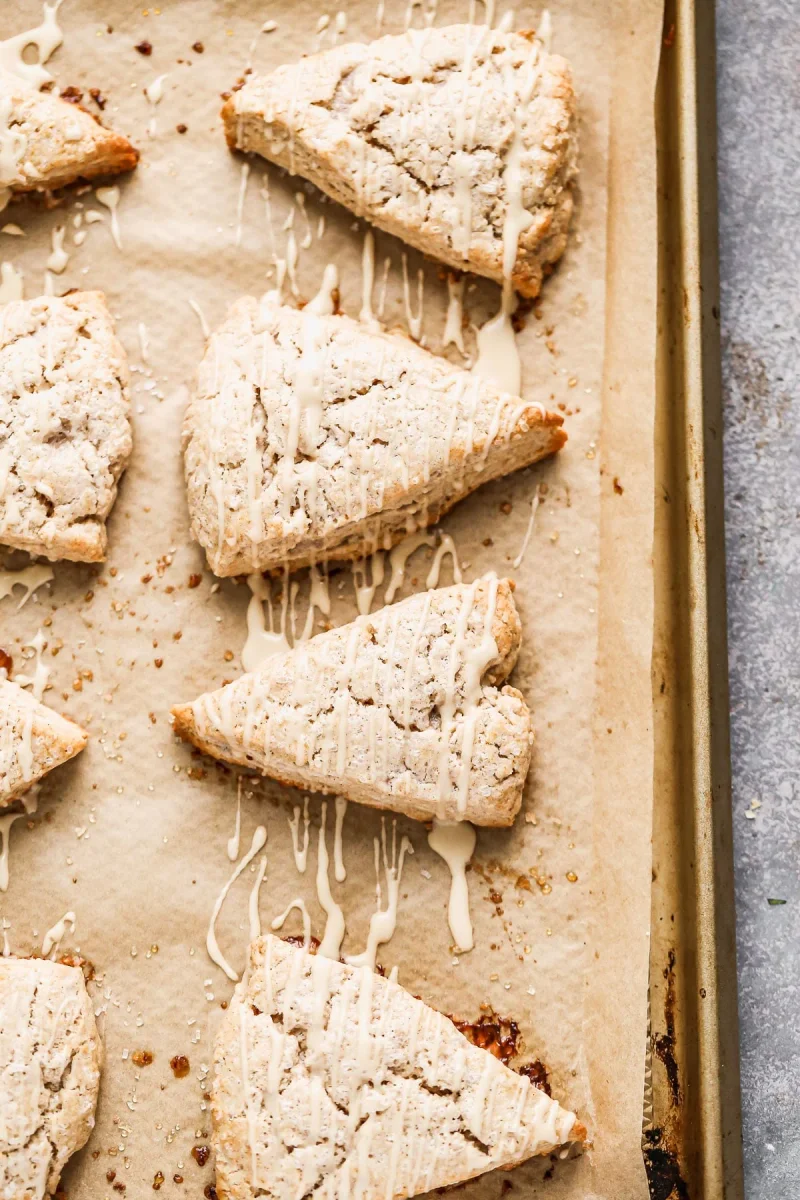
These American-style scones are tender inside with crisp, golden edges, warm cinnamon and a gentle maple sweetness. Keep the butter cold for flaky layers, then finish them with a simple maple glaze.
Ingredients
- 85 gunsalted butter
- 210 ml, plus 30–45 ml for brushingdouble cream
- 45 mlmaple syrup
- 2.5 mlvanilla extract
- 250 gplain flour
- 12 gbaking powder
- 55 g, packedsoft brown sugar
- ¾ tspMaldon sea salt
- 1¼ tspground cinnamon
- To taste, optionalcoarse sugar
- 40 gicing sugar
- 15 mlmaple syrup
- 5 mlmilk or cream
Instructions
- 1
Heat the oven
Heat the oven to 204°C and line a large baking tray with baking paper.
- 2
Chill the butter
Cut the butter into small dice, spread it on a plate and refrigerate it while you prepare the other ingredients.
- 3
Mix the liquids
Whisk the cream, 45 ml maple syrup and vanilla together in a measuring jug, then place the jug in the fridge.
- 4
Combine the dry ingredients
Whisk the flour, baking powder and brown sugar in a large bowl. Add the salt and whisk again.
- 5
Work in the butter
Add the cold butter to the flour mixture. Cut it in with a pastry cutter or fork until most pieces are about the size of peas; a few larger and smaller pieces are fine, and visible butter helps make the scones flaky.
- 6
Bring the dough together
Make a well in the dry ingredients and pour in the chilled liquid. Gently fold with a spatula until the flour is almost incorporated, then turn the dough out onto a very lightly floured surface. If it looks loose, gently bring it together with your hands; it should remain a little shaggy.
- 7
Shape and chill
Working quickly, form the dough into a circle about 2.5 cm thick and cut it into eight wedges with a sharp knife. Chill for 15 minutes, then brush with the remaining cream, using about 30 ml, and sprinkle with coarse sugar if you like.
- 8
Bake the scones
Bake for 10–12 minutes, until puffed and golden at the edges. Take care not to overbake.
- 9
Make the glaze
Whisk the icing sugar with 15 ml maple syrup and 5 ml milk or cream until smooth.
- 10
Glaze and serve
Let the scones cool completely, then drizzle them with the maple glaze.
What are cinnamon maple scones?
Scones are a familiar American bake, often served for breakfast or alongside a cup of tea or coffee. This version brings together cinnamon, maple syrup and a little flaky sea salt for a sweet, gently savoury flavour.
The method relies on cold butter kept in visible pieces, which helps create a crumbly, tender texture. A simple maple glaze adds another layer of maple flavour without making the dough overly sweet.
Nutrition and macros by portion
The nutrition label shows one serving as written: 350 calories, 5g protein, 45g carbs, 18g fat.
| Portion | Adjustment | kcal | Protein | Carbs | Fat |
|---|---|---|---|---|---|
| Lighter | Use less glaze | 245 kcal | 4g | 31g | 13g |
| This serving | As written | 350 kcal | 5g | 45g | 18g |
| Hungry | Serve two scones | 525 kcal | 8g | 68g | 27g |
Flour and sugar provide most of the carbohydrates, while butter and double cream contribute much of the fat and saturated fat. The cream and flour supply a modest amount of protein; serve a scone with yoghurt or fruit for a more balanced plate.
Keep the butter cold
Cold butter: chilling the diced butter before mixing helps it stay distinct in the dough. Work it into the flour until most pieces resemble peas rather than rubbing it in completely.
Cold cream: mixing the cream, maple syrup and vanilla ahead of time and refrigerating them keeps the dough cool as you bring it together.
Handle the dough gently
Light mixing: fold just until the flour is nearly incorporated, then finish bringing the dough together by hand. A slightly shaggy dough is preferable to one that has been worked smooth.
Quick shaping: form and cut the circle while the butter is still cold. If the dough feels soft, the 15-minute chill helps it firm up before baking.
Look for the right bake
Before baking: brush the wedges with cream for a lightly enriched surface, and add coarse sugar if you want a little crunch. The recipe specifies about 30 ml cream for brushing.
Doneness: look for puffed scones with golden edges after 10–12 minutes. Cool them fully before glazing so the icing stays on top rather than melting away.
Maple glaze and serving
Glaze texture: whisk the icing sugar, maple syrup and a little milk or cream until smooth. Add the liquid gradually if you want to keep the glaze thick enough to drizzle.
Serve the scones once the glaze has set, with coffee or tea. Their cinnamon and maple flavours also work well alongside plain yoghurt or fresh fruit.
Timing the bake
Preparation: measure the ingredients and chill the butter and liquid mixture before shaping. The dough then needs 15 minutes in the fridge before it goes into the oven.
Cooling: allow time for the baked scones to cool completely before adding the glaze. This helps the finish remain distinct instead of soaking into the warm crumb.
Recipe notes & tips
- Measure the cream for brushing separately so you do not use all of it in the dough.
- Use a sharp knife to cut the wedges cleanly without pressing the dough flat.
- Keep the flouring on the work surface very light so the dough does not become dry.
- Chill the shaped wedges for the full 15 minutes before baking.
- Check the scones at 10 minutes and remove them once the edges are golden.
- Wait until the scones are completely cool before drizzling on the glaze.
Variations
- Extra cinnamon: add a little more ground cinnamon for a stronger spiced flavour.
- Flaky finish: scatter a small pinch of flaky salt over the glaze before it sets.
- Nutty crunch: fold chopped pecans into the dough for added texture.
- No glaze: leave off the icing for a less sweet finish.
- Coarse topping: sprinkle coarse sugar over the cream-brushed wedges before baking.
Common mistakes to avoid
- Warm butter: it blends into the flour and reduces flakiness; chill the diced pieces before mixing.
- Overworking the dough: this can make the scones firm; stop mixing when it is just brought together.
- Adding too much flour: a heavy dusting can dry out the dough; flour the surface only lightly.
- Skipping the chill: soft dough may spread more; refrigerate the cut wedges for 15 minutes.
- Overbaking: the scones can turn dry; take them out when puffed and golden at the edges.
- Glazing while warm: the icing can melt into the crumb; cool the scones completely first.
How to store
Store cooled, glazed scones in an airtight container at room temperature for up to 2 days, or freeze them for up to 2 months. Thaw at room temperature; warm briefly in a low oven if desired.
Frequently asked questions
Can I prepare the dough ahead?
You can shape the wedges and chill them before baking. Keep them covered in the fridge and bake them while cold.
What if the dough looks crumbly?
That slightly shaggy texture is expected. Gently press it together with your hands rather than kneading it smooth.
Can I use milk instead of cream in the dough?
The recipe uses cream for a richer dough, so replacing it with milk will change the texture. Milk or cream is given as an option for the small amount in the glaze.
How do I know when the scones are done?
They should be puffed, with golden edges, after 10–12 minutes. Avoid waiting for the tops to become deeply browned.
Can I freeze the scones?
Yes. Freeze them once cooled, preferably without the glaze, for up to 2 months. Thaw at room temperature and glaze when ready to serve.
Why does the glaze need to go on after cooling?
Warm scones can cause the glaze to melt and soak into the surface. Cooling them first helps the drizzle remain visible.
Cook it from the original
This recipe comes from cookingforkeeps.com. Their page has the author’s own photos, notes and tips — the best place to cook it from.
Open the recipe on cookingforkeeps.com