
Easy Greek Salad
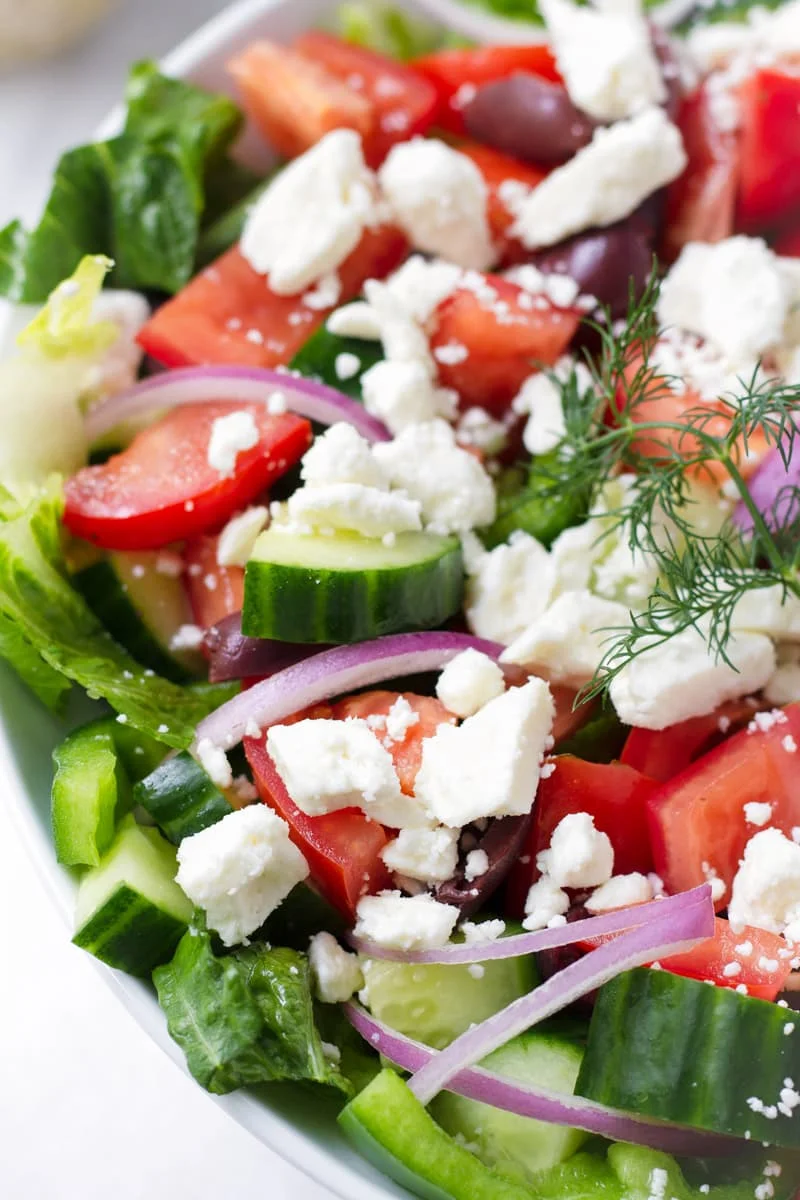
This easy Greek-style salad combines crisp romaine, tomatoes, cucumber, olives, green pepper, red onion and feta with Greek salad dressing. It comes together in 20 minutes and works as a fresh side or a base for a more filling meal.
Ingredients
- 5 to 6 cupschopped romaine lettuce
- 4Roma tomatoes, seeded and diced
- 1English cucumber, diced (peeled if needed)
- 1/2 cupKalamata olives, halved
- 1 smallgreen bell pepper, seeds removed and diced
- 3/4 cupcrumbled feta cheese
- 1/4 cupred onion, thinly sliced
- to tasteGreek salad dressing
Instructions
- 1
Make the dressing
Prepare the Greek salad dressing according to its recipe.
- 2
Toss and serve
Put all the ingredients in a large bowl and toss with the dressing. Serve straight away as a side salad, or add grilled or pan-seared chicken breast to make it a meal.
What is Greek salad?
Greek salad is inspired by the fresh, savoury flavours associated with Greek cooking, especially ripe vegetables, olives and feta. Traditional Greek village salad is often made without lettuce, while this version uses romaine for a crisp, leafy base.
The combination works because the juicy tomatoes and cucumber contrast with salty olives and creamy, tangy feta. A Greek-style dressing brings the ingredients together just before serving.
Nutrition and macros by portion
The nutrition label shows one serving as written: 220 calories, 7g protein, 13g carbs, 16g fat.
| Portion | Adjustment | kcal | Protein | Carbs | Fat |
|---|---|---|---|---|---|
| Lighter | Use less feta and dressing | 154 kcal | 5g | 9g | 11g |
| This serving | As written | 220 kcal | 7g | 13g | 16g |
| Hungry | Add grilled chicken breast | 330 kcal | 11g | 20g | 24g |
The tomatoes, cucumber, pepper and romaine provide most of the carbohydrates, while feta and dressing contribute much of the fat; feta also supplies some protein. For a more balanced plate, serve a portion with grilled chicken breast and keep the dressing to a light coating.
The fresh ingredients
Romaine: its sturdy leaves hold their crunch under the dressing better than softer salad leaves. Chop it into manageable pieces so it mixes evenly with the diced vegetables.
Tomatoes and cucumber: removing the tomato seeds helps keep the bowl from becoming watery. Peel the cucumber if its skin is tough or you prefer a more delicate texture.
Olives and feta: Kalamata olives contribute a briny, fruity note, while crumbled feta adds a creamy, salty finish. Red onion and green pepper round out the mix with sharpness and crunch.
Dress it just before serving
The method is simple, but timing matters: toss the salad with dressing shortly before it reaches the table. This keeps the romaine crisp and avoids drawing too much liquid out of the tomatoes and cucumber.
Start with enough dressing to lightly coat the ingredients, then add more if needed. The feta and olives are already salty, so taste the dressed salad before adding any extra seasoning.
Cut for an even mix
Similar-sized pieces make the salad easier to eat and help every serving include a little of each ingredient. Keep the onion thinly sliced so its sharper flavour is spread throughout rather than concentrated in large pieces.
Halve the olives as listed, and crumble the feta into bite-sized pieces. Toss gently so the feta stays in visible crumbles instead of disappearing into the dressing.
Make it a meal
Serve the salad alongside grilled or pan-seared chicken breast, as suggested, for a more substantial plate. Add the chicken just before serving, either sliced over the top or served alongside.
It also pairs well with warm bread or a simple grain on the side. Keep any accompaniments separate until serving so the salad stays fresh.
Plan the 20 minutes
The stated total time is 20 minutes, including preparation and tossing. Since the dressing is made according to a separate recipe, allow for any additional time that recipe requires.
To make the most of the prep time, chop the vegetables while the dressing is being prepared. Keep the salad ingredients chilled if you are not serving them immediately.
Recipe notes & tips
- Dry the romaine well after washing so the dressing clings rather than pools.
- Seed the tomatoes to reduce excess liquid in the bowl.
- Slice the red onion thinly for a gentler, more even bite.
- Add dressing gradually and toss again before deciding whether the salad needs more.
- Wait until just before serving to combine the dressing with the vegetables.
- Taste before adding extra salt, as feta and olives bring plenty of savoury flavour.
Variations
- Add chicken: top with grilled or pan-seared chicken breast for a more filling salad.
- Use another lettuce: swap romaine for crisp cos lettuce if that is what you have.
- Add fresh herbs: scatter over chopped parsley or oregano for an aromatic note.
- Make it more substantial: serve with warm bread or a cooked grain on the side.
- Adjust the onion: use less red onion for a milder flavour, or leave it out if preferred.
Common mistakes to avoid
- Dressing too early: the leaves can soften; toss the salad shortly before serving.
- Wet lettuce: excess water dilutes the dressing; dry the leaves thoroughly.
- Watery tomatoes: their seeds can make the salad wet; remove them before dicing.
- Too much dressing at once: the vegetables can become heavy; add it gradually.
- Overmixing the feta: it can break down into the dressing; toss gently to keep the crumbles intact.
How to store
Store undressed salad in an airtight container in the fridge and use within 1 day for the best texture. If already dressed, refrigerate and eat as soon as possible, as the vegetables and romaine will soften; this salad is best served cold and does not need reheating.
Frequently asked questions
Can I make this Greek salad ahead?
You can chop the vegetables and store them covered in the fridge, but keep the dressing separate. Toss everything together just before serving to preserve the romaine's crunch.
Should I peel the cucumber?
Peeling is optional. Peel it if the skin is thick or tough, or leave it on for extra colour and crunch.
How do I stop the salad becoming watery?
Seed the tomatoes, dry the lettuce well and dress the salad shortly before eating. These steps help keep excess moisture out of the bowl.
Can I serve this as a main course?
Yes. Add grilled or pan-seared chicken breast, as suggested in the method, to make it more substantial.
Can I use a different type of olive?
Kalamata olives are specified for their distinctive briny flavour, but another pitted olive can be used if needed. The taste of the finished salad will vary.
Cook it from the original
This recipe comes from cookingformysoul.com. Their page has the author’s own photos, notes and tips — the best place to cook it from.
Open the recipe on cookingformysoul.com