
Oil-free capirotada in just 5 steps
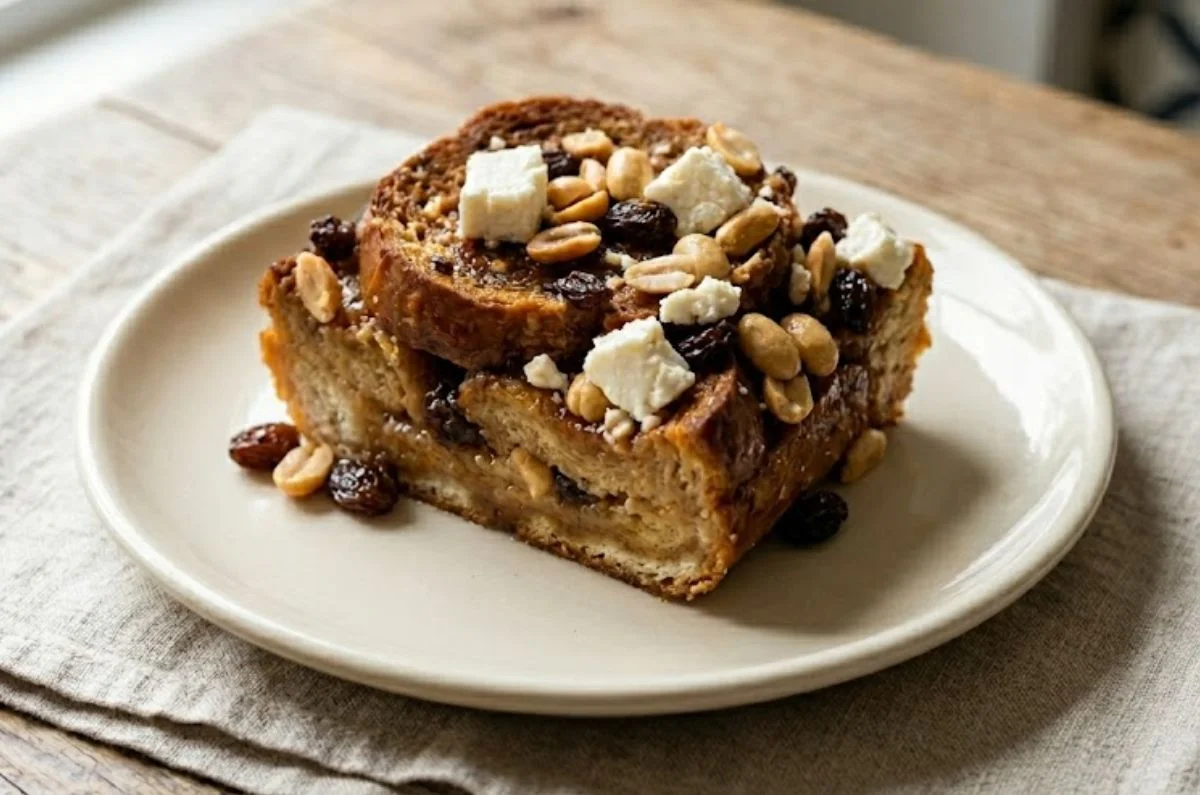
Capirotada is a layered Mexican bread pudding made here with bolillo, piloncillo syrup, raisins, peanuts and fresh cheese. Toasting the bread in the oven instead of frying it keeps the method simple, while the syrup softens the layers as they bake.
Ingredients
- 6 slicesbolillo or French bread, preferably a day old
- 200 gpiloncillo, chopped; reduce the amount if you prefer it less sweet
- 480 ml (2 cups)water
- 1 stickcinnamon
- 2whole cloves
- 40 g (¼ cup)raisins
- 36 g (¼ cup)roasted peanuts
- 100 gfresh cheese, crumbled
- Optional, to tastebutter spray
Instructions
- 1
Make the syrup
Put the water and chopped piloncillo in a medium saucepan. Add the cinnamon stick and cloves, then heat over medium, stirring occasionally, until the piloncillo has fully dissolved, about 10 minutes. Take the pan off the heat and strain out the spices. Set the syrup aside.
- 2
Toast the bread
Heat the oven to 180°C (350°F). Cut the bolillo into 2 cm slices and arrange them on an ungreased baking tray. If you like, apply a little butter spray for extra browning. Bake for 8–10 minutes, turning the slices halfway through, until crisp and lightly golden.
- 3
Layer the ingredients
Arrange half the toasted bread in a medium baking dish. Scatter over half the raisins and peanuts, pour on half the piloncillo syrup so the slices are well soaked, then add half the crumbled cheese. Repeat with the remaining ingredients to make a second layer.
- 4
Let it rest
Leave the assembled capirotada to rest for 15 minutes so the bread can absorb the syrup. During this time, heat the oven to 180°C again if needed.
- 5
Bake until ready
Cover the dish with foil and bake for 15 minutes. Remove the foil and bake for another 10 minutes, until the top is lightly browned, the cheese has melted and the edges are crisp. Leave to cool for 5 minutes before serving.
What is capirotada?
Capirotada is a Mexican bread pudding, often made with bread, syrup and a mixture of sweet and savoury toppings. It is particularly associated with Lent, though recipes and toppings vary from household to household.
This version layers bolillo with piloncillo syrup, raisins, peanuts and fresh cheese. Baking the bread rather than frying it gives the pudding toasted edges without adding frying oil.
Nutrition and macros by portion
The nutrition label shows one serving as written: 200 calories, 0g protein, 0g carbs, 0g fat.
| Portion | Adjustment | kcal | Protein | Carbs | Fat |
|---|---|---|---|---|---|
| Lighter | Omit butter spray | 140 kcal | 0g | 0g | 0g |
| This serving | As written | 200 kcal | 0g | 0g | 0g |
| Hungry | Serve a larger portion | 300 kcal | 0g | 0g | 0g |
The bread and piloncillo provide most of the carbohydrates, while the peanuts and optional butter spray contribute fat. The cheese and peanuts also provide some protein. Pair a portion with fresh fruit for a more balanced plate.
The bread and syrup
Day-old bread: Slightly stale slices hold their shape as they soak up syrup. Cut them to an even 2 cm thickness so they toast and soften at a similar rate.
Piloncillo: Dissolving it with cinnamon and cloves makes a fragrant syrup that seasons the whole dish. Straining out the spices before layering keeps their flavour without leaving whole cloves in the pudding.
Toast before layering
Even slices: Spread the bread in a single layer on an ungreased tray and turn it halfway through the 8–10 minute bake. Look for a crisp surface and light golden colour rather than deep browning.
Optional spray: A little butter spray adds richness and can encourage browning, but it is not essential to the method. Leave it out for the oil-free version.
Build balanced layers
First layer: Use half of each topping and half the syrup, then repeat with the rest. Sharing the ingredients between the layers helps distribute the raisins, peanuts and cheese throughout the dish.
Syrup coverage: Pour it over the bread rather than only into the corners of the dish. The 15-minute rest gives the slices time to absorb it before baking.
Check the texture
Ready to serve: After baking, the cheese should have melted and the edges should be crisp. The inside will be softer where the bread has absorbed the syrup.
Resting time: Leave the dish to cool for 5 minutes before serving. This short pause lets the hot syrup settle and makes the portions easier to lift.
Serving suggestions
Capirotada is sweet and filling, so serve it warm as a dessert or a small snack. A modest portion alongside fresh fruit can make a more balanced plate.
The recipe does not specify a drink pairing; coffee or tea can be served alongside if you like.
Recipe notes & tips
- Use day-old bread if available so the slices are less likely to fall apart when soaked.
- Cut the bread into even 2 cm slices for more consistent toasting.
- Stir the syrup occasionally while the piloncillo dissolves.
- Strain the syrup before pouring it over the bread to remove the cinnamon and cloves.
- Divide the syrup and toppings evenly between the two layers.
- Let the baked dish cool for 5 minutes before serving.
Variations
- Less sweetness: Use less piloncillo in the syrup to suit your taste.
- Skip the spray: Leave out the optional butter spray for an oil-free preparation.
- Extra cinnamon: Add another cinnamon stick while making the syrup, then strain it out.
- More raisins: Increase the raisins and distribute them between both layers.
- Nut-free: Leave out the peanuts if needed, noting that this changes the recipe's texture.
Common mistakes to avoid
- Skipping the toast: Untoasted bread may turn very soft; bake the slices until crisp and lightly golden first.
- Uneven slices: Different thicknesses toast inconsistently; cut the bread into slices about 2 cm thick.
- Pouring all the syrup in one spot: Some bread may stay dry; distribute half over each layer.
- Leaving whole spices in the dish: They can be unpleasant to bite into; strain the syrup before assembling.
- Baking without the rest: The bread has less time to absorb the syrup; let the assembled dish stand for 15 minutes.
- Serving straight from the oven: The hot syrup can burn; wait 5 minutes before serving.
How to store
Refrigerate leftovers in a covered container and use within 3 days. Reheat portions in the oven until warmed through, or microwave them briefly; the edges will be less crisp after storage.
Frequently asked questions
Can I make capirotada without butter spray?
Yes. The spray is optional, and the bread can be toasted on an ungreased tray as described.
Can I use fresh bread?
Yes, although day-old bread is preferable because it is less delicate when toasted and soaked. Watch fresh bread closely as it toasts.
How do I know when the capirotada is done?
The cheese should have melted and the edges should be crisp after the covered and uncovered baking stages.
Why does the dish rest before baking?
The 15-minute rest lets the toasted bread absorb some of the piloncillo syrup before it goes into the oven.
Can I reduce the piloncillo?
Yes. The ingredient list allows for using less if you prefer a less sweet pudding.
Can I prepare it ahead?
You can assemble it and leave it to rest for the specified 15 minutes before baking. For best texture, bake shortly before serving.
Cook it from the original
This recipe comes from cocinavital.mx. Their page has the author’s own photos, notes and tips — the best place to cook it from.
Open the recipe on cocinavital.mx