
Vanilla Bean Macarons
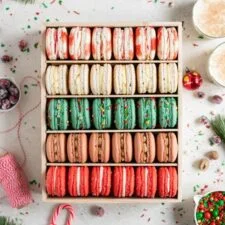
These vanilla bean French macarons are crisp, delicate almond meringue shells with a chewy centre. They make a versatile starting point for adding colour or pairing with a filling of your choice.
Ingredients
- 170 gground almonds
- 300 gicing sugar
- 180 gegg whites, at room temperature
- 160 gsugar
- 1 tspvanilla bean paste
Instructions
- 1
Prepare the oven
Heat the oven to 150°C (300°F) with a rack in the centre. Use a round cutter or the base of a piping tip about 4 cm (1.5 inches) across to draw circles on parchment, leaving about 2 cm (¾ inch) between them.
- 2
Sift dry ingredients
Mix the ground almonds and icing sugar in a large bowl. Sift the mixture twice to remove large lumps and aerate it, then set aside.
- 3
Whip the meringue
Using a stand mixer with a whisk attachment, whip the egg whites on medium speed until foamy. Add the sugar gradually, raise the speed and whip until the meringue begins to firm up. If using gel colouring, add a few drops at a time. Mix in the vanilla bean paste, then continue whipping until stiff peaks form.
- 4
Fold in almonds
Take the bowl off the mixer. Add half of the almond and icing sugar mixture, then fold it into the meringue, deflating it slightly as you combine them.
- 5
Mix the batter
Add the remaining almond mixture and stir gently to combine. Fold by scooping from the bottom and spreading the batter against the side of the bowl; turn the bowl a little and repeat to deflate it gradually.
- 6
Check consistency
Lift the spatula to check that the batter flows like lava and can form a figure eight without breaking. Take care not to overmix; piping will mix the batter a little more.
- 7
Pipe the shells
Fit a large piping bag with a medium round tip, such as an Ateco #805. Put the macaron template on a baking sheet and cover it with another sheet of parchment. Hold the bag at 90° and pipe rounds to the size of the drawn circles, finishing each with a small wrist flick. Remove the template.
- 8
Release air bubbles
Hold the baking sheet with both hands and tap it evenly and firmly against the work surface. Repeat a few times to release air bubbles, flatten points and help the rounds spread slightly.
- 9
Pipe remaining batter
Continue piping and tapping until all the batter is used; the recipe usually fills three baking sheets.
- 10
Dry the shells
Leave the piped macarons at room temperature for about 30 minutes, or until they have formed a skin that does not stick to your finger. The drying time will vary with humidity.
- 11
Heat a spare tray
About 15 minutes before baking, put a spare baking sheet in the oven to heat. Bake one tray at a time, placing the tray of macarons on top of the hot spare sheet.
- 12
Bake the macarons
Bake for about 18 minutes, rotating the tray once and checking from 15 minutes. Look for a ruffled foot and shells that have baked without browning. Press a shell lightly: if its foot gives way, bake a little longer; if stable, it is close to done.
- 13
Check the base
Test whether a shell lifts cleanly from the parchment. If it does, the macarons are done; if it is stable but still stuck, bake for about another minute. The exact timing depends on your oven.
- 14
Cool the shells
Take the tray out and cool the shells on it for 10 minutes. Peel them from the parchment and cool completely on a wire rack. Bake the remaining trays in the same way, using the heated spare sheet underneath.
- 15
Freezer release
If a shell will not peel away cleanly, put it on its parchment in the freezer for 5–10 minutes, then peel it off.
- 16
Store airtight
Once completely cool, keep the macarons in an airtight container until ready to use.
What are French macarons?
French macarons are small meringue-based almond shells, typically baked with smooth tops and frilled feet. They are associated with French pâtisserie, though their history has older Italian roots.
This version uses vanilla bean paste for a simple, fragrant base. The shells can be served as they are or paired with a filling once cool.
Nutrition and macros by portion
The nutrition label shows one serving as written: 118 calories, 3g protein, 23g carbs, 4g fat.
| Portion | Adjustment | kcal | Protein | Carbs | Fat |
|---|---|---|---|---|---|
| Lighter | Serve fewer shells | 83 kcal | 2g | 16g | 3g |
| This serving | As written | 118 kcal | 3g | 23g | 4g |
| Hungry | Add a filled macaron | 177 kcal | 5g | 35g | 5g |
The main carbohydrates come from the icing sugar and sugar, while ground almonds contribute most of the fat and some protein. Egg whites add further protein with little fat. Pair a couple of shells with fresh fruit or yoghurt for a more varied plate.
The almond and sugar mixture
Fine texture: Sifting the ground almonds and icing sugar twice helps remove larger lumps, which can leave the shells uneven.
Even mix: Combine the two dry ingredients before adding them to the meringue so the almond is distributed throughout.
Build a stable meringue
Room-temperature whites: These whip more readily than cold egg whites, so bring them to room temperature before starting.
Stiff peaks: Add the sugar gradually, then whip until the meringue holds firm peaks. Fold gently at first to avoid losing all the air.
Getting the batter right
Fold and turn: Scoop from the bottom, spread the batter against the bowl and rotate the bowl slightly. This combines the mixture while gradually deflating it.
Flow cue: The batter should fall from the spatula in a slow ribbon that can form a figure eight without breaking. Stop when it reaches this stage; overmixing can make it too runny.
Drying and piping
Even rounds: Piping at a right angle over a template helps keep the shells consistent in size. A small finishing flick may leave a point, which tapping the tray can help flatten.
Skin check: Let the piped rounds sit for about 30 minutes, then touch one gently. It should feel dry on the surface and not cling to your finger.
Baking and doneness
Double tray: A preheated spare baking sheet under the macaron tray is part of this method and is intended to help the shells bake evenly.
Check carefully: The shells should develop feet without browning. A stable foot and a shell that releases cleanly from the parchment are useful signs that they are ready.
Serving ideas
Filling choice: These are unfilled shells, so you can pair them with buttercream, ganache or jam once completely cool.
With a drink: Serve them with tea or coffee, or arrange them alongside other small desserts for a pâtisserie-style plate.
Recipe notes & tips
- Weigh the egg whites and dry ingredients accurately for more consistent results.
- Make sure the mixer bowl and whisk are clean before whipping the egg whites.
- Use the same template under the parchment each time to keep the rounds a consistent size.
- Tap the baking sheet firmly but evenly to help release trapped air.
- Drying time can change with humidity, so check for a non-sticky skin rather than relying only on the clock.
- Bake one sheet at a time and rotate it once during baking.
Variations
- Add colour: Mix a few drops of gel food colouring into the meringue before folding in the almonds.
- Try another extract: Replace the vanilla bean paste with a different flavouring that suits your chosen filling.
- Make chocolate shells: Replace part of the dry mixture with cocoa powder, keeping the overall dry proportions balanced.
- Fill with ganache: Sandwich cooled shells with chocolate ganache for a richer version.
- Add fruit: Use a small amount of thick fruit jam as the filling, keeping it away from the shell edges.
Common mistakes to avoid
- Lumpy dry mix: Sift the ground almonds and icing sugar twice before combining with the meringue.
- Underwhipped meringue: Continue whipping until it holds stiff peaks before folding in the dry ingredients.
- Overmixed batter: Stop folding once it flows slowly and forms a figure eight without breaking.
- Sticky shells: Give the piped rounds more time to dry until a skin forms that does not cling to a fingertip.
- Browning shells: Check them from 15 minutes and use the foot and stability checks to judge doneness.
- Shells stuck to parchment: Bake for about another minute if they are stable but do not lift cleanly, or use the freezer method after cooling.
How to store
Keep completely cooled shells in an airtight container until ready to use. For longer storage, freeze them in an airtight container and thaw before filling or serving.
Frequently asked questions
How do I know when the batter is mixed enough?
It should flow slowly from the spatula and form a figure eight without breaking. Stop once it reaches that consistency, as continued mixing can make it too loose.
Why do the macarons need to dry before baking?
Drying forms a skin on the surface of the piped shells. In this recipe, they are ready when a gentle touch does not stick to them.
Can I make these without a stand mixer?
A hand mixer can whip the egg whites, though it may take longer. Watch for the same stiff-peak cue before folding in the dry mixture.
Why are my shells sticking to the parchment?
They may need a little more baking time. If they seem stable but will not peel away cleanly, follow the recipe's freezer method: chill them on the parchment for 5–10 minutes, then peel.
Can I add food colouring?
Yes. The method suggests gel colouring, added a few drops at a time while whipping the meringue, before folding in the dry ingredients.
Are these macarons filled?
No, this recipe makes the shells only. Let them cool completely before sandwiching them with a filling of your choice.
Cook it from the original
This recipe comes from cloudykitchen.com. Their page has the author’s own photos, notes and tips — the best place to cook it from.
Open the recipe on cloudykitchen.com