
Cold Matcha Zenzai 冷たい抹茶ぜんざい
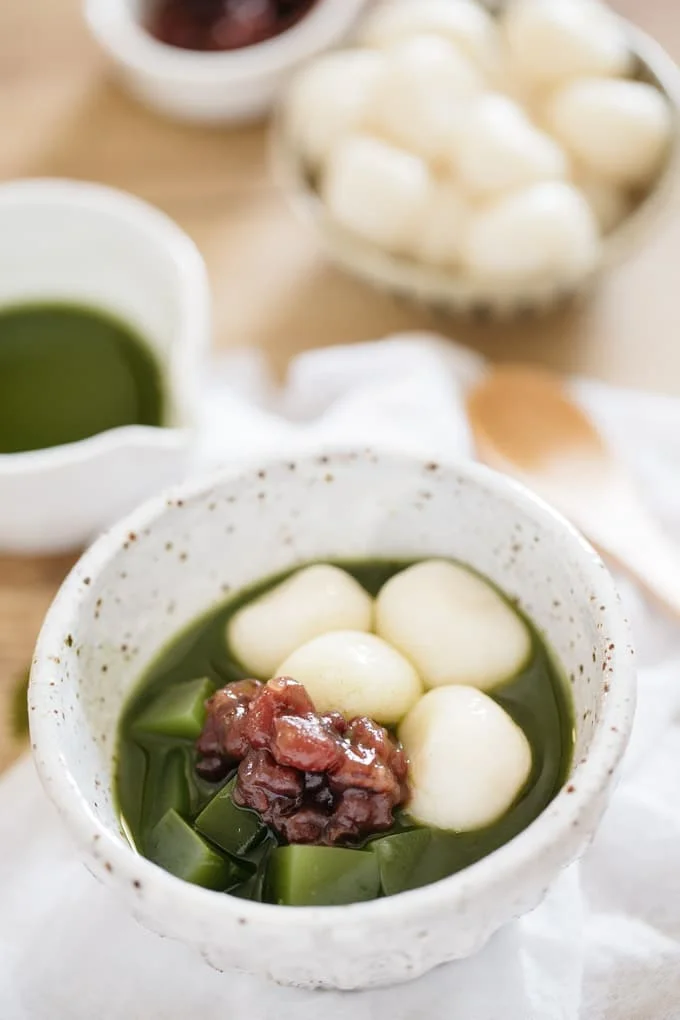
Cold Matcha Zenzai is a Japanese dessert of chilled matcha jelly, chewy mini mochi and sweet azuki bean paste, finished with matcha syrup. It makes a refreshing, make-ahead treat with contrasting textures and a gentle matcha bitterness.
Ingredients
- 2 gpowdered gelatine
- 300 mlwater
- 2 tbspicing sugar
- 2 tbspmatcha powder
- 1 tbsphot water
- 160 g (1 cup)glutinous rice flour
- 120 ml (½ cup)water
- 1 tbspmatcha
- 2 tbspwhite sugar
- 250 mlhot water
- 1 canready-made sweet azuki bean paste
- to tastekinako (roasted soya bean powder), optional
Instructions
- 1
Mix matcha paste
For the jelly, whisk the matcha powder and icing sugar together in a small cup, then vigorously whisk in about 1 tbsp hot water until they form a smooth paste. Set aside.
- 2
Make matcha jelly
Put 300 ml water and the gelatine in a saucepan and heat over medium heat. When the gelatine has dissolved, stir in the matcha paste. Take the pan off the heat, pour the mixture into a shallow container and let it cool briefly, then refrigerate for at least 30 minutes to set.
- 3
Mix mochi dough
Put the glutinous rice flour in a bowl and gradually stir in water until the mixture forms a soft dough. You may not need all the water, or may need a little more; aim for a dough that is firm but still soft.
- 4
Cook mochi balls
Bring a large pot of water to the boil. Roll the dough into small balls and drop them into the boiling water. When they rise to the surface, scoop them out into a bowl of cold water.
- 5
Divide the mochi
Drain away the cold water, divide the mochi balls among four small bowls and set aside.
- 6
Make matcha syrup
Whisk the matcha and white sugar together in a cup to break up any lumps. Gradually stir in 250 ml hot water. Let the syrup cool, then refrigerate it for 30 minutes.
- 7
Assemble bowls
Cut the set jelly into small pieces and divide it among four bowls. Add the mochi balls and top with sweet azuki bean paste. Pour over the matcha syrup and add kinako if you like.
What is cold matcha zenzai?
Zenzai is a Japanese sweet commonly served with azuki beans and mochi. This chilled version layers sweet bean paste with matcha jelly and small chewy rice-flour dumplings.
The recipe brings together familiar Japanese dessert ingredients in a cool bowl. The jelly and syrup give the matcha two textures, while the beans add sweetness and the mochi adds chew.
Nutrition and macros by portion
The nutrition label shows one serving as written: 221 calories, 8g protein, 42g carbs, 0g fat.
| Portion | Adjustment | kcal | Protein | Carbs | Fat |
|---|---|---|---|---|---|
| Lighter | Use less bean paste | 155 kcal | 6g | 29g | 0g |
| This serving | As written | 221 kcal | 8g | 42g | 0g |
| Hungry | Add extra mochi | 332 kcal | 12g | 63g | 0g |
The carbohydrates come mainly from the rice flour, sugars and sweet azuki paste; the paste and rice flour also contribute some protein. Most of the fat is likely to come from the bean paste and optional kinako, though the supplied nutrition lists fat as 0 g per serving. For a more balanced plate, serve a modest bowl after a meal that includes savoury vegetables and a protein source.
Building a smooth matcha base
Matcha paste: whisking the powder with icing sugar first helps break up clumps before liquid is added. Make a smooth paste with the small amount of hot water, then mix it into the gelatine liquid.
Syrup: combine the matcha and sugar before gradually adding hot water. Stir as you pour so the powder disperses evenly.
Getting the mochi dough right
Add water gradually: the flour's absorption can vary, so the full stated amount may not be needed. Stop when the dough holds together and feels soft but firm enough to roll.
Small balls: keep the pieces similar in size so they cook at about the same pace. Their rise to the surface is the recipe's cue to scoop them out.
Setting and chilling
Jelly: let the mixture cool briefly before putting it in the fridge, then give it at least 30 minutes to set. Cut it into small pieces once firm enough to handle.
Syrup: allow it to cool before refrigerating for 30 minutes. The chilling steps can overlap, which helps keep the overall preparation practical.
Balancing the flavours
Matcha: its earthy, slightly bitter character balances the sweetness of the bean paste and syrup. Whisk it thoroughly to avoid dry pockets or lumps.
Azuki paste: spoon it over the jelly and mochi so each bowl gets a little of every component. Kinako is an optional finishing touch, as noted in the method.
Serving the dessert
Serve the bowls chilled, with the syrup poured over just before eating. This keeps the jelly cool and lets the mochi remain distinct from the sauce.
The dessert is substantial enough to serve on its own after a meal. For a Japanese-style spread, offer it alongside unsweetened green tea.
Recipe notes & tips
- Sift or whisk the matcha and icing sugar together before adding water to help prevent lumps.
- Add the mochi dough water a little at a time, since you may not need the full amount.
- Keep the mochi balls small and similar in size for more even cooking.
- Use the rise to the water's surface as the cue to remove the mochi.
- Chill the jelly and syrup fully before assembling for a properly cold dessert.
- Add kinako only if you enjoy its roasted soya flavour; it is optional in the method.
Variations
- Adjust the sweetness: use less bean paste in each bowl for a less sweet finish.
- More kinako: dust the assembled bowls with roasted soya bean powder for a nuttier note.
- Stronger matcha: add a little more matcha to the syrup, whisking it smooth before pouring.
- Larger mochi: roll fewer, slightly larger balls, allowing them to cook until they rise to the surface.
- Serve separately: present the syrup at the table so each person can pour on the amount they prefer.
Common mistakes to avoid
- Lumpy matcha: whisk the powder with the sugar first, then add the liquid gradually.
- Watery dough: add the water in small increments and stop once the flour forms a soft, rollable dough.
- Uneven mochi: make the balls a similar size so they cook at a similar rate.
- Underset jelly: leave it in the fridge for at least 30 minutes and check that it has firmed before cutting.
- Warm syrup: let it cool before chilling, then refrigerate it for the stated 30 minutes.
- Overfilled bowls: divide the jelly and mochi evenly among four bowls, then add the toppings.
How to store
Keep the jelly, syrup and cooked mochi covered in the fridge and assemble shortly before serving. The recipe does not specify a storage life; for best texture, enjoy the assembled dessert promptly, as mochi can firm up during storage. Do not reheat this chilled dessert.
Frequently asked questions
Can I make the jelly and syrup ahead?
Yes. Both are chilled before assembly, so you can prepare them in advance and keep them covered in the fridge. Assemble the bowls when you are ready to serve.
How do I know when the mochi balls are cooked?
The method uses their rise to the surface of the boiling water as the cue. Scoop them out when they float and place them in cold water.
Do I need to use all the water for the mochi?
No. Add it gradually and stop once the dough is soft, firm and holds together for rolling. The amount needed can vary.
Can I leave out the kinako?
Yes. It is an optional topping in the method, so the dessert can be served without it.
Can I use sweet azuki beans instead of bean paste?
The recipe specifies ready-made sweet azuki bean paste. Whole sweet azuki beans would give the topping a different texture.
How long does the jelly need to chill?
Refrigerate it for at least 30 minutes, as stated in the method, and check that it has set before cutting it into pieces.
Cook it from the original
This recipe comes from chopstickchronicles.com. Their page has the author’s own photos, notes and tips — the best place to cook it from.
Open the recipe on chopstickchronicles.com