
Wild Rice Chirashizushi ワイルドライスのちらし寿司
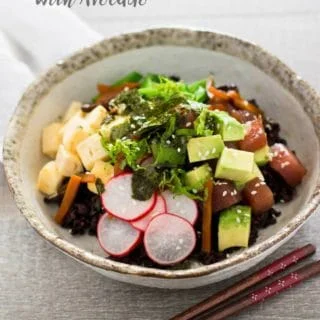
Wild rice chirashizushi is a colourful scattered sushi bowl topped with tuna, avocado, egg and vegetables. It makes a substantial Japanese-inspired meal, with different textures and flavours in every forkful.
Ingredients
- 185 g (1 cup)uncooked wild rice
- 2 sheetsnori
- 3eggs
- 1Australian avocado
- 150 gsashimi-grade tuna
- 2radishes
- 20 gdried shiitake mushrooms
- 30 gcarrots
- 30 gsugar snap peas
- 100 mlwater from soaking the mushrooms
- 30 ml (2 tbsp)sugar
- 30 ml (2 tbsp)sake
- 30 ml (2 tbsp)soy sauce
- To tastesushi vinegar (ingredients and quantities not specified)
- To tasteshiso leaves
Instructions
- 1
Soak the mushrooms
Place the dried shiitake mushrooms in a cup of water and leave them to soak.
- 2
Cook the rice
Cook 185 g (1 cup) of wild rice in a rice cooker.
- 3
Prepare the peas
Parboil the sugar snap peas, slice them thinly and set them aside.
- 4
Cook the eggs
Make Japanese rolled egg and cut it into small cubes. If you cannot make a rolled omelette, cook the eggs flat and slice them into thin strips instead.
- 5
Cut the tuna
Cut the sashimi-grade tuna into cubes.
- 6
Dice the avocado
Cut the Australian avocado into cubes and set it aside.
- 7
Make sushi vinegar
Put the sushi vinegar ingredients in a small saucepan and bring them to the boil over medium heat. Turn off the heat and leave the mixture to cool. The recipe does not specify the vinegar ingredients or their quantities.
- 8
Mix the sauce
Put 100 ml of the mushroom soaking water, 30 ml (2 tbsp) sugar, 30 ml (2 tbsp) sake and 30 ml (2 tbsp) soy sauce in a saucepan.
- 9
Simmer the vegetables
Add the sliced mushrooms and carrots to the saucepan. Bring the sauce to the boil, then reduce the heat to low and simmer until most of the liquid has reduced and the carrots are soft.
- 10
Cool the vegetables
Take the pan off the heat and leave its contents to cool.
- 11
Season the rice
When the rice is cooked, pour the sushi vinegar over it. Use a wooden spatula in a cutting motion to mix it through.
- 12
Assemble the bowls
Divide the rice between four plates. Scatter over the prepared toppings, then garnish with thinly sliced shiso leaves and pieces of nori.
What is chirashizushi?
Chirashizushi means scattered sushi: seasoned rice served with toppings arranged over it rather than rolled. It is a Japanese dish with many regional and household variations.
This version pairs wild rice with sashimi-grade tuna, egg, avocado and vegetables. The mix of savoury, fresh and creamy toppings gives the bowl variety without requiring sushi rolling.
Nutrition and macros by portion
The nutrition label shows one serving as written: 346 calories, 20g protein, 39g carbs, 12g fat.
| Portion | Adjustment | kcal | Protein | Carbs | Fat |
|---|---|---|---|---|---|
| Lighter | More vegetables, less rice | 242 kcal | 14g | 27g | 8g |
| This serving | As written | 346 kcal | 20g | 39g | 12g |
| Hungry | Larger rice portion | 519 kcal | 30g | 59g | 18g |
The rice supplies most of the carbohydrates, while the tuna and eggs contribute protein. Fat comes mainly from the avocado, with some from the eggs; pair a serving with extra vegetables or a light soup to round out the plate.
Wild rice and seasoning
Wild rice: the recipe uses a rice cooker, but wild rice can behave differently from standard sushi rice. Follow your cooker’s guidance for wild rice and check that it is tender before seasoning.
Sushi vinegar: the method calls for sushi vinegar, but does not list its ingredients or quantities. Use your preferred prepared sushi vinegar, or consult the original publisher’s full recipe for the missing details.
Build the mushroom topping
Soaking liquid: reserve the mushroom water and measure 100 ml for the sauce. It adds a savoury note as the mushrooms and carrots simmer.
Simmering: cook the vegetables over low heat until the carrots soften and most of the liquid has reduced. Let the mixture cool before adding it to the rice.
Prepare the toppings
Egg: a Japanese rolled omelette is cut into cubes for the topping. If rolling it is awkward, the recipe suggests cooking the egg flat and slicing it into thin strips.
Tuna and avocado: cut both into cubes so they are easy to scatter over the rice. Keep the sashimi-grade tuna chilled until you are ready to assemble and serve.
Season and handle the rice
Mixing: use a cutting motion with a wooden spatula to distribute the vinegar without mashing the grains. The recipe does not give a cooling time, so serve once the rice has been mixed and is ready to handle.
Portioning: divide the rice into four plates, then distribute the toppings across them. This helps each serving get some of the different textures and flavours.
Serve it with
The toppings make this a varied bowl on its own. For a fuller meal, serve it with miso soup or a simple vegetable side, keeping the accompaniments mild so they do not overwhelm the tuna and seasoned rice.
Nori and shiso provide the finishing garnish specified in the method. Slice the shiso thinly and break the nori into pieces just before serving.
Recipe notes & tips
- Reserve the mushroom soaking liquid before draining the mushrooms.
- Cut the carrot and mushrooms thinly so they cook evenly in the simmering sauce.
- Use a cutting motion when mixing the vinegar into the cooked rice to help keep the grains intact.
- Keep the sashimi-grade tuna chilled while preparing the other toppings.
- Assemble the plates shortly before serving so the toppings stay distinct.
Variations
- Flat omelette: cook the egg in a thin layer and cut it into strips instead of making a roll.
- Extra crunch: add more thinly sliced radish to the scattered toppings.
- Vegetarian bowl: leave out the tuna and add extra avocado and vegetables.
- Nori finish: break the nori into small pieces over each plate just before serving.
- Shiso garnish: slice the leaves finely for a fresh, herbal finish.
Common mistakes to avoid
- Guessing the vinegar mix: its ingredients and quantities are missing from the supplied recipe, so use prepared sushi vinegar or check the original recipe.
- Overcooking the carrots: simmer only until they are soft, then remove the pan from the heat.
- Leaving too much sauce: keep simmering on low until most of the liquid has reduced.
- Mashing the rice: fold in the vinegar with a cutting motion rather than stirring vigorously.
- Assembling too early: add the toppings near serving time, particularly the tuna.
How to store
Refrigerate leftovers promptly in a covered container and eat within 1 day, especially because the bowl contains raw fish. Store toppings separately from the rice where possible; do not reheat the tuna, and bring only the rice and cooked toppings to a safe serving temperature if reheating.
Frequently asked questions
Can I use ordinary sushi rice instead of wild rice?
Yes, though the texture and flavour will differ from this version. Cook it according to its packet or rice-cooker instructions before seasoning.
Can I use ready-made sushi vinegar?
Yes. The supplied method does not specify the ingredients or quantities for homemade sushi vinegar, so prepared sushi vinegar is a practical option.
Do I have to make rolled egg?
No. The method offers a simpler alternative: cook the eggs flat and slice them into thin strips.
Can I prepare the toppings ahead?
You can cook and cool the mushroom and carrot mixture ahead, and prepare the other toppings in advance. Keep the tuna chilled and cut or assemble it close to serving.
Is the tuna cooked?
No. The recipe calls for sashimi-grade tuna served as a topping, so handle it as raw fish and keep it refrigerated until serving.
Cook it from the original
This recipe comes from chopstickchronicles.com. Their page has the author’s own photos, notes and tips — the best place to cook it from.
Open the recipe on chopstickchronicles.com