
Chirashizushi in a cup カップ寿司
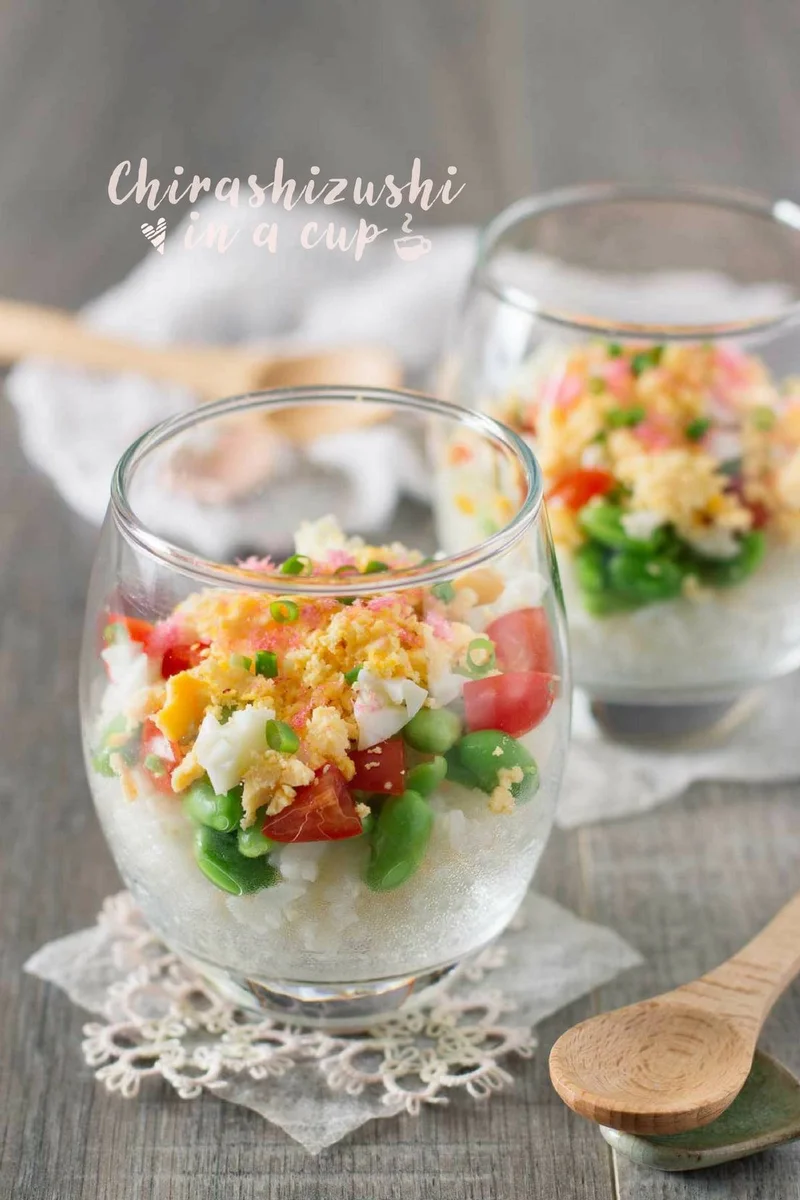
Chirashizushi, or scattered sushi, layers seasoned rice with colourful toppings in individual cups. This easy Japanese-inspired serving makes a cheerful meal or party dish without the need to shape sushi rolls.
Ingredients
- 320 g (2 cups)cooked rice
- 30 ml (2 tbsp)rice vinegar
- 12.5 g (1 tbsp)sugar
- 2.5 g (½ tsp)salt
- As neededatsuyakitamago, diced small, or 2 boiled eggs
- ½tomato, diced small
- 35 g (¼ cup)edamame
- 15 ml (1 tbsp)sakura denbu
- 7.5 ml (½ tbsp)green shallots, finely chopped, for garnish
Instructions
- 1
Cook the rice
Cook the rice according to your rice cooker’s instructions. The original method suggests adding a small piece of kombu for stock.
- 2
Mix the seasoning
In a small bowl, combine the rice vinegar, Natvia (sugar) and salt, mixing well to make sushi vinegar.
- 3
Season the rice
While the rice is still hot, pour the sushi vinegar over it and mix thoroughly.
- 4
Cool the rice
Set the seasoned rice aside to cool.
- 5
Dice the toppings
Cut the topping ingredients into small pieces, about 5 mm by 5 mm.
- 6
Fill the cups
Spoon a cup of cooked, cooled rice into a serving cup.
- 7
Add the toppings
Arrange the finely diced ingredients on top of the rice.
- 8
Finish the cups
Garnish with thin, small strips of seaweed and shiso leaves if available.
What is chirashizushi?
Chirashizushi means scattered sushi: seasoned sushi rice topped with an assortment of ingredients rather than rolled into sheets of seaweed. It is a Japanese dish, and serving it in cups turns the toppings into colourful individual portions.
This version pairs tangy rice with egg, tomato, edamame and sakura denbu. The mix of colours and textures makes each cup appealing while keeping assembly straightforward.
Nutrition and macros by portion
The nutrition label shows one serving as written: 363 calories, 8g protein, 75g carbs, 1g fat.
| Portion | Adjustment | kcal | Protein | Carbs | Fat |
|---|---|---|---|---|---|
| Lighter | Use less rice | 254 kcal | 6g | 53g | 1g |
| This serving | As written | 363 kcal | 8g | 75g | 1g |
| Hungry | Add another rice cup | 545 kcal | 12g | 113g | 2g |
Most of the carbohydrates come from the rice, while the egg and edamame provide some protein; the listed ingredients are low in fat overall. Pair a cup with extra vegetables or a simple salad for a more balanced plate.
Seasoning the rice
Sushi vinegar: Mix the rice vinegar, sugar and salt until well combined, then distribute it over the rice while the rice is hot. Mixing at this stage helps the grains take on the seasoning.
Cooling: Let the rice cool before assembling the cups so the toppings stay fresh-looking and the finished dish is comfortable to eat.
Choosing the toppings
Egg: Atsuyakitamago gives the cups a sweet, savoury topping; boiled eggs are offered as an alternative. Dice the egg small so it is easy to eat with a spoonful of rice.
Colour: Tomato and edamame add contrasting colours and textures. Sakura denbu contributes a sweet, delicate finish, while finely chopped green shallots are listed as a garnish.
Getting neat, even pieces
Small dice: Aim for pieces around 5 mm by 5 mm, as directed in the method. Similar-sized toppings are easier to distribute across the cups and give each serving a mix of flavours.
Gentle mixing: Stir the vinegar into the hot rice thoroughly, but avoid crushing the grains. Keeping the grains intact helps the rice remain distinct beneath the toppings.
Assembling the cups
Rice base: The method calls for a cup of cooked, cooled rice in each serving cup. Settle it into the cup without pressing it into a dense block.
Topping layer: Scatter the diced ingredients over the rice rather than mixing them through. This keeps the ingredients visible and makes the cups easy to serve individually.
Serving ideas
Serve the cups soon after assembly, while the toppings are fresh and distinct. A simple miso soup or lightly dressed greens can round out the meal without competing with the seasoned rice.
For a shared table, set out the cups as individual portions. The layered presentation also works well for a casual gathering.
Recipe notes & tips
- Use freshly cooked rice and season it while it is still hot.
- Taste the sushi vinegar before adding it, since the sugar and salt should be well dissolved.
- Cool the rice before adding the toppings.
- Cut the toppings into similarly sized pieces for an even layer.
- Keep the cups loosely filled so the rice is easy to scoop.
- If using boiled eggs, let them cool before dicing.
Variations
- Boiled egg: Use the suggested boiled eggs instead of atsuyakitamago.
- Kombu rice: Add a small piece of kombu to the rice while it cooks, as suggested in the method.
- Extra colour: Arrange the tomato and edamame in separate patches for a more defined topping layer.
- Seaweed finish: Add thin strips of seaweed as described in the method.
- Shiso garnish: Use shiso leaves for the optional garnish when you have them.
Common mistakes to avoid
- Seasoning cold rice: Add the sushi vinegar while the rice is hot so it mixes in readily.
- Serving the rice hot: Let it cool before assembling to keep the toppings fresh.
- Uneven dicing: Cut the toppings to roughly 5 mm pieces so they distribute evenly.
- Overmixing: Stir in the vinegar without crushing the rice grains.
- Packing the cups tightly: Spoon in the rice gently so it remains easy to eat.
How to store
Store the rice and toppings separately in covered containers in the refrigerator and assemble close to serving time. For best texture, eat the assembled cups the same day; chilled sushi rice can become firm, so allow it to lose its chill before serving rather than reheating the assembled dish.
Frequently asked questions
Can I use boiled eggs instead of atsuyakitamago?
Yes. The recipe lists 2 boiled eggs as an alternative; cool and dice them before adding to the cups.
Do I need a rice cooker?
No. The method refers to a rice cooker, but you can cook the rice using your usual method, following the rice instructions.
Why add the sushi vinegar while the rice is hot?
The method adds the seasoning as soon as the rice is cooked, which makes it easier to mix through the grains.
Can I prepare the cups ahead?
You can cook and season the rice and prepare the toppings ahead, then keep them covered and chilled separately. Assemble shortly before serving for the best texture.
What can I use if I do not have shiso?
Shiso is optional in the method, so you can leave it out. The ingredient list also includes finely chopped green shallots for garnish.
Cook it from the original
This recipe comes from chopstickchronicles.com. Their page has the author’s own photos, notes and tips — the best place to cook it from.
Open the recipe on chopstickchronicles.com