
Knafeh Na'ameh
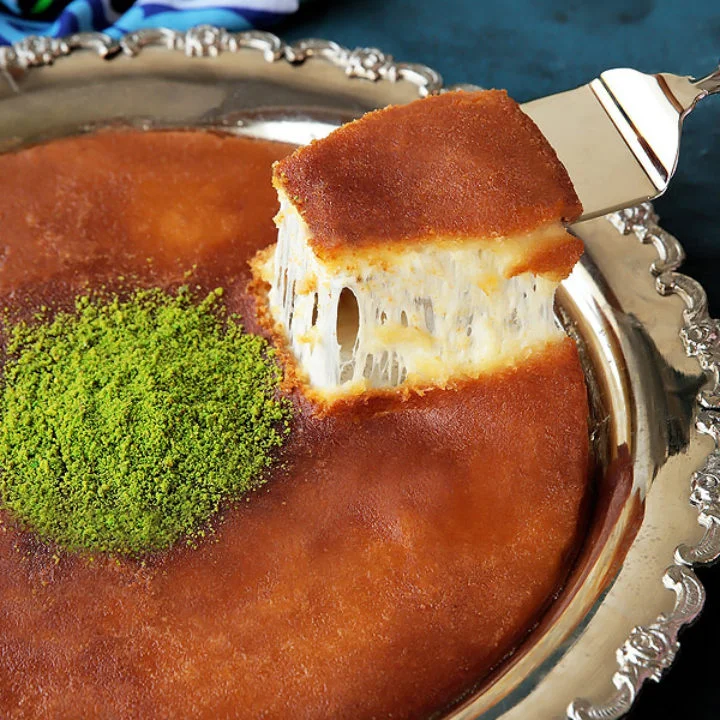
Knafeh Na'ameh is a warm Middle Eastern cheese pastry with a fine, toasted kunafa crust and fragrant sugar syrup. Preparing the syrup, cheese and crust components ahead makes the final stovetop cooking much easier.
Ingredients
- 375 gkunafa (kataifi dough), fresh or frozen
- 94 g (⅓ cup plus 2 tablespoons)melted ghee or clarified butter
- 60 g (3 tablespoons)scented sugar syrup
- 45 g (3 tablespoons)water
- 30 g (2 tablespoons)ghee or clarified butter, at room temperature, for cooking the knafeh
- To garnish, optionalground pistachios
- 400 g (2 cups)granulated sugar
- 230 g (1 cup)water
- A squeezelemon juice
- 2 teaspoons, more or less to tasteorange blossom water
- ½ teaspoon, more or less to tasterose water
- 500 gShelal cheese (or Shellala/Meshalela), preferably without black sesame
- 300 gAkkawi Tchiki cheese
Instructions
- 1
Combine syrup
Put the sugar, 230 g water and a squeeze of lemon juice in a medium saucepan. Set it over medium-high heat. Avoid stirring as it warms to help prevent crystallisation, but give it a few stirs if the sugar is not dissolving. Once it boils, stop stirring.
- 2
Simmer gently
As soon as the syrup boils, lower the heat and simmer for no longer than 10 minutes. Set a timer: it should thicken slightly to the consistency of warm pancake syrup. Stir in the orange blossom water and rose water.
- 3
Cool the syrup
Pour the syrup into a medium bowl or gravy boat and leave it to cool to room temperature before using.
- 4
Soak the cheeses
Thinly slice both cheeses with a sharp knife and put each type in a separate bowl. Cover with lukewarm tap water and soak for 2–6 hours, changing the water every 30 minutes, until the cheese no longer tastes salty. The soaking time depends on the saltiness of the cheese. For an overnight soak, keep the bowls in the fridge.
- 5
Drain and crumble
Drain the cheeses in a colander, pressing them with your hand or the back of a spoon to remove excess liquid. Crumble them together by hand or in a food processor, then leave them in the colander to drain while you prepare the crust.
- 6
Grind the kunafa
In batches, process the kunafa in a spice grinder until very fine and powdery, like fine breadcrumbs. Tip it into a medium bowl and mix in the melted ghee, 60 g scented sugar syrup and 45 g water until evenly combined. The mixture should resemble cooked couscous, feel very damp and stick together when squeezed.
- 7
Coat and grind
In a medium bowl, mix shredded kunafa strands with the ghee, 60 g scented sugar syrup and 45 g water until evenly coated. Pass the mixture through a meat grinder until it comes out clumpy.
- 8
Toast the farkeh
Transfer the kunafa mixture to a large skillet over medium heat. Stir continuously without letting it brown, until it is dry and sandy and no longer sticks together; it should become one shade darker. While still hot, smooth out lumps in a food processor or pass the mixture through a large mesh sieve. The farkeh can be frozen in a zipper-lock bag at this stage.
- 9
Press the crust
Brush only a 34 cm aluminium or copper pan with the 30 g room-temperature ghee. Set aside 3 tablespoons of the farkeh. Sprinkle the rest evenly over the pan and press it into a compact, even layer about ¾ cm thick.
- 10
Add the cheese
Spread the cheese mixture over the crust, leaving a 2 cm border uncovered around the edge.
- 11
Cook the knafeh
Place the pan over one side of the hob so the flame covers only half its base; centring it can burn the middle before the edges cook. On an electric hob, use medium-high heat; on gas, use medium heat. With tongs in one hand and an oven mitt on the other, keep rotating the pan for even cooking. Pat the cheese with a clean cloth or kitchen towels to absorb released moisture. Cook for 10–15 minutes, until the crust edge is deep golden brown and the cheese is mostly melted. The colour of the edge indicates the colour of the base. Remove the pan from the heat.
- 12
Rest and finish
Cover the pan and leave it for a few minutes so the cheese can melt through. Sprinkle the reserved 3 tablespoons of farkeh over the cheese to absorb excess moisture and help stop it sticking to the serving platter.
- 13
Invert and serve
Grease a serving platter with ghee and invert the knafeh onto it, so the cheese is underneath and the crust is on top. Pour over enough cooled scented syrup to cover the surface, about ¾ cup, and spread it evenly with a spatula. Add ground pistachios if desired, cut into squares and serve warm while the cheese is gooey. Add fresh eshta or extra syrup if desired. To serve later, warm the platter over simmering water so the steam remelts the cheese. Knafeh is best eaten the day it is made.
What is knafeh na'ameh?
Knafeh is a Middle Eastern dessert pairing cheese with a pastry base and sweet syrup. Na'ameh means fine or smooth, reflecting the finely prepared kunafa crust.
This version layers a fine, toasted farkeh crust with two cheeses, then turns the pastry over so its golden base faces up. Fragrant syrup and optional pistachios finish it.
Plan the components ahead
Syrup: It can be made in advance and cooled before use; the recipe also notes that a big batch can be prepared months ahead. Keep the cooking time short so it remains pourable.
Cheese: Soak the two cheeses separately because their salt levels may differ. Changing the water regularly lets you check when each is ready.
Farkeh: The crust mixture can be prepared, toasted and sifted ahead, then frozen in a zipper-lock bag. With those components ready, assembly and stovetop cooking are the main jobs for serving day.
Keep the syrup pourable
Boil the sugar, water and lemon together, then stop stirring once the mixture reaches a boil. Simmer for no longer than 10 minutes and set a timer.
The target is a slight thickening, similar to warm pancake syrup. Add the floral waters after simmering, then let the syrup cool before pouring it over the pastry.
Prepare the cheese carefully
Separate bowls: Sliced Shelal and Akkawi soak in separate bowls of lukewarm water, with the water changed every 30 minutes. Taste a little to judge when the saltiness has eased.
Drain well: Press out excess water after soaking, then leave the crumbled cheeses in a colander as you prepare the crust. Too much moisture makes the cheese layer harder to manage.
Look for a sandy crust
Grinding and coating: The method describes processing the kunafa finely, coating it with ghee, syrup and water, and also passing coated strands through a meat grinder. Follow the listed preparation sequence and aim for a cohesive mixture.
Toasting: Keep the mixture moving in the skillet and avoid browning it. It is ready when it feels dry and sandy, no longer clings together, and has darkened by one shade.
Control the stovetop heat
Position: Set the pan to one side of the burner so the flame covers only half its base. This helps the centre avoid scorching while the outer edge cooks.
Rotate: Keep turning the pan and use the deep golden edge as the cue for the colour of the base. The stated cooking time is 10–15 minutes, but the edge colour and the mostly melted cheese are the key signs.
Serve warm
Invert the pastry onto a greased platter so the crust is uppermost, then spread the cooled syrup over the surface. Pistachios add a finishing garnish if you like.
Cut and serve while the cheese is still gooey. The recipe suggests eshta or extra syrup as optional accompaniments.
Recipe notes & tips
- Soak the two cheeses separately and change their water every 30 minutes.
- Taste the cheese during soaking rather than relying on a fixed time alone.
- Set a timer so the syrup does not simmer past 10 minutes.
- Keep the farkeh moving as it toasts, and take it off the heat before it browns.
- Rotate the pan continuously and use the edge colour to judge the underside.
- Drain the cheese thoroughly before spreading it over the crust.
Variations
- Pistachio finish: Scatter ground pistachios over the syrup-coated surface.
- Floral syrup: Adjust the orange blossom water or rose water to taste.
- Extra syrup: Offer more cooled scented syrup at the table.
- Eshta topping: Add a dollop of fresh eshta when serving.
- Make-ahead farkeh: Prepare and freeze the toasted crust mixture for later use.
Common mistakes to avoid
- Overcooking the syrup: Stop simmering at 10 minutes so it stays pourable.
- Stirring after boiling: Stop stirring once the syrup reaches a boil to help avoid crystallisation.
- Uneven browning: Keep rotating the pan and let the burner cover only half its base.
- Soggy cheese layer: Press out excess liquid and let the crumbled cheese drain.
- Browning the farkeh: Stir continuously and stop when it is dry, sandy and one shade darker.
- Skipping the rest: Cover the pan for a few minutes after cooking so the cheese can melt through.
How to store
The recipe recommends eating knafeh on the day it is made. If serving later that day, reheat the platter over a simmering water bath; the steam helps remelt the cheese. The toasted farkeh can be frozen in a zipper-lock bag for months.
Frequently asked questions
Can I prepare knafeh in advance?
Yes. The syrup and farkeh can be prepared ahead, and the cheese can soak overnight in the fridge. Assemble and cook the knafeh close to serving time.
How do I know when the cheese has soaked long enough?
Taste a little after soaking and changing the water. It is ready when it no longer tastes salty; the time varies with the cheese.
Why soak the cheeses separately?
Shelal and Akkawi can have different salt levels, so separate bowls let you check each one and stop soaking it when it is ready.
How can I tell when the crust is cooked?
The edge should be deep golden brown and the cheese mostly melted after about 10–15 minutes. The edge colour indicates the colour of the underside.
Can I reheat knafeh?
For serving later, place the serving platter over simmering water. The steam warms the pastry and helps make the cheese gooey again.
What can I serve with knafeh?
Serve it warm with optional ground pistachios, fresh eshta or extra scented syrup.
Cook it from the original
This recipe comes from cleobuttera.com. Their page has the author’s own photos, notes and tips — the best place to cook it from.
Open the recipe on cleobuttera.com