
Japanese Baked Cheesecake ベイクドチーズケーキ
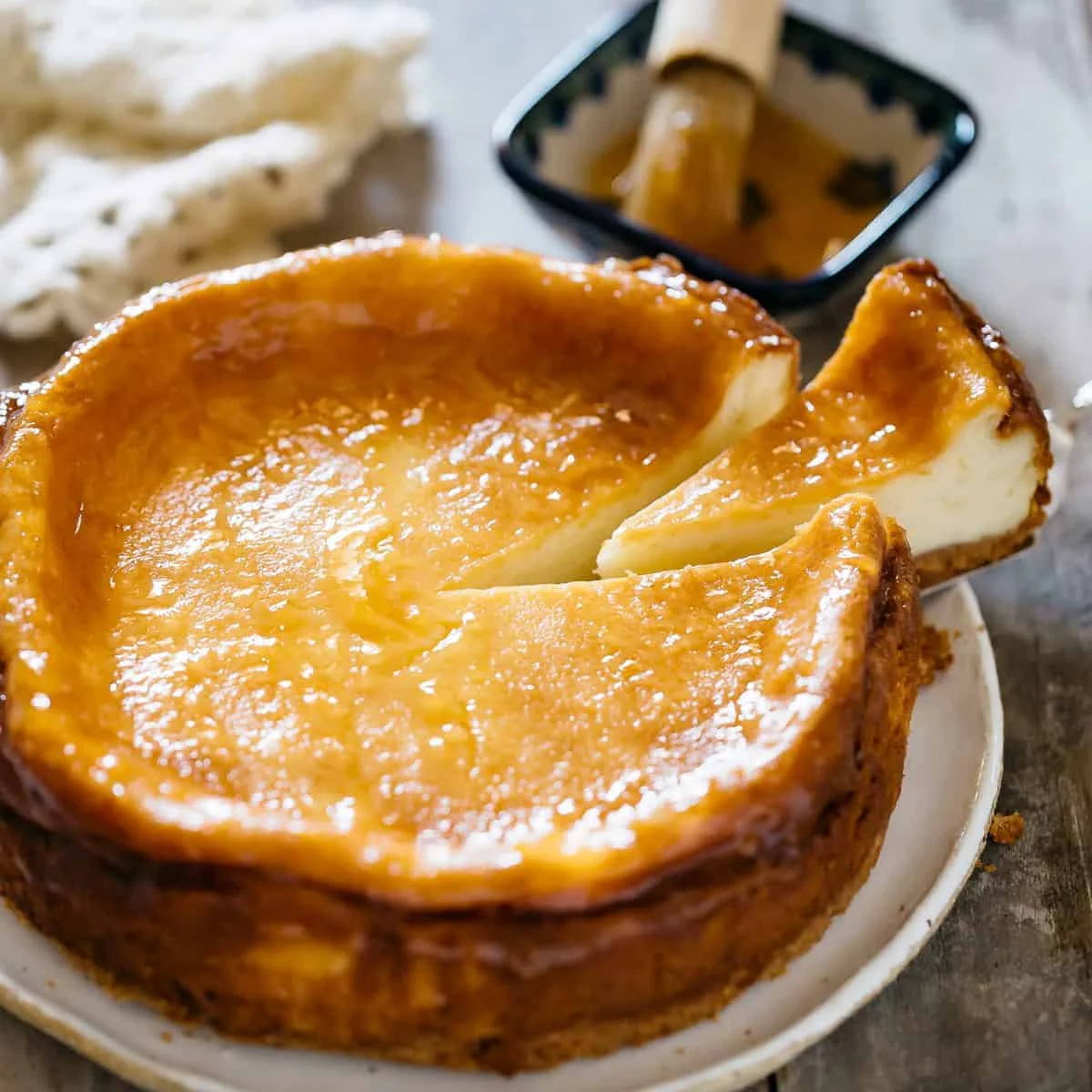
This Japanese baked cheesecake has a buttery digestive-biscuit base and a rich, creamy cheese filling with a little lemon. It takes time to chill, but the method is straightforward and makes a lovely make-ahead dessert.
Ingredients
- 250 gPhiladelphia cheese
- 200 ml (7 fl oz)pure cream
- 2eggs
- 80 g (⅓ cup)sugar
- 3 tbspplain flour
- 1 tbsplemon juice
- 90 gdigestive biscuits (about 6 Graham Crackers)
- 40 gmelted butter (about 3 tbsp)
- 2 tbsp, optionalapricot jam
- 1 tbsp, optionalbrandy
- To tasteicing sugar, for dusting
- To tasteraspberries, to serve
Instructions
- 1
Preheat the oven
Heat the oven to 180°C.
- 2
Bring ingredients to temperature
Leave the Philadelphia cheese and eggs out until they reach room temperature.
- 3
Make the crust
Crush the digestive biscuits into crumbs in a bowl, then mix them with the melted butter.
- 4
Prepare the tin
Line the base of the baking tin with parchment paper and lightly butter its sides.
- 5
Add the crust
Spread the biscuit mixture evenly over the bottom of the tin to form the crust, then set it aside.
- 6
Mix the filling
Beat the Philadelphia cheese in a mixing bowl. Keep beating as you add the sugar, eggs, cream and, last, the lemon juice. Once everything is in, mix for a few minutes until the filling looks creamy and plump.
- 7
Fold in flour
Sift the flour into the mixture and fold it in gently.
- 8
Fill the tin
Pour the mixture into the prepared tin and place it in the preheated oven.
- 9
Bake at 170°C
Turn the oven down to 170°C and bake for about 60 minutes, adjusting for your oven.
- 10
Bake at 160°C
Reduce the oven temperature to 160°C and bake for a further 20 minutes.
- 11
Switch off the oven
When the top is golden brown, turn off the oven and take out the cheesecake.
- 12
Cool and chill
Let the cheesecake cool in the tin. Cover it with cling film and refrigerate overnight or for a few hours.
- 13
Serve the cheesecake
Dust with icing sugar and serve with raspberries.
What is Japanese baked cheesecake?
Japanese baked cheesecake is a baked cream-cheese dessert, distinct from the airy soufflé-style cheesecake also associated with Japan. This version uses a biscuit base and a rich filling made with cream, eggs and a little flour.
The recipe’s strength is its simple contrast: a crisp, buttery crust under a smooth, creamy centre. Chilling the cake before serving helps it set and makes it easier to slice.
Nutrition and macros by portion
The nutrition label shows one serving as written: 455 calories, 6g protein, 30g carbs, 34g fat.
| Portion | Adjustment | kcal | Protein | Carbs | Fat |
|---|---|---|---|---|---|
| Lighter | Smaller slice with berries | 319 kcal | 4g | 21g | 24g |
| This serving | As written | 455 kcal | 6g | 30g | 34g |
| Hungry | Larger slice | 683 kcal | 9g | 45g | 51g |
The biscuit base and sugar provide most of the carbohydrates, while the cream cheese, cream and butter contribute much of the fat. Eggs and cheese provide some protein. Serve a slice with raspberries for a fresh contrast, or alongside fruit to balance the richness.
Choose the right base
Biscuits: Digestives give the crust a gently malty flavour; Graham Crackers are offered as an alternative. Crush them finely so the base holds together evenly.
Butter: Mix the crumbs thoroughly with melted butter before pressing them into the tin. The parchment-lined base helps with release, while a light coating of butter on the sides reduces sticking.
Keep the filling smooth
Room-temperature ingredients: Take the cheese and eggs out ahead of mixing, as directed. Softer cheese is easier to beat into a smooth filling.
Additions: Beat in the sugar, eggs, cream and lemon juice in the stated order. Sift the flour and fold it in gently at the end to avoid overworking the mixture.
Follow the two-stage bake
First bake: The recipe starts at 180°C, then calls for 170°C for about 60 minutes. The exact timing can vary with the oven, so use the stated golden-brown top as the visual cue.
Second bake: Lower the heat to 160°C and bake for another 20 minutes. Switch off the oven and remove the cake once the top is golden brown.
Cool before chilling
In the tin: Let the cheesecake cool in its baking tin before covering it. This gives it time to settle before refrigeration.
In the fridge: Chill it overnight or for a few hours, as the method allows. A well-chilled cake is easier to portion neatly and serve.
Serve with a light finish
Raspberries: Their fresh, tart flavour pairs well with the creamy filling. Add them when serving so they stay distinct from the cake.
Icing sugar: Dust the top just before serving for a simple finish. Apricot jam and brandy are listed as optional ingredients, but the method does not specify how to use them.
Recipe notes & tips
- Bring the cheese and eggs to room temperature before mixing, as the method directs.
- Crush the biscuits finely so the crust forms an even layer.
- Sift the flour before folding it into the filling.
- Use a gentle hand when folding in the flour.
- Check the top for a golden-brown colour at the end of baking.
- Allow the cheesecake to cool before covering and refrigerating it.
Variations
- Use Graham Crackers: Swap them for the digestive biscuits as suggested in the ingredient list.
- Add apricot jam: Use the optional jam as a finishing touch when serving.
- Add brandy: Include the optional brandy for a subtle spirit note.
- Serve with berries: Add raspberries at the table for a tart contrast.
- Skip the dusting: Leave off the icing sugar for a less sweet finish.
Common mistakes to avoid
- Cold cheese: Let it reach room temperature before beating so it blends more smoothly.
- Large biscuit pieces: Crush the biscuits into fine crumbs for a more even crust.
- Rough folding: Fold in the sifted flour lightly rather than beating it in.
- Skipping the second bake: Lower the oven to 160°C and continue for the full additional 20 minutes.
- Covering while warm: Cool the cheesecake in its tin before wrapping it.
- Slicing too soon: Chill it for a few hours or overnight before serving.
How to store
Cover the cooled cheesecake and keep it in the fridge; the recipe recommends chilling it overnight or for a few hours before serving. Keep any leftovers refrigerated and serve them chilled.
Frequently asked questions
Can I use Graham Crackers instead of digestive biscuits?
Yes. The ingredient list gives 6 Graham Crackers as an alternative to 90 g of digestive biscuits.
How long does the cheesecake need to chill?
The recipe suggests leaving it in the fridge overnight or for a few hours after it has cooled.
How do I know when it is baked?
The method gives a golden-brown top as the cue. It also specifies about 60 minutes at 170°C followed by another 20 minutes at 160°C.
Do the eggs and cheese need to be at room temperature?
Yes. Leave both out until they reach room temperature before mixing.
Are the apricot jam and brandy essential?
No. Both are marked optional in the ingredient list, and the method does not explain when to add them.
What should I serve with the cheesecake?
The recipe suggests dusting it with icing sugar and serving it with raspberries.
Cook it from the original
This recipe comes from chopstickchronicles.com. Their page has the author’s own photos, notes and tips — the best place to cook it from.
Open the recipe on chopstickchronicles.com