
Fried Shrimp 海老フライ
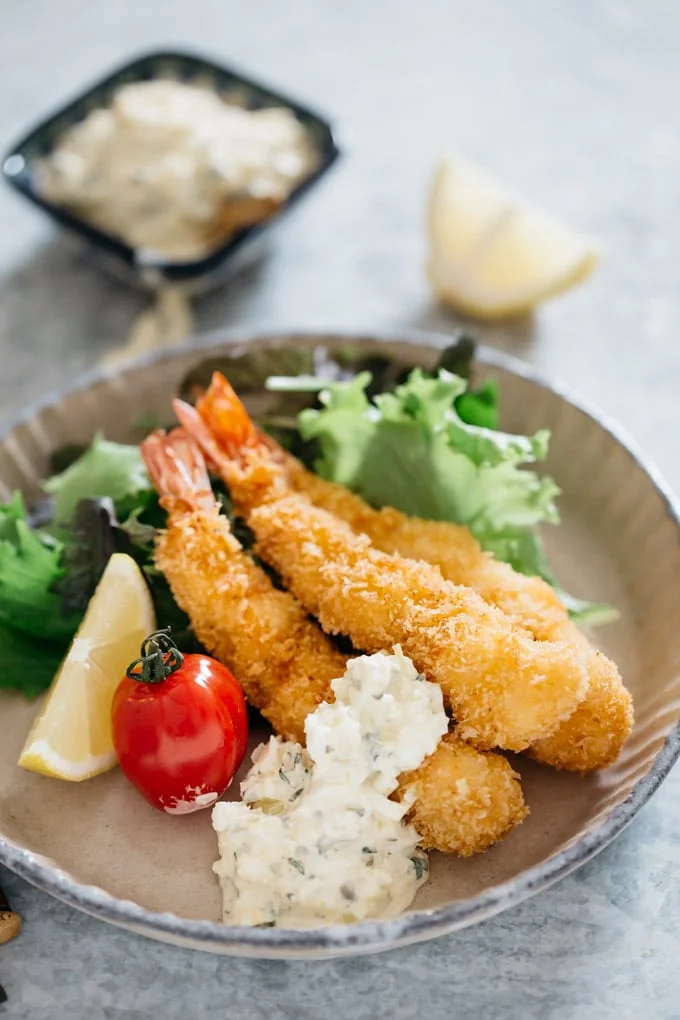
Japanese-style fried shrimp are coated in a light batter and panko, then deep-fried until crisp and golden. Serve them with salad, lemon wedges and tartar sauce for a simple, celebratory plate.
Ingredients
- 10shrimp
- 1egg
- 3 tbsp (45 ml)plain flour
- 1 tbsp (15 ml)Japanese mayonnaise
- 50 mlwater
- as neededoil for deep-frying
- to servegreen salad leaves
- to servecherry tomatoes
- to servelemon wedges
- to servetartar sauce
Instructions
- 1
Prepare the shrimp
Remove the shells from the shrimp and devein them.
- 2
Score the undersides
Make 2–3 shallow cuts along the underside of each shrimp, then gently press to snap the muscle and help the shrimp stay straight as they cook.
- 3
Mix the batter
In a small bowl, combine the egg, flour, water and mayonnaise to make a batter.
- 4
Coat the shrimp
Dip the shrimp in the batter, then place them in the panko crumbs and turn to coat.
- 5
Heat the oil
Pour frying oil into a deep pan and heat it to around 180°C (356°F).
- 6
Fry until golden
Fry each shrimp until crisp and golden brown on both sides. Transfer to kitchen paper to soak up excess oil.
- 7
Serve the shrimp
Serve the fried shrimp with the vegetables and top with tartar sauce.
What is Japanese fried shrimp?
海老フライ, or ebi fry, is a Japanese dish of breaded, deep-fried shrimp. It is often served as a set meal or as part of a larger spread, with crisp coating, lemon and a creamy sauce.
This version uses a mayonnaise-and-egg batter before the panko coating. The method also scores the shrimp so they are less likely to curl as they fry.
Nutrition and macros by portion
The nutrition label shows one serving as written: 56 calories, 2g protein, 1g carbs, 4g fat.
| Portion | Adjustment | kcal | Protein | Carbs | Fat |
|---|---|---|---|---|---|
| Lighter | Use less tartar sauce | 39 kcal | 1g | 1g | 3g |
| This serving | As written | 56 kcal | 2g | 1g | 4g |
| Hungry | Serve with steamed rice | 84 kcal | 3g | 2g | 6g |
The supplied nutrition per serving lists 1 g of carbohydrate, 4 g of fat and 2 g of protein; the shrimp provide protein, while the batter and frying oil contribute most of the listed fat and carbohydrate. Add salad or another vegetable side to round out the plate.
Preparing the shrimp
Shell and devein: remove the shell and the dark vein before coating. Pat the shrimp dry if they are wet, so the batter has a better chance of clinging.
Score the underside: make 2–3 shallow cuts, then gently press along the shrimp to break the tight muscle. Avoid cutting all the way through.
The batter and coating
Batter: mix the egg, flour, water and Japanese mayonnaise in a small bowl until combined. It should coat the shrimp without being so thick that it hides their shape.
Panko: the method calls for panko crumbs after the batter, although no quantity is specified in the ingredient list. Coat each shrimp evenly so the surface fries up crisp.
Frying at the right temperature
Oil temperature: heat the oil to around 180°C. A steady temperature helps the coating turn golden without sitting in the oil for too long.
Work in batches if needed so the pan is not crowded and the shrimp have room to fry. Keep a close eye on the colour, since the shrimp are small and cook quickly.
Checking texture and doneness
Look for a crisp, golden coating on both sides, as specified in the method. Move cooked shrimp to kitchen paper to drain away excess oil.
The shrimp should be opaque and firm when cooked through. Avoid leaving them in the oil after they are done, as their texture can become tough.
Serving the plate
Serve the shrimp with green salad leaves, cherry tomatoes and lemon wedges, then add tartar sauce. A squeeze of lemon gives the rich coating a bright contrast.
For a fuller meal, pair the plate with steamed rice or another simple side. Keep the shrimp uncovered until serving to help the coating stay crisp.
Recipe notes & tips
- Remove the vein carefully before scoring the shrimp.
- Make shallow cuts on the underside rather than slicing through the shrimp.
- Coat each shrimp in batter and panko just before frying.
- Use a deep pan with enough room for the shrimp to fry without crowding.
- Drain the cooked shrimp briefly on kitchen paper before serving.
- Serve with lemon wedges so diners can add lemon to taste.
Variations
- Add a dip: serve extra tartar sauce on the side.
- Add a citrus note: offer extra lemon wedges at the table.
- Make it a meal: serve the shrimp with steamed rice.
- Change the salad: use crisp lettuce or other salad leaves.
- Serve family-style: arrange the shrimp and vegetables on a shared platter.
Common mistakes to avoid
- Skipping the scoring: shallow cuts and a gentle press help the shrimp stay straighter as they fry.
- Cutting too deeply: keep the underside cuts shallow so the shrimp remain in one piece.
- Crowding the pan: fry in batches if necessary so the shrimp have room to cook.
- Guessing the oil temperature: heat the oil to around 180°C as directed.
- Leaving the shrimp to drain in a pile: spread them on kitchen paper so excess oil can be absorbed.
How to store
For the best crisp texture, serve the shrimp soon after frying. Refrigerate leftovers in a covered container and use within 2 days; reheat in an oven until hot and crisp rather than microwaving.
Frequently asked questions
Why are my shrimp curling up?
The recipe scores the underside in 2–3 places and gently snaps the muscle to help prevent curling. Keep the cuts shallow and avoid cutting through the shrimp.
What temperature should the oil be?
Heat the oil to around 180°C (356°F), as directed in the method.
What are panko crumbs?
Panko are Japanese-style breadcrumbs used here to coat the battered shrimp. The method includes them, but the ingredient list does not give a quantity.
Can I prepare the shrimp ahead?
You can shell, devein and score the shrimp ahead, then keep them covered in the fridge. For the crispest coating, batter and fry them close to serving time.
What should I serve with fried shrimp?
The recipe suggests green salad leaves, cherry tomatoes, lemon wedges and tartar sauce. Steamed rice is another simple accompaniment.
Cook it from the original
This recipe comes from chopstickchronicles.com. Their page has the author’s own photos, notes and tips — the best place to cook it from.
Open the recipe on chopstickchronicles.com