
Vegan Cacio e Pepe
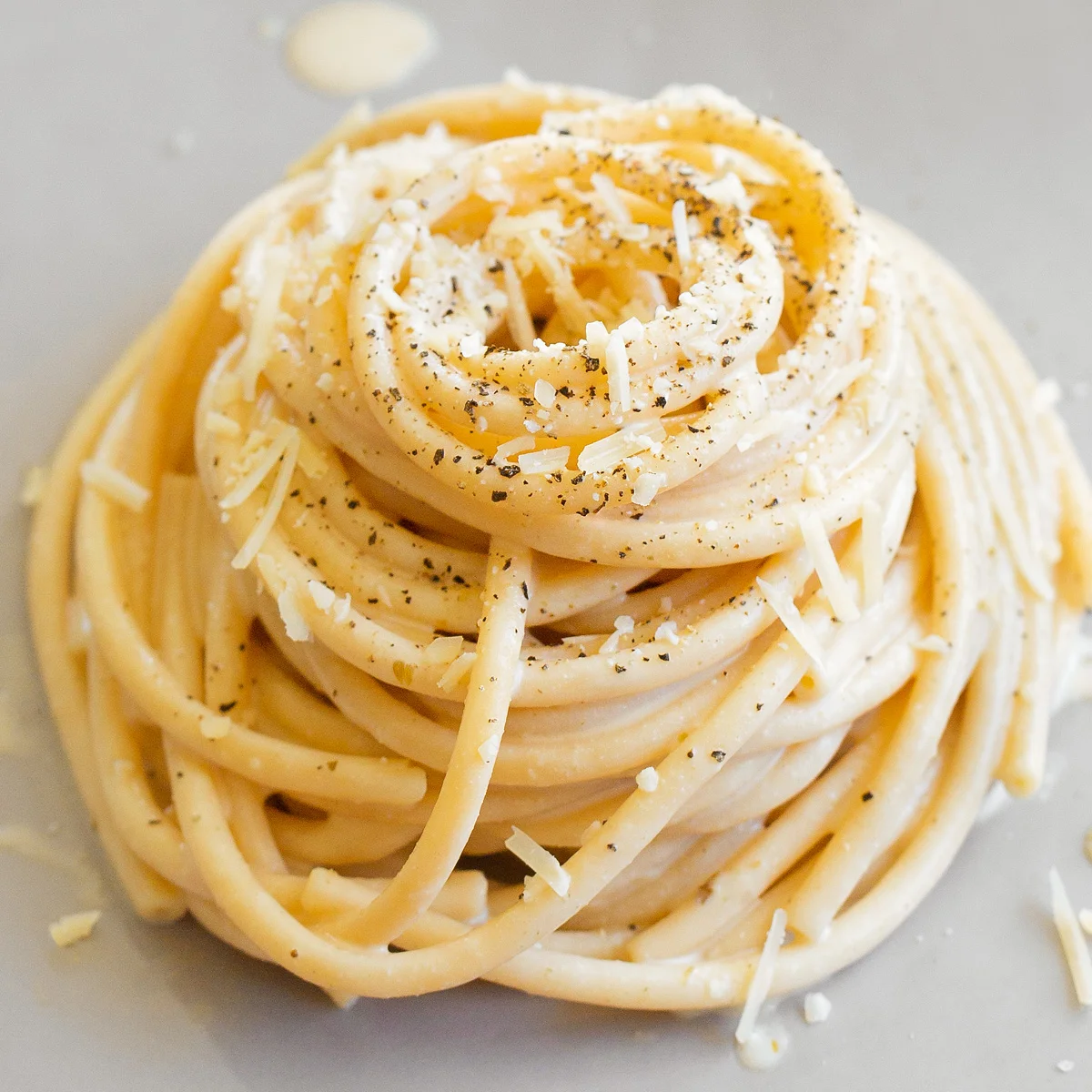
This dairy-free take on Italian cacio e pepe pairs pasta with a smooth cashew sauce flavoured with nutritional yeast, onion and black pepper. It comes together quickly in a blender, with an optional soak for an even creamier texture.
Ingredients
- 98 graw cashews (or unsalted macadamia nuts)
- 160 mlwater
- 15 ml (1 tbsp)nutritional yeast (or vegan Parmesan)
- 5 ml (1 tsp)onion powder
- 3.75 ml (¾ tsp)salt
- 0.625 ml (⅛ tsp), plus more for servingground pepper
- 227 gpasta (or spaghetti squash)
Instructions
- 1
Soak the cashews
If you have time, soak the cashews in a bowl of water for 1–2 hours. Drain them and pat them dry; this optional step helps make the sauce creamier.
- 2
Blend the sauce
Blend everything except the pasta in a high-speed blender until very smooth. If you do not have a high-speed blender, use ½ cup raw cashew butter instead of the nuts and blend with a standard blender or food processor. The sauce should look thin; it thickens in the fridge or when warmed in a saucepan.
- 3
Serve the pasta
Serve the sauce over the pasta. If you like, garnish with vegan cheese and extra pepper. Keep any leftover sauce in a covered container in the fridge for up to a week.
What is cacio e pepe?
Cacio e pepe is a Roman pasta dish whose name means cheese and pepper. The classic version uses cheese and black pepper to make a simple, savoury coating for pasta.
This version replaces the dairy with blended cashews and nutritional yeast. The result is a smooth, peppery sauce that can be made while the pasta cooks.
Nutrition and macros by portion
The nutrition label shows one serving as written: 301 calories, 0g protein, 0g carbs, 0g fat.
| Portion | Adjustment | kcal | Protein | Carbs | Fat |
|---|---|---|---|---|---|
| Lighter | Use spaghetti squash | 211 kcal | 0g | 0g | 0g |
| This serving | As written | 301 kcal | 0g | 0g | 0g |
| Hungry | Larger pasta portion | 452 kcal | 0g | 0g | 0g |
The cashews provide most of the fat and some protein, while the pasta or spaghetti squash supplies most of the carbohydrates. Serve with vegetables or a side salad for a more rounded plate.
Choosing the sauce ingredients
Cashews: These form the creamy base once blended with water. Unsalted macadamia nuts are offered as an alternative.
Nutritional yeast: It brings a savoury, cheese-like note without dairy; vegan Parmesan is another option. Onion powder and salt round out the seasoning.
Getting a smooth sauce
Soaking: The recipe makes soaking optional, but suggests 1–2 hours in water to help the cashews blend into a creamier sauce. Drain and pat them dry before blending.
Blending: Use a high-speed blender for the smoothest result. If yours is not high-speed, the recipe suggests swapping in ½ cup raw cashew butter and using a standard blender or food processor.
What to look for
Consistency: The sauce should look thin straight from the blender. It thickens when chilled or heated in a saucepan, so it does not need to be thick before serving.
Seasoning: The sauce includes ground pepper, and extra pepper is suggested for serving. Add it at the table to suit your taste.
Choosing the base
Pasta: The recipe calls for 227 g and names spaghetti as an option. Cook your chosen pasta separately, then serve it with the blended sauce.
Spaghetti squash: This is the listed alternative to pasta. The method does not give separate instructions for preparing it, so have it ready before serving the sauce.
Making it ahead
The sauce can be blended ahead and kept covered in the fridge for up to a week. It thickens as it chills; warm it in a saucepan if you want to serve it hot.
Recipe notes & tips
- Soak the cashews for 1–2 hours if you have time for a creamier sauce.
- Drain and pat soaked cashews dry before blending.
- Blend until completely smooth before serving.
- Expect the sauce to thicken as it chills or heats.
- Finish with extra ground pepper if you want a more pronounced pepper flavour.
Variations
- Use macadamias: Swap in unsalted macadamia nuts for the cashews.
- Try vegan Parmesan: Use it instead of nutritional yeast for a different cheesy note.
- Choose spaghetti squash: Use it instead of pasta as listed in the recipe.
- Add more pepper: Grind extra over each serving to bring out the dish’s peppery character.
Common mistakes to avoid
- Skipping the soak when aiming for extra creaminess: Soak the cashews for 1–2 hours, then drain and pat them dry.
- Expecting a thick sauce straight away: The blended sauce should look thin and thickens when chilled or heated.
- Using a standard blender with whole nuts: Swap in ½ cup raw cashew butter if you do not have a high-speed blender.
- Blending the pasta with the sauce: The recipe says to blend everything except the pasta, then serve the sauce over it.
How to store
Keep leftover sauce in a covered container in the fridge for up to a week. It thickens when chilled; warm it in a saucepan before serving if desired.
Frequently asked questions
Do I have to soak the cashews?
No. Soaking is optional, though the recipe notes that it helps make the sauce creamier. If soaking, leave them in water for 1–2 hours, then drain and pat dry.
Can I make the sauce without a high-speed blender?
Yes. The recipe suggests replacing the nuts with ½ cup raw cashew butter and using a standard blender or food processor.
Why is the sauce thin after blending?
That is expected. It thickens in the refrigerator or when warmed in a saucepan.
Can I use something other than pasta?
Spaghetti squash is listed as an alternative. The recipe does not include separate preparation instructions for it.
How long does the leftover sauce keep?
Store it in a covered container in the fridge for up to a week.
Cook it from the original
This recipe comes from chocolatecoveredkatie.com. Their page has the author’s own photos, notes and tips — the best place to cook it from.
Open the recipe on chocolatecoveredkatie.com