
Chinese Hamburger-Pork Belly Buns
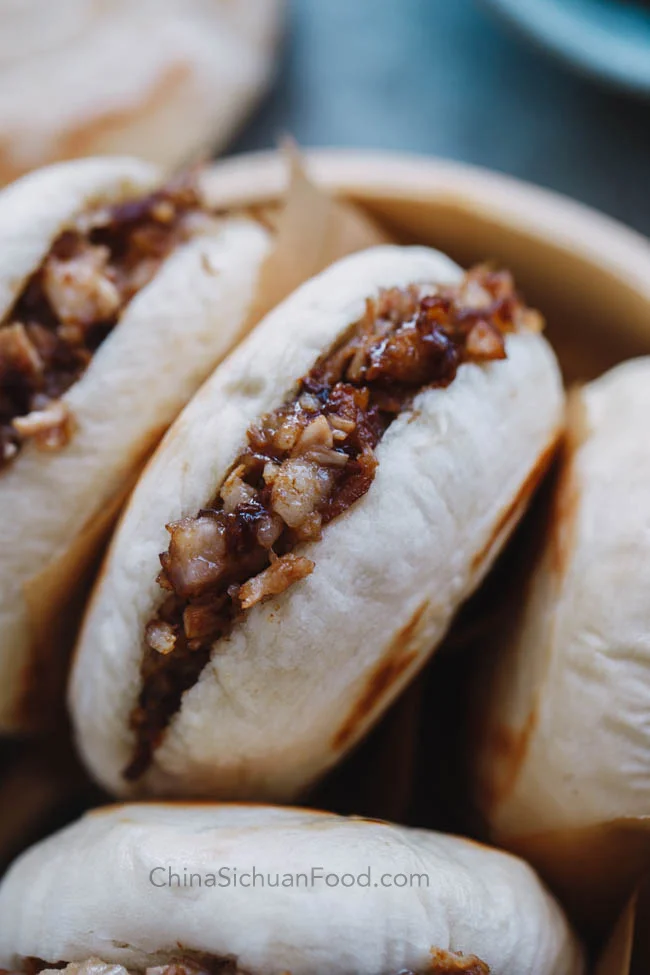
Roujiamo pairs soft, pan-toasted Chinese flatbreads with richly braised pork belly, chopped finely and tucked inside. The pork can be cooked ahead, making the final assembly quick; the buns are finished in a pan and oven for a browned outside and tender centre.
Ingredients
- 200 gplain flour
- a pinchsalt
- 1 tbspvegetable cooking oil
- 100 mlwater
- ¾ tspinstant yeast
- 800 gpork belly
- ½ cup (about 100 g)crystal sugar
- 2 largeonions, cut into sections
- 2 tbsplight soy sauce
- 1½ tbspdark soy sauce
- 1 inchroot ginger, divided
- as neededwater or stock
- 1 tbspShaoxing cooking wine
- 1 tbspsalt
- 4 clovesgarlic
- 1 tspSichuan peppercorns
- 2star anise
- 1 small piececinnamon bark
- 4–6cloves
- 2bay leaves
- 1 tspfennel seeds
- 1dried chilli pepper
- 1 piecedried tangerine peel
- 1 tspwhole white peppercorns
- 1 chunk, optionalgalangal
- 1, optionalFructus Amomi (砂仁)
- 2 pieces, optionaldried ginger
- 1 piece, optionalsand ginger
- 1, optionalnutmeg (豆蔻)
- 1, optionalTsaoko Amomum (草果)
- to taste, optionalcoriander
Instructions
- 1
Soak the spices
Soak the spices in hot water for 5 minutes, then bundle them securely in a spice bag.
- 2
Blanch the pork
Cut the pork belly into small pieces. Bring a large pot of water to the boil with some of the ginger, the Sichuan peppercorns and Shaoxing cooking wine. Add the pork and cook for 2–3 minutes after the water boils, then lift it out and drain.
- 3
Brown the pork
Fry the pork belly pieces in a wok until lightly seared. Remove them and pour off the excess fat; the rendered fat can be kept for noodles or soup.
- 4
Braise the pork
Put the pork, spice bag, remaining ginger, crystal sugar, onions, salt, light soy sauce and dark soy sauce in a large pot. Add enough water or stock to cover the pork, bring to the boil, then lower the heat and simmer for about 1 hour.
- 5
Rest the pork
Turn off the heat and leave the pork soaking in its cooking liquid. Reheat it before assembling the buns.
- 6
Mix the dough
Stir the yeast into the water and leave it for 5 minutes. Mix the flour with a pinch of salt and the oil, then add the yeast water. Knead until smooth, cover with a damp cloth or plastic wrap and leave for 15–30 minutes, depending on the room temperature, until the dough is about one-third larger.
- 7
Divide the dough
Knead the dough again to press out the air. Roll it into a long log and divide it into 5 equal portions.
- 8
Shape the buns
Shape one portion into a long log with tapered ends, then roll it out into a long flat strip. Roll the strip up, tuck the loose end into one end of the coil and press it down gently. Turn it over, roll it into a bun about 1.5 cm thick and shape it into a bowl with your hand. Repeat with the remaining portions.
- 9
Pan-fry the buns
Heat a pan over a low heat. Cook each bowl-shaped bun until lightly browned, then turn it over and brown the other side.
- 10
Bake the buns
Preheat the oven to 190°C. Put the buns on a baking sheet and bake for 8–10 minutes, until cooked through; this gives them a crisp shell and soft interior.
- 11
Chop the filling
Lift the pork out of its cooking liquid and mince it finely. Add chopped coriander if you like; the method also suggests cumin powder as an optional addition.
- 12
Fill and serve
Cut each bun about two-thirds of the way through from the middle and tuck in the minced pork and any other chosen filling ingredients. Serve warm.
What is roujiamo?
Roujiamo is a Chinese filled flatbread, often described as a meat sandwich, associated with Shaanxi cuisine. Its name refers to meat tucked into a mo, a round bread.
This version combines slow-braised pork belly with buns that are first cooked in a pan and then baked. The two-stage cooking helps give the bread a browned exterior while keeping its middle soft enough to hold the filling.
Nutrition and macros by portion
The nutrition label shows one serving as written: 482 calories, 10g protein, 55g carbs, 25g fat.
| Portion | Adjustment | kcal | Protein | Carbs | Fat |
|---|---|---|---|---|---|
| Lighter | Smaller pork filling | 337 kcal | 7g | 39g | 18g |
| This serving | As written | 482 kcal | 10g | 55g | 25g |
| Hungry | Larger pork-filled bun | 723 kcal | 15g | 83g | 38g |
The pork belly supplies most of the fat and some of the protein, while the flour, sugar and buns provide much of the carbohydrate. Serve one bun with a crisp vegetable side to add contrast and round out the plate.
Build flavour into the pork
Blanching first: Briefly boiling the pork with ginger, Sichuan peppercorns and Shaoxing wine is the recipe’s first preparation step. Drain it well before frying so it can sear rather than simply steam.
Spice bag: Bundling the spices keeps whole aromatics together during the long braise and makes them easy to remove. The listed galangal, dried roots and other less common spices are optional, so the core spices can still form the aromatic base.
Browning and braising
Sear gently: Fry the pork until it is lightly browned, not deeply crisped. Pour away excess rendered fat before adding the braising ingredients; the recipe notes that the fat can be saved for another use.
Cover with liquid: Use enough water or stock to submerge the pork, then simmer it for about 1 hour. A gentle simmer gives the meat time to become tender and take on the soy, sugar and spice flavours.
Get the dough ready
Short rise: This is a semi-fermented dough, so it rests only until it has grown by about one-third, rather than being left to fully double. The stated 15–30 minutes allows for differences in room temperature.
Shape evenly: Divide the dough into 5 equal pieces so the buns cook at a similar rate. The coiled shaping creates layers, while rolling each piece to about 1.5 cm thick gives it enough body to hold the filling.
Cook the buns through
Low heat first: Pan-fry the shaped buns over a low heat until lightly browned on both sides. A low setting helps colour the outside without leaving the centre raw.
Finish in the oven: Bake at 190°C for 8–10 minutes. The recipe’s doneness cue is that the buns are cooked through, with a crisp shell and soft inside.
Chop and fill
Fine filling: Mince the cooked pork finely so it sits neatly inside the bread. Add chopped coriander if desired; the method also mentions cumin powder as an optional seasoning.
Leave a hinge: Cut each bun about two-thirds of the way through rather than splitting it completely. This makes a pocket that can hold the pork while still being easy to handle.
Serve it warm
The recipe is best assembled just before serving, with warm bread and reheated pork. A light, crisp vegetable side can add freshness alongside the rich filling.
For easier timing, braise the pork in advance and prepare the buns closer to serving. Keep the pork in its cooking liquid until it is time to reheat and chop it.
Recipe notes & tips
- Drain the blanched pork well before searing it.
- Keep the simmer gentle so the pork cooks steadily in its braising liquid.
- Use a damp cloth or wrap to cover the dough during its short rest.
- Pan-fry the buns over low heat so they brown without scorching.
- Keep the cooked pork in its liquid until you are ready to reheat it.
- Mince the pork finely so it is easier to tuck into the bun.
Variations
- Use stock: Replace the braising water with stock for a fuller savoury base.
- Add coriander: Mix chopped coriander into the minced pork for a fresh herbal note.
- Try cumin: Add a little cumin powder to the pork, as suggested in the method.
- Simplify the spices: Leave out the optional aromatics and use the core whole spices.
- Make ahead: Braise the pork in advance, then reheat it before filling freshly cooked buns.
Common mistakes to avoid
- Skipping the blanch: The recipe starts by boiling the pork briefly; follow this before searing.
- Crowding the wok: Too much pork at once can hinder browning; sear it in batches if needed.
- Boiling hard: A vigorous boil can make the braise cook unevenly; lower the heat after it reaches the boil.
- Over-proofing the dough: This is a short-rest, semi-fermented dough; stop when it has grown by about one-third.
- Cooking over high heat: The buns may brown before the inside cooks; keep the pan heat low.
- Cutting all the way through: Leave a hinge by cutting about two-thirds through each bun.
How to store
Keep leftover pork in its braising liquid in a covered container in the fridge and use within 3 days. Store buns separately, covered, and reheat them in a low oven or pan; reheat the pork in its liquid until hot before assembling.
Frequently asked questions
Can I make the pork ahead?
Yes. Braise it ahead and leave it in its cooking liquid, then reheat it before chopping and filling the buns.
How long should the dough rest?
Rest it for about 15–30 minutes, depending on the room temperature, until it has grown by roughly one-third.
Do I need all the listed spices?
The recipe marks several of the less common spices as optional. The remaining whole spices provide the main aromatic blend.
Can I use water instead of stock?
Yes. The recipe allows water or stock for the braise; use enough to cover the pork.
How do I know the buns are cooked?
They should be lightly browned from the pan and baked at 190°C for 8–10 minutes until cooked through, with a crisp outside and soft centre.
Can I freeze the buns?
The recipe does not specify freezing. For best texture, store cooked buns separately from the pork and reheat them before filling.
Cook it from the original
This recipe comes from chinasichuanfood.com. Their page has the author’s own photos, notes and tips — the best place to cook it from.
Open the recipe on chinasichuanfood.com