
MYSORE BONDA / ULUNDU BONDA
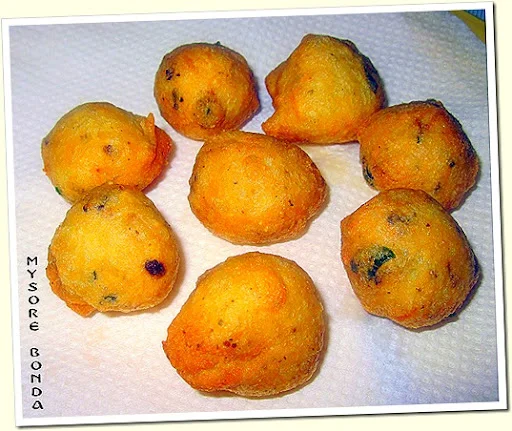
Mysore bonda, also called ulundu bonda, are crisp, savoury fritters made from urad dal with coconut, herbs and pepper. Soak the dal ahead, then fry the thick batter in batches for a snack to serve with coconut chutney.
Ingredients
- 100 g (½ cup)urad dal
- 8 g (1 tbsp)rice flour
- 1green chilli (optional)
- 1 tsppeppercorns, lightly crushed
- A fewcurry leaves, chopped
- 1 handfulcoconut pieces
- A fewcoriander leaves, chopped
- As neededsalt
- As neededwater
- As neededoil, for frying
Instructions
- 1
Soak the dal
Soak the urad dal in enough water for 1 hour.
- 2
Grind the dal
Drain the dal, then grind it with the salt and green chilli, if using, adding as little water as possible. Use ice-cold water for grinding.
- 3
Add the mix-ins
Stir in the coconut pieces, chopped curry leaves and coriander leaves, and the lightly crushed peppercorns.
- 4
Check the batter
Mix thoroughly and check that the batter is thick. If it is too loose, add a little rice flour.
- 5
Fry in batches
Heat oil in a kadai. Fry portions of the batter in batches over a low to medium flame.
- 6
Drain the bondas
Fry until golden brown, then lift them out and drain on kitchen paper.
- 7
Serve warm
Serve the bondas with coconut chutney.
What is Mysore bonda?
Mysore bonda, also known as ulundu bonda, is a South Indian savoury snack associated with Karnataka. These fritters use urad dal as their base, with coconut, herbs and pepper folded through the batter.
This version relies on a thick, freshly ground batter and a mix of crisp edges and soft centres. Coconut chutney is a classic accompaniment.
Nutrition and macros by portion
The nutrition label shows one serving as written: 180 calories, 4g protein, 13g carbs, 11g fat.
| Portion | Adjustment | kcal | Protein | Carbs | Fat |
|---|---|---|---|---|---|
| Lighter | Use less frying oil | 126 kcal | 3g | 9g | 8g |
| This serving | As written | 180 kcal | 4g | 13g | 11g |
| Hungry | Serve a larger portion | 270 kcal | 6g | 20g | 17g |
Urad dal provides most of the carbohydrates and plant protein, while coconut and frying oil contribute much of the fat. The sodium mainly depends on how much salt you add. Pair a portion with chutney and a fresh vegetable side for a more rounded plate.
The urad dal batter
Soaking: Give the dal the full hour to soften, which helps it grind evenly. Drain it before grinding so you can control how much water goes into the batter.
Grinding: Add water sparingly and use ice water as directed. The batter needs to hold its shape when spooned into the oil.
Coconut, herbs and spice
Coconut: Small pieces add little pockets of texture to the fritters. Keep them small enough to mix through the batter evenly.
Seasoning: Crushed peppercorns bring a warm bite, while curry leaves and coriander add fragrance. The chilli is optional, so leave it out for a milder batch.
Getting the texture right
Thick batter: A watery mixture is harder to portion and can make the bondas lose their shape. Add rice flour a little at a time if needed rather than tipping in extra all at once.
Oil temperature: Keep the heat low to medium as the recipe directs. If the oil is too hot, the outside may brown before the centre cooks through.
Frying and doneness
Small batches: Frying a few at a time helps the oil temperature stay steadier and leaves room to turn the bondas. Avoid crowding the kadai.
Colour cue: Look for an even golden-brown surface, then drain the fritters on kitchen paper. Serve them warm for the crispest exterior.
How to serve them
Coconut chutney is the suggested pairing and complements the savoury, peppery batter. Serve the bondas soon after frying, either as a snack or alongside other dishes.
Recipe notes & tips
- Measure out the ice water gradually so the batter stays thick.
- Chop the coconut and herbs small enough to distribute through the batter.
- Crush the peppercorns lightly rather than grinding them to powder.
- Add rice flour in small amounts only if the batter seems too loose.
- Fry in batches so the bondas have room in the kadai.
- Drain the cooked fritters on kitchen paper before serving.
Variations
- Skip the chilli: Leave it out for a milder bonda.
- More pepper: Add extra lightly crushed peppercorns for a stronger peppery flavour.
- Coconut texture: Chop the coconut more finely for smaller pieces throughout.
- Herb balance: Adjust the curry leaves and coriander to suit your taste.
- Serve with chutney: Offer a different chutney alongside the suggested coconut chutney.
Common mistakes to avoid
- Too much grinding water: The batter may turn loose; add water sparingly and use a little rice flour if needed.
- Skipping the soak: The dal may not grind as evenly; soak it for the full hour.
- Overcrowding the kadai: The oil temperature can drop; fry the bondas in batches.
- Oil too hot: The outsides can brown too quickly; keep the heat low to medium.
- Uneven mix-ins: Coconut or herbs can clump; stir them through the batter thoroughly.
How to store
Refrigerate leftover bondas in a covered container for up to 2 days. Reheat in an oven or air fryer until hot and crisp; they may soften if reheated in a microwave.
Frequently asked questions
Can I make the batter ahead?
For the best texture, grind and fry the batter shortly before serving. Keep the soaked dal refrigerated if you need to prepare it ahead, then drain and grind it when ready.
How thick should the batter be?
It should be thick enough to hold together when portioned. If it is watery, mix in a little rice flour at a time.
Can I leave out the green chilli?
Yes. The chilli is optional, so omit it for a milder result.
How do I know the bondas are cooked?
Fry them until they are golden brown, keeping the heat low to medium so the centres have time to cook.
What should I serve with Mysore bonda?
Serve it with coconut chutney, as suggested in the recipe.
Can I use water at room temperature for grinding?
The method specifies ice water for grinding. Add it sparingly to keep the batter thick.
Cook it from the original
This recipe comes from chitrasfoodbook.com. Their page has the author’s own photos, notes and tips — the best place to cook it from.
Open the recipe on chitrasfoodbook.com