
Lu Rou Fan-Braised Pork Rice
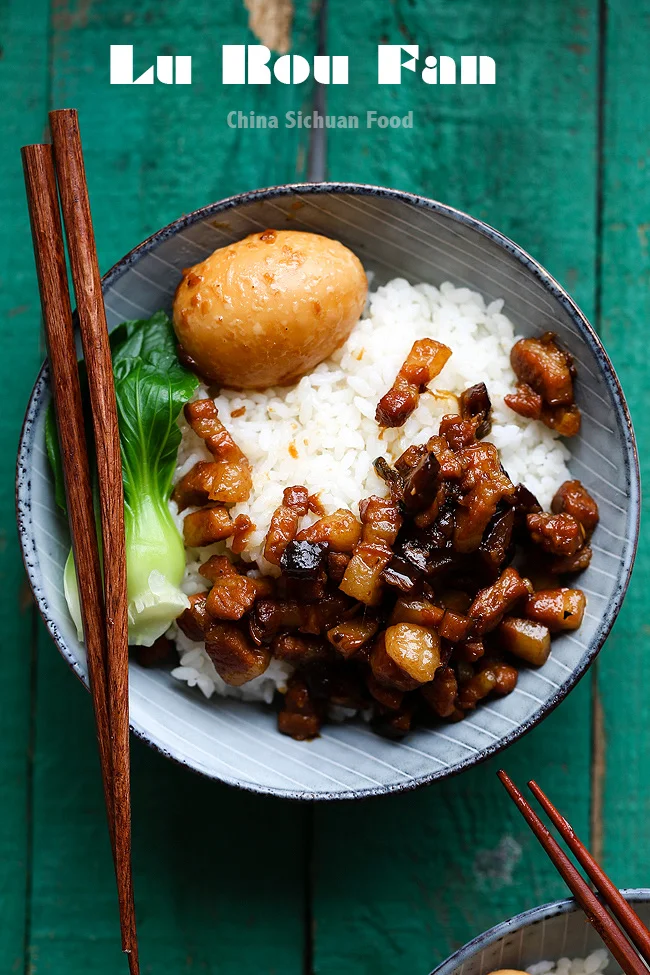
Lu Rou Fan is a Taiwanese-style bowl of rice topped with pork belly slowly braised with soy, Shaoxing wine, mushrooms and aromatics. This version builds flavour with crisp fried shallots and hard-boiled eggs, then finishes with rice and blanched bok choy.
Ingredients
- 1,000 gpork belly, skin on or off
- 4 mediumshallots, peeled and sliced
- 240 ml (1 cup)oil
- 6dried shiitake mushrooms, rehydrated
- 25 grock sugar
- 60 ml (4 tbsp)light soy sauce
- 45 ml (3 tbsp), or 30 ml (2 tbsp) dark soy saucethickened soy sauce (soy paste)
- 60 ml (4 tbsp)Shaoxing wine
- 4hard-boiled eggs, shells left on
- 4–5 clovesgarlic, sliced
- 1.25 ml (¼ tsp)white pepper
- 2spring onions
- 2–3 headsbok choy
- 4star anise
- 2bay leaves
- 10, optionalSichuan peppercorns
- 0.6 ml (⅛ tsp), optionalcumin seeds
- 1 slice, optionalsand ginger
- As neededstock or water, plus strained mushroom soaking water
- To servesteamed rice
Instructions
- 1
Dice the pork
Cut the pork belly into small cubes, about 2–3 cm.
- 2
Fry the shallots
Heat about 240 ml (1 cup) oil in a wok or saucepan. Add the sliced shallots and fry until golden brown, stirring continuously; watch the heat closely near the end. Lift them out and leave to cool. Once crisp, crush them in a plastic bag with a rolling pin or chop them with a knife.
- 3
Brown the pork
Leave about 15 ml (1 tablespoon) oil in the wok or pan. Fry the pork belly until lightly browned and beginning to release its fat.
- 4
Start the braise
Transfer the pork to a deep cast-iron pot. Add the Shaoxing wine, both soy sauces, sliced garlic, spices, white pepper, spring onions, rock sugar and diced mushrooms, followed by the strained mushroom soaking water. Add stock or water until it comes 2–3 cm above the pork. If using a regular pot, add slightly more water to account for extra evaporation. Bring to the boil, then simmer over the lowest heat for 15 minutes.
- 5
Add eggs
Stir in the fried shallots and add the hard-boiled eggs. Cover and simmer over the lowest heat for about 30–40 minutes. If using a regular pot, you may need another 20–30 minutes.
- 6
Thicken and serve
Turn up the heat briefly at the end to reduce the braising liquid slightly. Serve straight away, or let the flavours combine for several hours, then reheat, stirring to prevent sticking. Serve with steamed rice and blanched bok choy.
What is Lu Rou Fan?
Lu Rou Fan is a Taiwanese dish of rice topped with pork braised in a savoury, aromatic sauce. Its name describes the pairing of braised pork and rice, a simple format that lets the rich sauce season the grains.
This version uses pork belly, soy sauces, Shaoxing wine and shiitake mushrooms. Fried shallots add a crisp, savoury element, while eggs and bok choy make the bowl more substantial.
Nutrition and macros by portion
The nutrition label shows one serving as written: 1539 calories, 34g protein, 22g carbs, 144g fat.
| Portion | Adjustment | kcal | Protein | Carbs | Fat |
|---|---|---|---|---|---|
| Lighter | Less pork belly, more bok choy | 1077 kcal | 24g | 15g | 101g |
| This serving | As written | 1539 kcal | 34g | 22g | 144g |
| Hungry | Extra rice and pork | 2309 kcal | 51g | 33g | 216g |
Pork belly is the main source of fat and protein, while the rice provides most of the carbohydrates; the soy sauces also contribute sodium. Serve with a generous helping of bok choy and rice to make a more balanced bowl, and portion the pork and sauce to suit your appetite.
The pork and aromatics
Pork belly: cutting it into 2–3 cm cubes gives the pieces plenty of surface area to brown and leaves them easy to portion over rice.
Aromatics: garlic, spring onions, star anise and bay leaves flavour the braising liquid. Sichuan peppercorns, cumin seeds and sand ginger are optional, so you can leave them out if you prefer a simpler seasoning.
Why fry the shallots separately?
Frying the shallots until golden gives them a crisp texture and concentrated savouriness. Keep the heat controlled and stir continuously, particularly as they approach golden brown, since they can darken quickly.
Let them cool before crushing or chopping. Adding them during the braise lets their flavour mingle with the sauce while retaining some of their character.
Build the braising liquid
Soy sauces: light soy sauce seasons the pork, while thickened soy sauce adds body. The recipe allows dark soy sauce as an alternative to the thickened variety.
Mushroom water: strain the soaking liquid before adding it to the pot, then top up with stock or water until the liquid sits 2–3 cm above the pork. A regular pot may lose more steam, so the method calls for a little extra liquid.
Check the texture and timing
Keep the pot at a gentle simmer over the lowest heat rather than letting it boil vigorously. The recipe gives 15 minutes for the first simmer, then 30–40 minutes after adding the eggs; a regular pot may need another 20–30 minutes.
The pork should be tender after braising, and the sauce should be slightly thickened at the end. If it still looks thin, briefly increase the heat to reduce it, keeping the pot attended and stirring so it does not catch.
Serve it as a bowl
Spoon the pork and some sauce over steamed rice so the grains take on the braising flavours. Add a hard-boiled egg and blanched bok choy to each serving.
The dish can be served straight from the pot, though the recipe notes that resting it for several hours lets the flavours combine. Reheat it before serving and stir to keep the contents from sticking.
Recipe notes & tips
- Cut the pork into evenly sized 2–3 cm pieces so they cook at a similar rate.
- Stir the shallots continuously and watch them closely as they turn golden.
- Strain the mushroom soaking water before adding it to the pot.
- Keep the braise at the lowest heat for the simmering stages.
- Use slightly more liquid if your regular pot loses a lot of steam.
- Reheat the braise gently and stir to stop it sticking.
Variations
- Use dark soy: substitute 30 ml (2 tbsp) dark soy sauce for the thickened soy sauce.
- Skip optional spices: leave out the Sichuan peppercorns, cumin seeds or sand ginger to simplify the aromatic profile.
- Add extra greens: serve with more blanched bok choy alongside the rice.
- Rest the braise: make it several hours ahead, then reheat and stir before serving.
- Choose skin-on or skin-off: use either form of pork belly, as specified in the recipe.
Common mistakes to avoid
- Burning the shallots: lower the heat and keep stirring closely near the end of frying.
- Crowding the simmer: keep the liquid gently bubbling over the lowest heat rather than boiling hard.
- Adding unstrained mushroom water: strain it first before pouring it into the pot.
- Using too little liquid: bring it 2–3 cm above the pork and add a little more for a regular pot.
- Letting the sauce catch: stir during reheating and keep an eye on it as it thickens.
How to store
Cool leftovers and refrigerate them in a covered container; use within 3 days. Reheat the pork and sauce until piping hot, stirring to prevent sticking, and serve with freshly prepared rice and bok choy.
Frequently asked questions
Can I use dark soy sauce instead of thickened soy sauce?
Yes. The recipe gives 30 ml (2 tablespoons) dark soy sauce as an alternative to 45 ml (3 tablespoons) thickened soy sauce.
How long should the pork simmer?
Simmer it for 15 minutes first, then add the shallots and eggs and cook for about 30–40 minutes more. A regular pot may need an additional 20–30 minutes.
Can I make the braise ahead?
Yes. The method suggests resting it for several hours so the flavours can combine, then reheating it and stirring before serving.
Do I need to use every optional spice?
No. Sichuan peppercorns, cumin seeds and sand ginger are marked optional, so you can omit any or all of them.
What should I serve with Lu Rou Fan?
Serve the braised pork and sauce over steamed rice with blanched bok choy, as the recipe suggests.
Cook it from the original
This recipe comes from chinasichuanfood.com. Their page has the author’s own photos, notes and tips — the best place to cook it from.
Open the recipe on chinasichuanfood.com