
Sticky Rice Cake with Coconut – Nuomichi
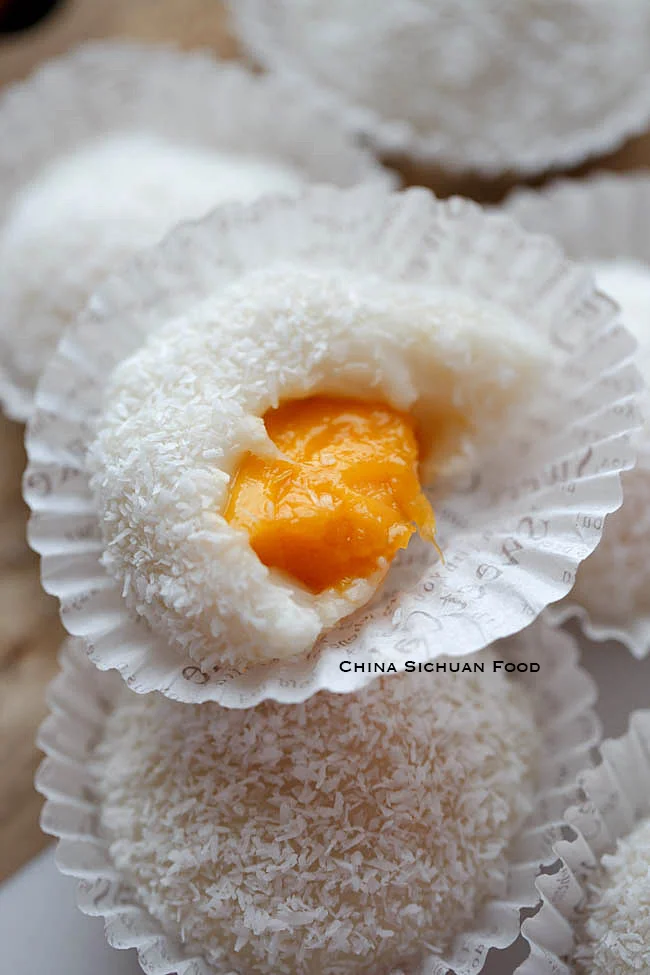
Nuomichi are soft, chewy Chinese glutinous rice cakes filled with mango, red bean paste or another chosen filling, then rolled in coconut. Steaming the rice-flour mixture makes a pliable dough that is easy to shape once chilled.
Ingredients
- 40 gdesiccated coconut, for decoration
- To tastemango, red bean paste or another filling of your choice
- 150 gwater-milled glutinous rice flour
- 40 gcornflour or plain rice flour
- 30 g, or to tasteicing sugar
- 1 tbspneutral vegetable oil
- 240 mlcoconut milk
Instructions
- 1
Mix the batter
In a large bowl, combine the glutinous rice flour, cornflour or rice flour, icing sugar, oil and coconut milk until smooth. Cover the bowl with cling film.
- 2
Steam the mixture
Set the covered bowl in a steamer. Bring the water to the boil and steam for 20 minutes, stirring the mixture once during cooking so it heats evenly.
- 3
Cool and knead
Take the bowl out of the steamer and stir the mixture with chopsticks to help it cool. Transfer it to a plate covered with cling film, then knead for 3–4 minutes using the cling film to protect your hands. Wrap the dough well and refrigerate until chilled.
- 4
Shape and fill
Once the dough is thoroughly chilled, make a circle with your thumb and index finger around it and squeeze out a small ball. Flatten and wrap the ball around your chosen filling.
- 5
Coat and chill
Roll each cake in the desiccated coconut and place it in a paper cupcake case. Repeat with the remaining dough and filling, then refrigerate all the cakes for 2 hours before serving.
What are nuomichi?
Nuomichi are Chinese glutinous rice cakes with a soft, chewy wrapper and a sweet filling. They are often finished with a coating of coconut, which adds fragrance and a slightly dry contrast to the tender dough.
This version uses coconut milk in the steamed wrapper and lets you choose the centre, such as mango or red bean paste. Chilling the dough before shaping helps make the sticky mixture easier to handle.
Nutrition and macros by portion
The nutrition label shows one serving as written: 147 calories, 1g protein, 20g carbs, 6g fat.
| Portion | Adjustment | kcal | Protein | Carbs | Fat |
|---|---|---|---|---|---|
| Lighter | Use less coconut coating | 103 kcal | 1g | 14g | 4g |
| This serving | As written | 147 kcal | 1g | 20g | 6g |
| Hungry | Make a larger portion | 221 kcal | 2g | 30g | 9g |
The coconut milk, cooking oil and desiccated coconut provide most of the fat, while the rice flours and sugar contribute most of the carbohydrate. The filling can add further carbohydrate, and the recipe provides little protein per serving. Pair a cake with fresh fruit and an unsweetened drink for a simple, balanced snack.
Choosing the flour
Glutinous rice flour: This is what gives the wrapper its characteristic stretchy, chewy texture; it is not ordinary wheat flour.
Cornflour or rice flour: The recipe allows either one alongside the glutinous rice flour. Measure the 40 g carefully so the dough keeps its soft, workable texture.
Steaming the wrapper
Covered bowl: Covering the bowl helps keep condensation from dripping into the batter as it steams. Set the bowl in the steamer once the water is boiling.
Midway stir: Stir the mixture once during the 20-minute steaming time to help it heat evenly. The cooked mixture should come together as a cohesive, sticky dough rather than remain a pourable batter.
Handling the sticky dough
Cool first: Stir the hot mixture with chopsticks to release some heat before transferring it to the cling-film-covered plate. Give it time in the fridge until it is well chilled before shaping.
Knead with a barrier: Knead for 3–4 minutes through cling film, which helps protect your hands from the sticky dough. Keep the dough wrapped while it chills so its surface does not dry out.
Filling and shaping
Small portions: Squeeze out a ball of dough using your thumb and index finger, then flatten it enough to enclose the filling. Use a modest amount of filling so the wrapper can close around it.
Seal gently: Bring the dough around the centre and pinch it closed before rolling it in coconut. If the dough becomes difficult to handle, chill it again briefly.
Serving and timing
The recipe takes 25 minutes of stated preparation and steaming time, followed by chilling: first until the dough is cold enough to shape, then for 2 hours after the cakes are assembled. Allow for this refrigeration time when planning to serve them.
Serve the cakes chilled, in their cupcake cases for easy handling. Their sweet, coconut-rich flavour works well alongside unsweetened tea or fresh fruit.
Recipe notes & tips
- Use a bowl that fits comfortably inside your steamer and can be covered.
- Stir the steaming mixture once during cooking, as directed, to help it heat evenly.
- Let the dough cool and chill fully before shaping to make it easier to handle.
- Keep the dough covered while chilling so its surface does not dry out.
- Choose a filling that is firm enough to enclose without leaking.
- Refrigerate the finished cakes for the full 2 hours before serving.
Variations
- Mango centre: Use small pieces of mango as the filling and enclose them fully in the dough.
- Red bean filling: Use red bean paste for a smooth, traditional-style sweet centre.
- Other fillings: Try another sweet filling of your choice, keeping the portion small enough to wrap.
- Sugar adjustment: Use less icing sugar for a less-sweet wrapper or add it to taste.
- Rice flour option: Use plain rice flour instead of cornflour as the recipe allows.
Common mistakes to avoid
- Shaping warm dough: It will be harder to handle; chill it until cold before forming the cakes.
- Skipping the mid-steam stir: The mixture may heat unevenly; stir it once during the 20-minute steam.
- Overfilling: The wrapper may not close; use a small amount of filling and seal the dough around it.
- Leaving dough uncovered: Its surface can dry out; keep it wrapped during chilling.
- Serving before the final chill: The cakes may not be as firm; refrigerate them for 2 hours after shaping.
How to store
Keep the cakes covered in an airtight container in the fridge and eat them within 2 days for the best texture. Serve chilled; reheating is not needed and may soften the wrapper.
Frequently asked questions
Can I use plain rice flour instead of cornflour?
Yes. The recipe lists plain rice flour as an alternative to cornflour; use 40 g.
Do I need to use mango?
No. The filling can be mango, red bean paste or another filling you prefer.
Why is the dough so sticky?
That sticky, chewy quality comes from the glutinous rice flour. Cooling and chilling the dough makes it more manageable for shaping.
How long should I chill the dough?
Chill it until it is well chilled before shaping. After filling and coating the cakes, refrigerate them for a further 2 hours.
Can I make the cakes ahead?
Yes. Make them in advance and keep them covered in the fridge; they are served chilled.
Cook it from the original
This recipe comes from chinasichuanfood.com. Their page has the author’s own photos, notes and tips — the best place to cook it from.
Open the recipe on chinasichuanfood.com