
Braised Spicy Fish—Sichuan Style
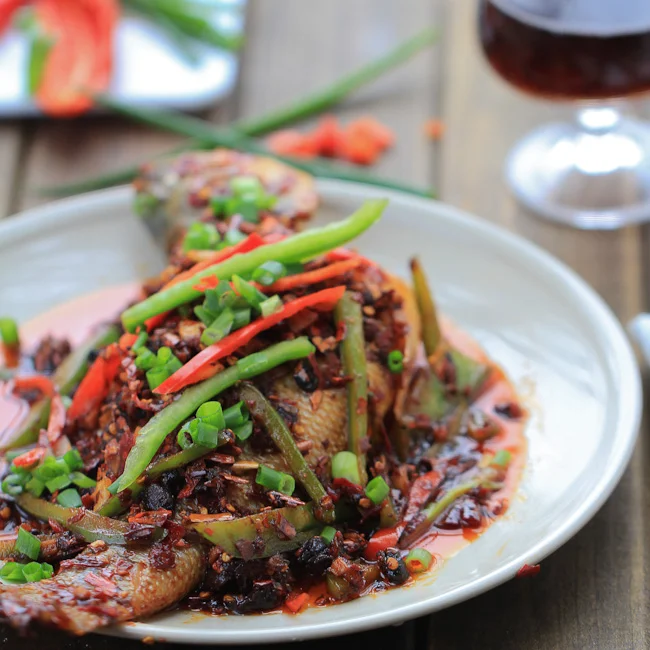
This Sichuan-style braised fish pairs a whole fish with doubanjiang, fermented black beans and sweet peppers for a spicy, savoury pan-cooked dish. It is a quick way to serve fish with bold flavours and a simple garnish of spring onion.
Ingredients
- 1fresh freshwater fish
- 1.5 tablespoonsdoubanjiang
- 2 teaspoonsdou-chi (fermented black beans)
- 1 tablespooncooking oil
- 1green round pepper
- 1red round pepper
- 1 rootginger
- 2 clovesgarlic
- 1scallion
- 1 tablespooncooking wine
- 1 tablespoonchopped spring onions
- 1 tablespooncooking wine
- 2 teaspoonssalt
Instructions
- 1
Season the fish
Scale and wash the fish carefully. Rub it all over with 1 tablespoon of cooking wine and 2 teaspoons of salt, spreading the salt evenly. Leave it to stand for 10 minutes.
- 2
Prepare ingredients
Prepare the remaining ingredients one by one.
- 3
Brown the fish
Heat 1/2 tablespoon of oil in a pan and sauté the fish until both sides are lightly golden. Transfer it out of the pan.
- 4
Fry the aromatics
Heat the remaining 1/2 tablespoon of oil in the pan over a medium heat. Add the ginger, garlic and scallion, and stir-fry until fragrant. Add the doubanjiang and dou-chi, then stir-fry until red oil appears.
- 5
Braise the fish
Return the fish to the pan. Add 1 tablespoon of cooking wine and the strips of pepper. Cover and cook for around 2 minutes, then turn the fish over and cook for another 2 minutes.
- 6
Garnish and serve
Transfer the fish out of the pan and garnish with chopped spring onions. Add some pepper strips as decoration if you like.
What is Sichuan-style braised fish?
This dish takes its cue from Sichuan cooking, known for assertive, layered seasoning. Doubanjiang, a fermented chilli and broad-bean paste, gives the fish its savoury heat, while dou-chi adds another fermented note.
Here, a whole fish is briefly browned, then cooked covered with the seasonings and pepper strips. That short, covered finish helps the fish take on the sauce without requiring a long braise.
Nutrition and macros by portion
The nutrition label shows one serving as written: 364 calories, 35g protein, 27g carbs, 16g fat.
| Portion | Adjustment | kcal | Protein | Carbs | Fat |
|---|---|---|---|---|---|
| Lighter | Use less cooking oil | 255 kcal | 25g | 19g | 11g |
| This serving | As written | 364 kcal | 35g | 27g | 16g |
| Hungry | Serve with extra rice | 546 kcal | 53g | 41g | 24g |
The fish provides most of the protein, while the peppers and any rice served alongside contribute carbohydrates. Oil and the fat in the fish account for much of the fat; serve with steamed rice and an extra portion of vegetables if you want a more balanced plate.
Choosing the fish
Fish: Use a fresh fish that fits your pan, scaled and cleaned before cooking. The recipe does not specify a variety or size, so cooking time can depend on the fish you have.
Surface: Drying the fish after washing can help it brown more readily. Take care when handling it, especially when turning it in the pan.
Building the flavour base
Aromatics: Ginger, garlic and scallion go into the oil first and are cooked until fragrant. Keep them moving over medium heat so they flavour the oil without scorching.
Fermented seasonings: Stir-fry the doubanjiang and dou-chi until red oil appears, as directed. This signals that the paste has warmed through and coloured the oil.
Getting the browning right
First sear: The fish only needs to become lightly golden on both sides before it is removed. Handle it gently so it stays intact when you return it to the pan.
Pan space: If the fish cannot lie comfortably in the pan, use one large enough to hold it. Crowding or forcing the fish into a small pan makes turning more difficult.
Checking when it is done
Timing: The method cooks the covered fish for around 2 minutes on each side after adding the wine and peppers. The actual time may vary with the fish's size and thickness.
Doneness: Check the thickest part near the backbone; the flesh should be opaque and separate readily from the bones. If it is not ready after the stated time, continue cooking briefly and check again.
Serving the fish
Garnish: Scatter chopped spring onions over the fish just before serving. A few strips of pepper can be added on top for the decoration suggested in the method.
On the plate: Serve with a plain accompaniment such as steamed rice to make a fuller meal and balance the strongly seasoned fish. Take care around the bones when eating.
Recipe notes & tips
- Scale and clean the fish thoroughly before seasoning it.
- Spread the salt evenly over the fish so the seasoning is not concentrated in one spot.
- Cut the peppers into strips before you start cooking, as the pan stages move quickly.
- Keep the aromatics moving over medium heat to help prevent them from burning.
- Turn the fish carefully with a broad spatula to reduce the chance of it breaking.
- Check the thickest part of the fish for doneness rather than relying only on the brief cooking time.
Variations
- Adjust the heat: Use a little less doubanjiang for a milder result.
- Change the peppers: Use just one colour of round pepper if that is what you have.
- Add more ginger: Use extra ginger for a stronger aromatic note.
- Serve with rice: Add steamed rice to catch the savoury pan flavours.
- Garnish simply: Finish with spring onions and leave off the decorative pepper strips.
Common mistakes to avoid
- Uneven seasoning: Spread the salt over the whole fish before leaving it to stand.
- Scorched aromatics: Keep the ginger, garlic and scallion moving over medium heat.
- Skipping the browning: Give both sides a light sear before removing the fish.
- Rough turning: Use a broad spatula and support the fish as you turn it.
- Relying only on the timer: Check the thickest part, since fish size affects how quickly it cooks.
How to store
Refrigerate leftovers promptly in a covered container and eat within 1–2 days. Reheat gently in a covered pan until piping hot throughout, taking care not to break up the fish.
Frequently asked questions
Can I use fish fillets instead of a whole fish?
Yes, but fillets may cook faster and are more delicate to turn. Check them early and adjust the cooking time so they do not overcook.
What is dou-chi?
Dou-chi, also called douchi, is a Chinese fermented black bean seasoning. It contributes a savoury, fermented flavour to the sauce.
Is this dish very spicy?
Doubanjiang brings chilli heat, though its strength varies by brand. For a milder dish, reduce the amount of paste.
What does 'red oil appears' mean?
As the doubanjiang heats in the oil, it colours the oil red. Stir the paste through the pan until you can see this colour develop.
How do I know the whole fish is cooked?
Check the thickest flesh near the backbone; it should be opaque and separate readily from the bones. Give it a little longer if it is still translucent.
What can I serve with braised fish?
Steamed rice is a straightforward accompaniment to the strongly seasoned fish. A side of vegetables also works well.
Cook it from the original
This recipe comes from chinasichuanfood.com. Their page has the author’s own photos, notes and tips — the best place to cook it from.
Open the recipe on chinasichuanfood.com