
Biscoff Cheesecake Bars
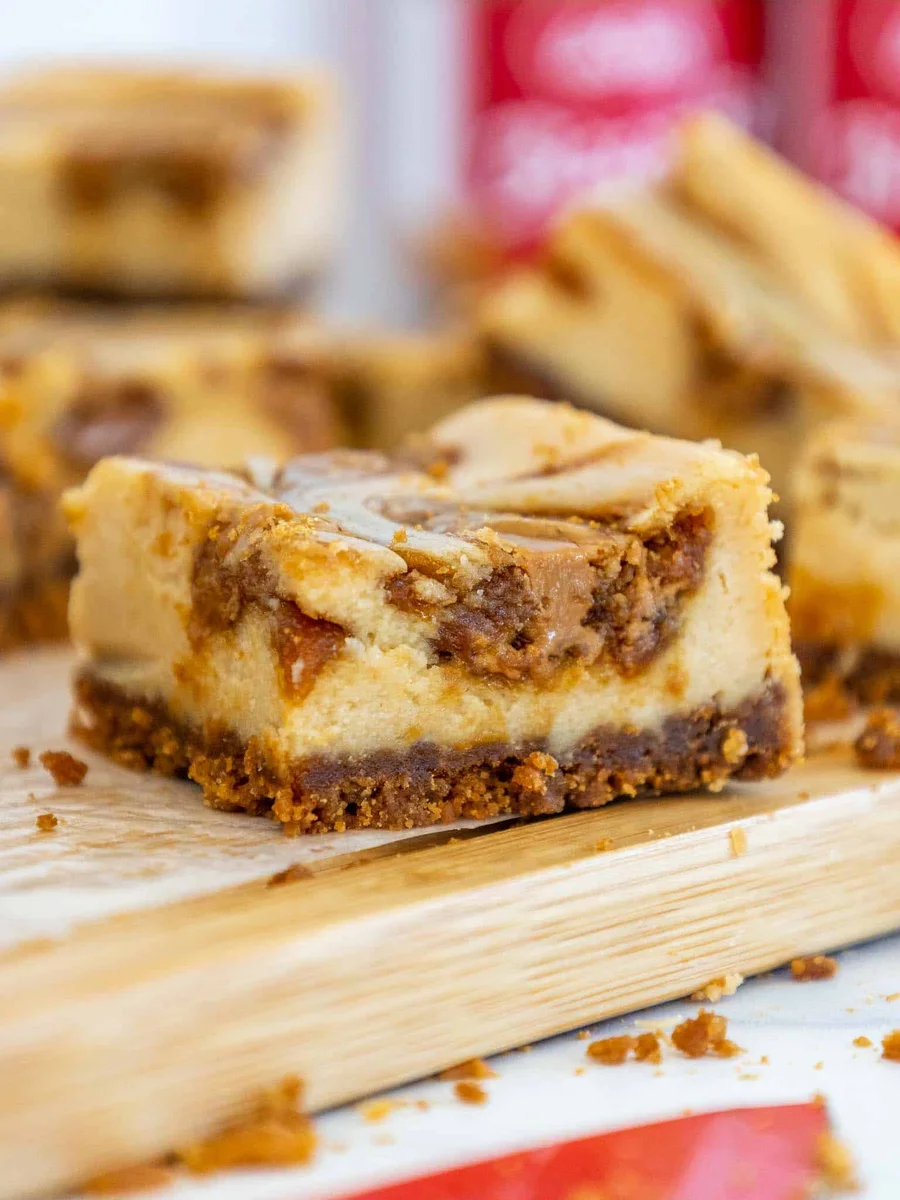
These American-style cheesecake bars pair a buttery Biscoff biscuit base with a creamy cookie-butter filling and a marbled topping. They are a rich make-ahead dessert, with neat squares that are easy to serve.
Ingredients
- 160 g (about 20 biscuits)Biscoff biscuit crumbs
- 56 gsalted butter, melted
- 452 gfull-fat cream cheese, at room temperature
- 60 gcookie butter
- 133 ggranulated sugar
- 2 large (112 g), at room temperatureeggs
- 4 gvanilla extract or vanilla bean paste
- 120 gcookie butter
Instructions
- 1
Prepare the tin
Heat the oven to 165°C. Line and grease an 20 cm square baking tin with baking parchment; unpainted metal binder clips can hold the paper in place.
- 2
Mix the crumbs
Put the Biscoff crumbs and melted butter in a medium bowl. Stir until the crumbs are evenly coated and look moist.
- 3
Press the base
Tip the biscuit mixture into the prepared tin. Press it firmly with the flat bottom of a measuring cup or glass to make a compact, even layer.
- 4
Bake the crust
Bake for 8 minutes, then take the tin out and set it on a wire rack to cool. Leave the oven on.
- 5
Beat the filling
While the crust bakes and cools, beat the cream cheese and 60 g cookie butter in a medium bowl with a hand mixer or stand mixer fitted with a whisk. Mix at medium-high speed for 1 minute, until creamy and smooth.
- 6
Add sugar
Mix in the sugar at medium-low speed until combined, scraping the sides and bottom of the bowl with a rubber spatula as needed.
- 7
Finish the batter
Add the eggs and vanilla. Mix at medium-low speed until incorporated and smooth; if you see any lumps, continue mixing on low.
- 8
Fill the tin
Pour the cheesecake mixture over the cooled biscuit crust and spread it evenly.
- 9
Make the swirls
Microwave the remaining 120 g cookie butter for 10 seconds. Drop small spoonfuls over the filling, then draw a butter knife or offset spatula through them to create swirls.
- 10
Bake the bars
Bake on the oven's middle rack at 165°C for 43–48 minutes. Put a large, rimmed baking tray filled with 2.5 cm of water on the rack below; if it does not fit, use another pan that holds the same depth of water and fits on the lower rack. Rotate the bars halfway through baking, and cover the top with foil if it browns too much.
- 11
Check the centre
Gently wiggle the tin and watch the centre: it should have a small wobble when the bars are done. Cheesecake does not set as firmly as cake in the oven, so a skewer test is not suitable.
- 12
Cool and chill
Let the bars cool completely in the tin on a metal rack. Once they reach room temperature, refrigerate them for at least 2 hours or overnight; putting them straight into the fridge from the oven can cause the top to crack.
- 13
Slice the bars
Cut the fully cooled bars with a sharp, warm knife, wiping it clean after every cut for neater squares.
- 14
Store leftovers
Keep leftover bars in an airtight container in the fridge for up to 5 days.
What are Biscoff cheesecake bars?
Cheesecake bars are a baked, chilled cheesecake cut into individual squares rather than served as a round cake. This American-style version layers a spiced Biscoff biscuit crust with a cream-cheese filling and a cookie-butter swirl.
The biscuit base gives the soft filling a firm, caramelised contrast, while cookie butter appears both in the batter and on top. The shallow square tin also makes the dessert straightforward to portion and share.
Nutrition and macros by portion
The nutrition label shows one serving as written: 396 calories, 5g protein, 39g carbs, 26g fat.
| Portion | Adjustment | kcal | Protein | Carbs | Fat |
|---|---|---|---|---|---|
| Lighter | Smaller bar, fresh berries | 277 kcal | 4g | 27g | 18g |
| This serving | As written | 396 kcal | 5g | 39g | 26g |
| Hungry | Serve two bars | 594 kcal | 8g | 59g | 39g |
The biscuit crumbs and sugar provide most of the carbohydrates, while butter, full-fat cream cheese and cookie butter contribute much of the fat. The cream cheese and eggs supply some protein. Pair a bar with fresh fruit, or serve it after a meal that includes vegetables and a protein-rich main.
Build a firm biscuit base
Even crumbs: use finely crushed Biscoff biscuits so the butter can coat them throughout. The mixture should look moist before it goes into the tin.
Compact layer: press the crumbs firmly and evenly, especially into the corners. A flat-bottomed cup makes it easier to create a base that holds together when sliced.
Keep the filling smooth
Room-temperature ingredients: softened cream cheese and eggs blend more readily than cold ones. This helps you mix a smooth batter without needing to beat it excessively.
Gentle mixing: scrape the bowl while adding the sugar, eggs and vanilla so no unmixed cream cheese remains at the bottom or sides. Stop once the batter is smooth and incorporated.
Create the cookie-butter swirl
Warm topping: a brief 10-second microwave softens the cookie butter so it can be spooned over the filling. If it is still too stiff to drizzle or dollop, warm it only in short additional bursts.
Light strokes: draw a knife or offset spatula through the dollops to make swirls without mixing the topping completely into the filling. A few passes are enough to leave a visible marbled pattern.
Judge when they are baked
Small wobble: the edges should look set while the centre moves slightly when the tin is nudged. The filling will firm further as it cools and chills.
Even heat: the tray of water sits on the lower rack beneath the bars, and rotating the tin halfway through helps them bake evenly. Shield the top with foil if it begins to brown too much.
Cool before slicing
Gradual cooling: leave the tin on a wire rack until the bars reach room temperature, then chill them for at least 2 hours or overnight. This gives the filling time to set and helps avoid a cracked top.
Clean cuts: warm a sharp knife and wipe it between slices. Chilling the bars fully first makes it easier to cut tidy squares.
Serve and portion
These bars are rich, so small squares make a satisfying dessert after a lighter meal. Serve them straight from the fridge, or let them stand briefly for a softer texture.
Fresh berries or sliced fruit make a bright accompaniment, while unsweetened tea or coffee balances the sweet cookie-butter flavour.
Recipe notes & tips
- Bring the cream cheese and eggs to room temperature before mixing for a smoother batter.
- Line the tin with parchment that extends over the sides to make lifting out the chilled slab easier.
- Press the biscuit crumbs firmly into an even layer so the base stays together when sliced.
- Use short microwave bursts if the cookie butter needs more warming after its initial 10 seconds.
- Start checking the centre at 43 minutes, as the bars should retain a slight wobble when they come out.
- For cleaner squares, chill thoroughly and wipe the warmed knife between cuts.
Variations
- Extra spice: Add a small pinch of ground cinnamon to the biscuit crumbs for a warmer base.
- Chocolate finish: Drizzle melted dark chocolate over the chilled bars just before serving.
- Fruit pairing: Serve each bar with fresh raspberries or sliced strawberries for a tart contrast.
- Crisp topping: Scatter a few extra crushed Biscoff biscuits over the filling before baking.
- Neat layers: Reserve some melted cookie butter and add a little extra marbling on top before baking.
Common mistakes to avoid
- Cold cream cheese: It can leave lumps in the batter; let it soften at room temperature before mixing.
- Loose crust: Crumbs that are not pressed firmly may crumble when sliced; compact them evenly across the tin.
- Overmixing the batter: Excessive beating can incorporate too much air; stop once the ingredients are smooth and combined.
- Overbaking: A completely firm centre in the oven can become dry; take the bars out when the centre still wobbles slightly.
- Skipping the cooling: Chilling bars while they are hot can encourage cracks; cool them fully at room temperature first.
- Blunt or cold knife: It can drag through the filling; use a sharp, warm blade and clean it between cuts.
How to store
Keep the bars in an airtight container in the fridge for up to 5 days. Serve chilled, or leave a portion at room temperature briefly to soften slightly; the recipe gives no reheating instructions.
Frequently asked questions
How can I tell when the cheesecake bars are done?
The edges should look set and the centre should have a small wobble when you gently move the tin. It will firm up as the bars cool and chill.
Can I make these bars ahead?
Yes. Chill them for at least 2 hours, or overnight, before slicing; they can also be stored in the fridge for up to 5 days.
Why do the ingredients need to be at room temperature?
Room-temperature cream cheese and eggs blend more easily into a smooth filling. Cold ingredients can leave lumps in the batter.
Can I use a skewer to test the filling?
No. Baked cheesecake remains softer in the centre than cake, so use the gentle-wobble test instead.
Why is there a tray of water in the oven?
The method places a tray holding 2.5 cm of water on the rack below the bars while they bake. Use a pan that fits on the lower rack.
How do I cut clean squares?
Chill the bars fully, then cut them with a sharp, warm knife. Wipe the blade clean after each cut.
Cook it from the original
This recipe comes from chelsweets.com. Their page has the author’s own photos, notes and tips — the best place to cook it from.
Open the recipe on chelsweets.com