
Vegetarian Mapo Tofu with Mushrooms
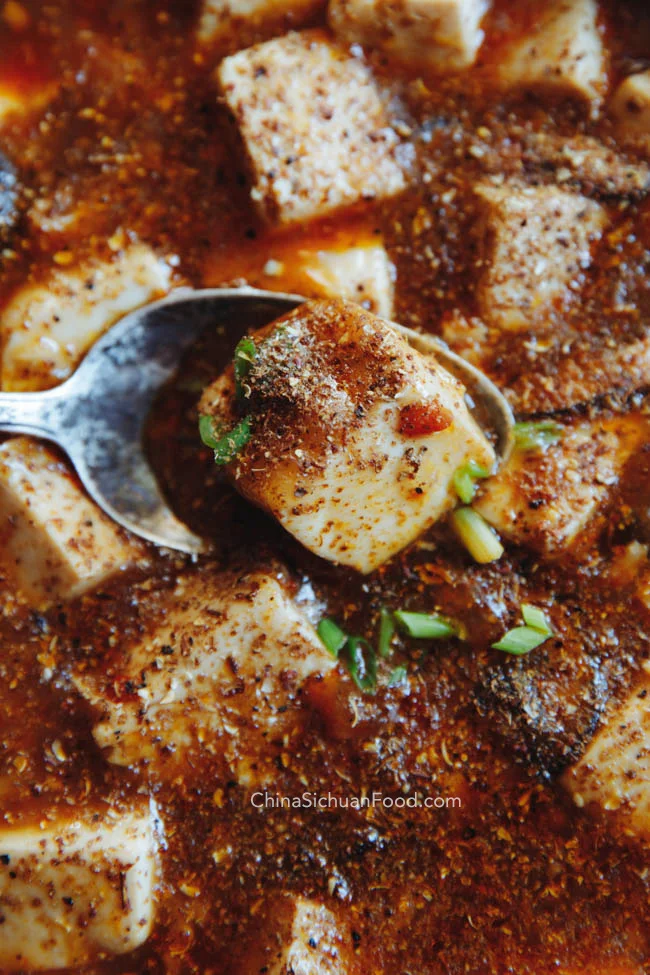
This vegetarian take on Sichuan mapo tofu uses shiitake mushrooms in place of meat, with soft tofu in a savoury, chilli-bean sauce. It comes together in about 20 minutes and is best served with rice to catch the sauce.
Ingredients
- 450 gsoft tofu
- 4 mediumshiitake mushrooms, sliced
- 1½ tbspdoubanjiang, chopped
- ½ tbspfermented black beans, chopped
- 2 tbspcooking oil
- 2shallot whites, chopped
- 2 clovesgarlic, chopped
- 1 inchginger, chopped
- 2 tbspoil
- 1 tbsplight soy sauce
- 2 cups (about 475 ml)water
- ¼ tspsugar
- 1 tspsesame oil
- To tastefresh Sichuan peppercorn powder
- 2 tbspwater
- 2 tbspsweet potato starch, or 1½ tbsp cornflour
- A pinch, plus to tastesalt
Instructions
- 1
Prepare the aromatics
Slice the mushrooms. Chop the garlic, ginger, shallot whites, doubanjiang and fermented black beans.
- 2
Blanch the tofu
Cut the tofu into cubes about 2 cm across. Bring a generous amount of water to the boil, add a pinch of salt, then gently add the tofu. Cook for 1 minute, lift it out and drain.
- 3
Fry the seasonings
Cook the doubanjiang in the cooking oil over a low heat for 1 minute, until the oil turns red. Add the garlic, shallot whites, ginger and fermented black beans; fry for 30 seconds, until fragrant. Add the mushrooms and cook until soft.
- 4
Simmer the tofu
Add the 2 cups of water and bring to the boil over a high heat. Gently slide in the tofu, then add the light soy sauce and sugar. Once boiling, reduce the heat and simmer for 6–8 minutes. Drizzle with sesame oil.
- 5
Thicken the sauce
Stir the 2 tbsp water into the sweet potato starch, then pour half of the mixture into the simmering pot. Wait about 30 seconds before adding the rest. Taste the tofu and add a pinch of salt if needed.
- 6
Finish and serve
When the seasonings cling to most of the tofu cubes, transfer the dish to a serving bowl. Sprinkle with Sichuan peppercorn powder to taste.
What is mapo tofu?
Mapo tofu is a Sichuan dish traditionally made with soft tofu in a punchy, savoury sauce, often with minced meat and doubanjiang. Its characteristic flavour comes from fermented chilli bean paste and the citrusy tingle of Sichuan pepper.
This version replaces the meat with shiitake mushrooms. They add savoury depth while keeping the tofu at the centre of the dish.
Nutrition and macros by portion
The nutrition label shows one serving as written: 291 calories, 22g protein, 13g carbs, 17g fat.
| Portion | Adjustment | kcal | Protein | Carbs | Fat |
|---|---|---|---|---|---|
| Lighter | Use less cooking oil | 204 kcal | 15g | 9g | 12g |
| This serving | As written | 291 kcal | 22g | 13g | 17g |
| Hungry | Serve with extra rice | 437 kcal | 33g | 20g | 26g |
Tofu provides much of the protein, while the tofu and starch contribute carbohydrates. The cooking oils, sesame oil and tofu account for much of the fat; serve with a modest portion of rice and add a vegetable side to round out the plate.
Why soft tofu works
Soft tofu gives the dish its tender texture and absorbs the seasoned broth as it simmers. Cut it into even cubes of about 2 cm so they warm through at roughly the same pace.
Blanching the cubes briefly before adding them to the sauce helps them keep their shape during the later simmer. Handle them gently when moving them in and out of the pot.
Build flavour in the pan
Doubanjiang: fry it gently until the oil turns red, rather than letting it scorch. This gives the sauce its savoury, chilli-rich base.
Aromatics: garlic, ginger, shallot whites and fermented black beans go in next. Their short 30-second fry is enough to release their aroma before the mushrooms are added.
Get the sauce texture right
Let the mushrooms soften before adding the water, then simmer the tofu for 6–8 minutes so it can take on the flavour of the broth. Keep the heat gentle once the pot has come back to the boil.
Mix the starch thoroughly with the measured water before adding it. Adding half, waiting about 30 seconds and then adding the rest gives you a chance to see how the sauce thickens.
Finish with a light hand
The sesame oil goes in near the end, while Sichuan peppercorn powder is sprinkled over the finished dish. Add the pepper gradually so its distinctive tingle suits your taste.
The recipe calls for a final taste before serving; add salt only if the tofu needs it, since the fermented beans, doubanjiang and soy sauce already season the dish.
What to serve with it
Steamed rice is a natural match for the savoury sauce and makes this a more filling meal. Spoon the tofu and sauce over the rice just before eating.
For a simple side, serve with a plain green vegetable, such as steamed greens. Keep the side lightly seasoned so it does not compete with the mapo tofu.
Recipe notes & tips
- Keep the doubanjiang over a low heat so it colours the oil without burning.
- Use a slotted spoon to move the tofu gently and avoid breaking the cubes.
- Have the aromatics chopped before you start frying, as the early cooking stages move quickly.
- Stir the starch and water again just before using, since the starch can settle.
- Add the Sichuan peppercorn powder a little at a time and taste as you go.
Variations
- Use cornflour: replace the sweet potato starch with 1½ tbsp cornflour.
- Adjust the heat: use a little less doubanjiang for a milder sauce.
- Add greens: fold in a handful of leafy greens during the final minutes of simmering.
- Use firmer tofu: choose medium-firm tofu if you prefer cubes that hold their shape more firmly.
- Serve with noodles: spoon the tofu and sauce over cooked noodles instead of rice.
Common mistakes to avoid
- Scorching the doubanjiang: keep the heat low and stir until the oil turns red.
- Breaking the tofu: slide it into the pot gently and avoid vigorous stirring.
- Adding dry starch: mix it with the measured water first so it thickens evenly.
- Over-thickening the sauce: add the starch mixture in two stages and assess the texture between additions.
- Over-seasoning early: taste near the end before adding any extra salt.
How to store
Refrigerate leftovers in a covered container for up to 2 days. Reheat gently in a saucepan until piping hot, stirring carefully; add a splash of water if the sauce has thickened.
Frequently asked questions
Can I use firm tofu instead?
Yes, but the texture will be firmer and less delicate than with soft tofu. Cut it into cubes and handle gently while simmering.
What can I use instead of sweet potato starch?
The recipe gives 1½ tbsp cornflour as an alternative to 2 tbsp sweet potato starch. Mix either option with the 2 tbsp water before adding it to the pot.
How spicy is this dish?
Its heat depends largely on the doubanjiang and how much Sichuan peppercorn powder you use. Add the pepper powder to taste at the end.
Can I make it ahead?
It is best freshly cooked, when the tofu is tender and the sauce has just thickened. You can chop the aromatics and mushrooms ahead, then refrigerate them until needed.
What should I serve with mapo tofu?
Steamed rice is the simplest pairing and works well with the sauce. A lightly seasoned green vegetable makes a good side.
Cook it from the original
This recipe comes from chinasichuanfood.com. Their page has the author’s own photos, notes and tips — the best place to cook it from.
Open the recipe on chinasichuanfood.com