
Raspberry scones
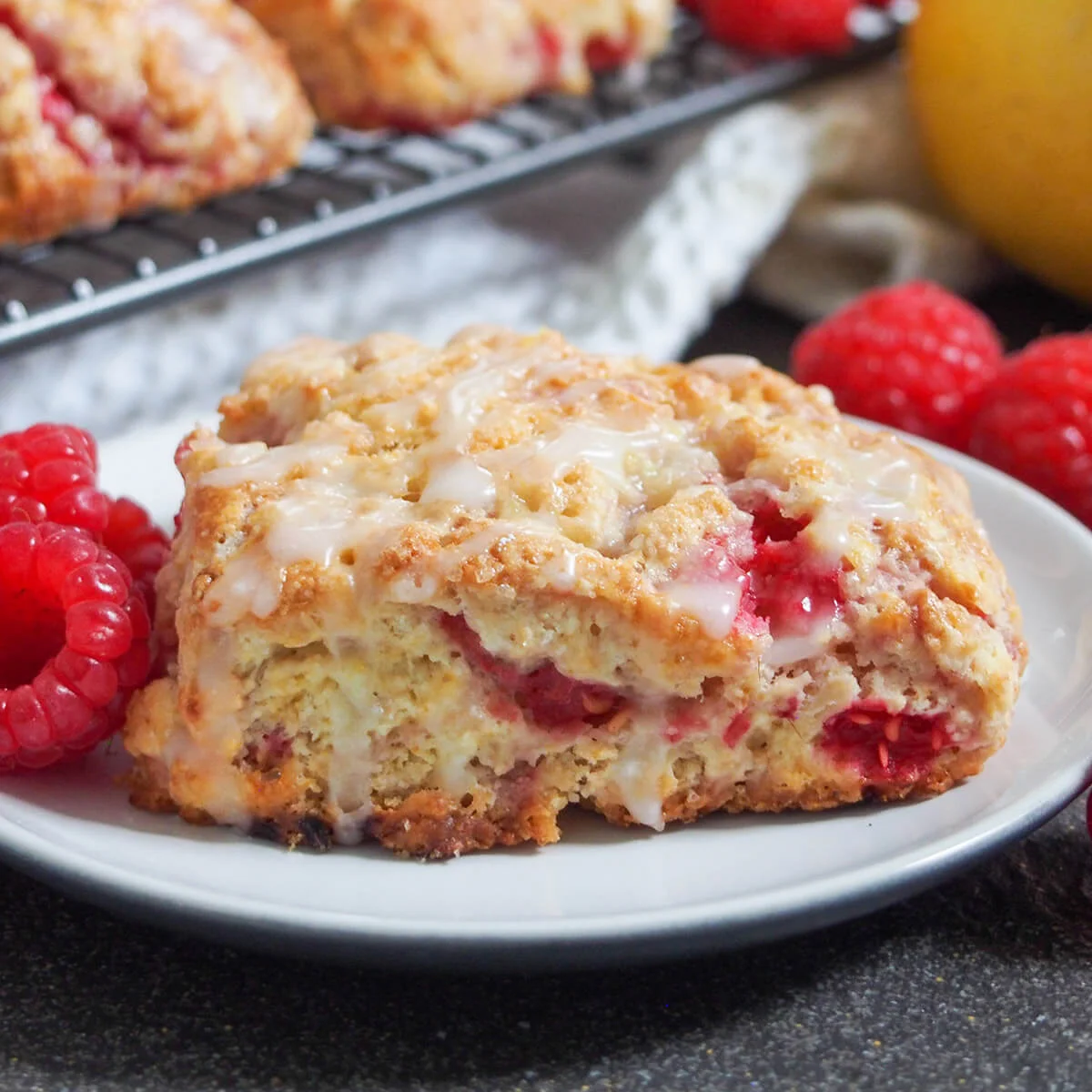
These British-style raspberry scones bring fresh fruit and a bright lemon glaze to a teatime classic. They come together quickly and are best enjoyed once the glaze has set.
Ingredients
- 280 g (2 1/4 cups)plain flour
- 18 g (1 1/2 tbsp)baking powder
- 2.5 g (1/2 tsp)salt
- 25 g (2 tbsp)sugar
- 70 g (5 tbsp), coldunsalted butter
- 160 ml (2/3 cup)milk, or cream for richer scones
- 1egg
- 2.5 ml (1/2 tsp), optionalvanilla extract
- 125 g (1 cup)raspberries
- Zest of 1/2 lemon, optionallemon zest
- 1 egg or 15–30 ml (1–2 tbsp) milk, optionalegg or milk, for brushing
- 30 g (4 tbsp)icing sugar
- 10 ml (2 tsp), or a little more as neededlemon juice
- Zest of 1/2 lemonlemon zest
Instructions
- 1
Heat the oven
Preheat the oven to 220°C (425°F). Line a baking tray with baking parchment or a silicone mat.
- 2
Mix dry ingredients
Stir the flour, baking powder, salt and sugar together in a large bowl.
- 3
Rub in butter
Cut the cold butter into small pieces and add it to the flour mixture. Rub it in with your fingertips, or use a pastry cutter, until the mixture resembles breadcrumbs; take care not to overwork it.
- 4
Add fruit carefully
Add the egg and milk, or cream, along with the vanilla if using. Mix gently with a blunt knife or spatula until combined, then fold in the raspberries and optional lemon zest, keeping the berries in fairly large pieces.
- 5
Shape the scones
Turn the dough onto a floured surface and press it together. Flatten it to about 2–3 cm (2/3–1 in) thick, then cut into 8 large or 16 small scones, or your preferred size. Transfer them carefully to the prepared tray.
- 6
Brush the tops
If you like, brush the scones with egg wash or milk to help them brown a little more. You can also sprinkle them with sugar, though the glaze provides sweetness.
- 7
Bake until golden
Bake for about 10–12 minutes, until lightly browned on top. Leave the scones to cool.
- 8
Make the glaze
Once the scones are cool, mix the icing sugar with the lemon juice and zest to make a smooth paste. Drizzle it over the scones.
What are raspberry scones?
Scones are a familiar part of British teatime, usually served with something sweet or alongside a cup of tea. This version folds raspberries into a simple baking-powder dough and finishes the cooled scones with lemon glaze.
The method keeps the dough handling light, which helps the scones bake up tender. Cutting shapes directly from the flattened dough also avoids the need to reroll scraps.
Nutrition and macros by portion
The nutrition label shows one serving as written: 252 calories, 5g protein, 38g carbs, 9g fat.
| Portion | Adjustment | kcal | Protein | Carbs | Fat |
|---|---|---|---|---|---|
| Lighter | Choose milk, smaller scones | 176 kcal | 4g | 27g | 6g |
| This serving | As written | 252 kcal | 5g | 38g | 9g |
| Hungry | Choose a larger scone | 378 kcal | 8g | 57g | 14g |
The flour and sugar provide most of the carbohydrate, while butter and the optional cream contribute fat. Egg, milk and flour contribute some protein, and the raspberries add fruit and fibre. Pair a scone with fresh fruit or yoghurt for a more balanced plate.
Choosing the ingredients
Cold butter: small pieces rub into the flour more easily and give the dough its breadcrumb-like starting texture. Keep the handling brief so the butter does not soften too much.
Raspberries: fold them in gently after mixing the wet and dry ingredients. Large pieces give the finished scones pockets of fruit rather than turning the dough uniformly pink.
Bringing the dough together
Gentle mixing: use a blunt knife or spatula to bring the egg and milk into the flour mixture. Stop when the dough is just combined; extra mixing can make the scones less tender.
Shaping: press the mixture together on a floured surface rather than kneading it. Aim for an even thickness of 2–3 cm so the scones bake at a similar rate.
How to judge doneness
Colour: the tops should be lightly browned after about 10–12 minutes in the 220°C oven. The recipe gives colour as the main cue, so start checking towards the earlier end of the baking time.
Cooling: let the scones cool before adding the glaze. This gives the lemon icing a neater finish rather than letting it melt straight into the warm tops.
Cutting and portioning
Eight large scones make a generous teatime portion, while cutting the dough into 16 produces smaller pieces. The dough can be cut into squares or rectangles, or into another shape that suits the portion size.
The mixture is described as less suited to a cutter, so cut shapes directly from the flattened dough. Move them carefully to the tray to help keep the berries in place.
Serving ideas
Serve the scones once the glaze has set, with tea or coffee. Their fruit and lemon topping make them enjoyable on their own, or you can offer extra raspberries alongside.
For a fuller teatime spread, pair them with fresh fruit and a savoury option. If serving warm, leave off the glaze until the scones have cooled.
Recipe notes & tips
- Keep the butter cold until you are ready to rub it into the flour.
- Stop rubbing the butter in when the mixture looks like breadcrumbs.
- Fold the raspberries through gently to keep them in large pieces.
- Flour the work surface lightly before shaping the dough.
- Wait until the scones are cool before mixing and drizzling on the glaze.
Variations
- Use cream: replace the milk with cream for richer scones.
- Add vanilla: include the optional vanilla extract for a gentle aromatic note.
- Add lemon to the dough: fold in the optional lemon zest with the raspberries.
- Make smaller scones: cut the dough into 16 pieces instead of 8.
- Skip the glaze: leave off the icing for a less sweet finish.
Common mistakes to avoid
- Overworking the dough: mix only until combined to help keep the scones tender.
- Crushing the berries: fold them in gently so they remain in larger pieces.
- Uneven shaping: flatten the dough to an even 2–3 cm thickness for more consistent baking.
- Moving the dough roughly: transfer the cut scones carefully to keep their shape.
- Glazing while warm: cool the scones first so the lemon icing does not melt away.
How to store
Store cooled scones in an airtight container at room temperature and eat within 1–2 days for the best texture. Warm briefly in a low oven before serving; add the glaze after reheating if you have not glazed them already.
Frequently asked questions
Can I use cream instead of milk?
Yes. The recipe gives cream as an option for richer scones; use the same amount as the milk.
Do I have to add vanilla?
No, it is optional. You can leave it out without changing the rest of the method.
Can I make smaller scones?
Yes. Cut the flattened dough into 16 smaller scones instead of 8 large ones.
Why should the raspberries stay in large pieces?
Gentle folding helps keep them from breaking up and colouring the dough throughout.
When should I add the lemon glaze?
Make and drizzle the glaze once the scones are cool, so it stays on top rather than melting into them.
How do I know when the scones are ready?
Bake for about 10–12 minutes, until they are lightly browned on top.
Cook it from the original
This recipe comes from carolinescooking.com. Their page has the author’s own photos, notes and tips — the best place to cook it from.
Open the recipe on carolinescooking.com