
Fiskefrikadeller (Danish fish cakes)
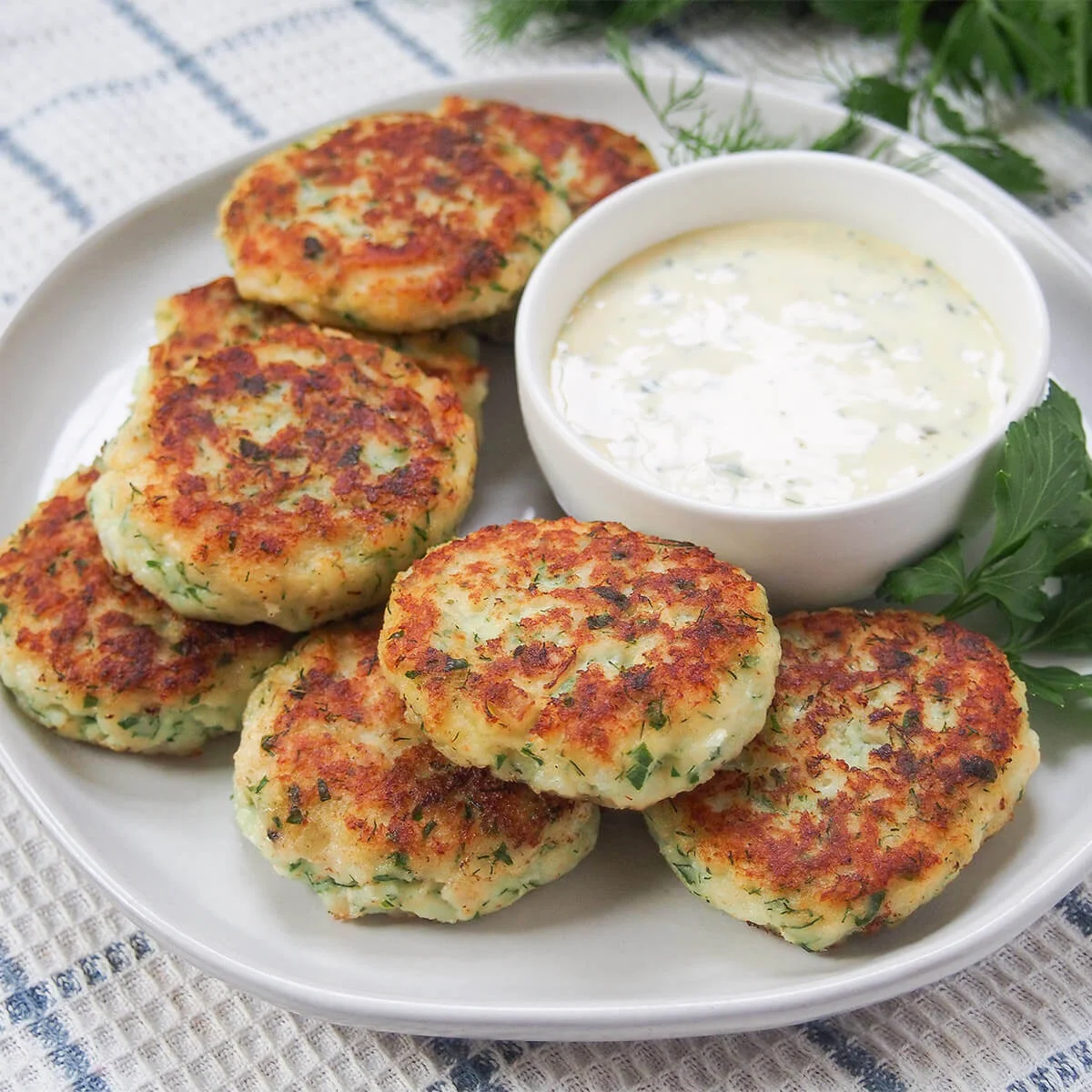
Fiskefrikadeller are tender Danish fish cakes made with white fish, herbs and a little cream, served with a tangy remoulade. They make an easy main with sides or a savoury snack.
Ingredients
- 454 gcod, or another white fish such as halibut or hake; some salmon can also be used
- 30 gplain flour
- 1 largeegg
- 80 mldouble cream
- 30 mlonion or shallot, finely chopped or grated
- 30 mlchopped parsley
- 30 mlchopped dill (optional)
- Zest of ½ lemonlemon
- 1 pinchsalt
- 1 pinchblack pepper
- 15 ml, approximatelyolive oil
- 15 ml, approximatelybutter
- 60 mlmayonnaise
- 15 mlpickled cucumber or cornichon, finely chopped
- 5 mlcapers, chopped
- 15 mlchopped parsley
- 5 mllemon juice
- 5 mlDijon mustard
- ⅛ tspcurry powder
Instructions
- 1
Mix the fish
Roughly chop the fish and check carefully for any skin or bones. Put it in a food processor with the flour, egg, cream, onion, parsley, dill, lemon zest, and a little salt and pepper. Pulse until well combined and the larger fish pieces are broken up, but stop while the mixture still has some texture.
- 2
Chill the mixture
Refrigerate the fish mixture for around 30 minutes, or a little longer, to help it firm up.
- 3
Make the remoulade
While the mixture chills, stir together the mayonnaise, pickled cucumber, capers, parsley, lemon juice, mustard, and curry powder in a small bowl. Refrigerate until needed.
- 4
Warm the pan
When ready to cook, warm some of the olive oil and butter in a small or medium non-stick frying pan over a medium heat. Cook in two or three batches; a smaller pan makes this easier.
- 5
Shape the cakes
With damp hands, take a heaped spoonful of mixture, about the size of a golf ball or slightly larger, and shape it into a flattened ball. Set the cakes briefly on a plate if you prefer, or place them straight into the warm pan. Continue until the pan is filled without crowding it.
- 6
Cook until done
Cook the cakes for a few minutes on each side until gently browned and cooked through. They should feel a little firmer when pressed gently in the middle, while remaining juicy rather than dry. Cook the sides briefly too if needed.
- 7
Fry remaining cakes
Transfer the cooked fish cakes to kitchen paper to drain. Shape and fry the remaining mixture in further batches.
- 8
Serve with sauce
Serve the fish cakes with the remoulade on the side.
What are fiskefrikadeller?
Fiskefrikadeller are Danish fish cakes, typically made from minced or finely processed fish and pan-fried until golden. They are eaten as a simple meal or served cold or warm as part of a spread.
This version combines white fish with cream, egg and flour to bind it, while lemon zest and fresh herbs keep the flavour bright. A mayonnaise-based remoulade supplies a sharp, savoury contrast.
Nutrition and macros by portion
The nutrition label shows one serving as written: 364 calories, 23g protein, 8g carbs, 26g fat.
| Portion | Adjustment | kcal | Protein | Carbs | Fat |
|---|---|---|---|---|---|
| Lighter | Use less remoulade | 255 kcal | 16g | 6g | 18g |
| This serving | As written | 364 kcal | 23g | 8g | 26g |
| Hungry | Serve extra fish cakes | 546 kcal | 35g | 12g | 39g |
The fish provides most of the protein, while the flour contributes some of the carbohydrates. Cream, butter, oil and mayonnaise account for much of the fat. To balance the plate, serve a portion with plenty of vegetables or salad alongside.
Choosing the fish
White fish: Cod is mild and easy to shape into cakes, while halibut or hake are also suitable. The recipe allows some salmon to be mixed in for a richer fish flavour.
Check the fillets: Pick over the fish before processing so that skin and bones do not end up in the mixture.
Getting the texture right
Pulse, don't purée: Process the mixture until the larger pieces are broken down and everything is combined, then stop while some texture remains. A completely smooth mixture makes for a denser cake.
Chill the mix: Refrigerating it for around 30 minutes helps it firm up and makes shaping easier. Damp hands help keep the mixture from sticking as you form the cakes.
Frying in batches
Moderate heat: Start with a medium heat and warm the oil and butter together. The cakes should brown gently as the fish cooks through.
Room to move: Avoid crowding the pan, as the cakes are easier to turn when they have space. Use two or three batches, adding more fat to the pan as needed.
Checking doneness
Look and feel: The outside should be lightly browned, and the centre should feel a little firmer when pressed gently. The aim is cooked fish that is still juicy, not dried out.
Finish the edges: If the sides need more colour or cooking, briefly turn the cakes onto their sides rather than leaving them too long on their faces.
The remoulade
Chopped pickles and capers bring a salty, tangy bite to the mayonnaise, while lemon juice and Dijon mustard add sharpness. A small amount of curry powder gives the sauce its distinctive savoury warmth.
Make the sauce while the fish mixture chills and keep it refrigerated until serving. Chop the pickles and capers finely so they are distributed through each spoonful.
Serving ideas
For a main meal, serve the fish cakes with potatoes or bread and a green vegetable or salad. The remoulade works well as a dip or as a spooned-on sauce.
They can also be served as a snack or as part of a larger spread. Drain the cooked cakes on kitchen paper before bringing them to the table.
Recipe notes & tips
- Use damp hands when shaping the cakes to reduce sticking.
- Pulse the fish mixture only until combined, leaving some texture.
- Chill the mixture for around 30 minutes to help it firm up.
- Cook in two or three batches so the cakes are not crowded.
- Drain each batch briefly on kitchen paper before serving.
- Keep the remoulade chilled until you are ready to serve.
Variations
- Swap the fish: Use halibut or hake instead of cod, as suggested in the recipe.
- Add salmon: Replace part of the white fish with salmon for a richer flavour.
- Change the onion: Use finely chopped or grated shallot in place of onion.
- Leave out the dill: Omit the optional dill while keeping the parsley.
- Adjust the pickles: Use finely chopped cornichons or sliced pickles in the remoulade.
Common mistakes to avoid
- Over-processing: The mixture can become too smooth; pulse only until the larger fish pieces are broken up.
- Skipping the chill: A soft mixture is harder to shape; refrigerate it for around 30 minutes or longer.
- Dry hands: Mixture may stick while shaping; dampen your hands before forming each cake.
- Crowded pan: Cakes are harder to turn and brown evenly; cook them in two or three batches.
- High heat: The outside can brown before the fish cooks through; use a medium heat and check the centre gently.
How to store
Refrigerate leftover cooked fish cakes and remoulade separately in covered containers, and use within 1–2 days. Reheat the cakes in a frying pan over a gentle heat until hot throughout; stir the sauce before serving and keep it chilled until then.
Frequently asked questions
Can I use a different fish?
Yes. The recipe suggests halibut or hake as alternatives to cod, and says you can use some salmon along with the white fish.
Do I have to include the dill?
No. Dill is optional, so you can leave it out and keep the parsley.
Why should I chill the mixture?
Chilling for around 30 minutes, or a little longer, helps the mixture firm up before shaping and frying.
How do I know when the fish cakes are cooked?
They should be gently browned on both sides and feel a little firmer in the middle when pressed lightly. Avoid cooking them until they feel dry.
Can I make the remoulade ahead?
You can mix it while the fish mixture chills and refrigerate it until serving. Keep it chilled.
Can I cook all the fish cakes at once?
Only if your pan can hold them without crowding. The method recommends two or three batches so they are easier to cook and turn.
Cook it from the original
This recipe comes from carolinescooking.com. Their page has the author’s own photos, notes and tips — the best place to cook it from.
Open the recipe on carolinescooking.com