
Egg in a Hole
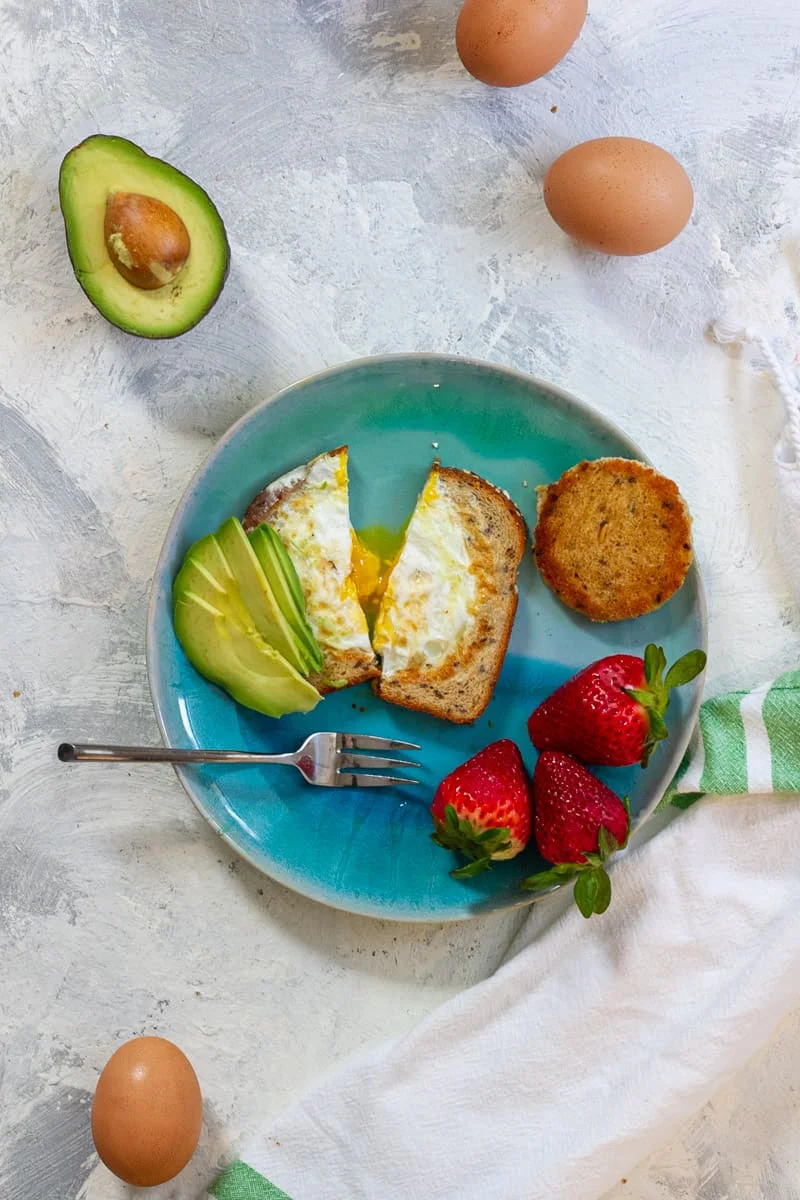
Egg in a Hole is a quick American breakfast of bread pan-fried with an egg cooked in its centre. It uses just a few ingredients and lets you choose whether the yolk stays runny or cooks through.
Ingredients
- 1 slicebread
- 14 g (1 tablespoon)butter
- 1egg
- a small pinchsalt
Instructions
- 1
Cut the bread
Cut a hole in the slice of bread using a biscuit or cookie cutter, the rim of a glass or a knife.
- 2
Heat the butter
Melt the butter in a heavy pan over medium heat. Add both pieces of bread once the butter has melted.
- 3
Add the egg
Crack the egg into the hole, taking care not to break the yolk. Sprinkle a small pinch of salt over the egg.
- 4
Cook and flip
Keep an eye on the egg. When the whites are mostly cooked through, flip the bread carefully so the yolk stays intact.
- 5
Finish cooking
Cook the egg to your preferred doneness. For a runny, over-easy yolk, cook for about 30 seconds more; for over-medium, about 1 minute; and for well-done, about 1½ minutes. These times are approximate and depend on how hot the pan is.
What is egg in a hole?
Egg in a Hole is a simple American breakfast in which an egg cooks in a cut-out space in a slice of bread. It is also known as Toad in a Basket or Egg in a Basket.
This version keeps the ingredients straightforward: butter helps the bread brown in the pan, while the egg cooks in the middle. The cut-out piece cooks alongside it, so there is no need to waste the bread.
Nutrition and macros by portion
The nutrition label shows one serving as written: 240 calories, 9g protein, 14g carbs, 17g fat.
| Portion | Adjustment | kcal | Protein | Carbs | Fat |
|---|---|---|---|---|---|
| Lighter | Use less butter | 168 kcal | 6g | 10g | 12g |
| This serving | As written | 240 kcal | 9g | 14g | 17g |
| Hungry | Add another slice | 360 kcal | 14g | 21g | 26g |
The bread provides most of the carbohydrates, while the butter and egg contribute much of the fat; the egg also supplies the protein. Add fruit or vegetables on the side to round out the plate without changing the cooking method.
Choosing the bread
Bread slice: A slice sturdy enough to hold its shape makes flipping easier. Cut the hole near the centre, leaving a broad border around it.
Bread centre: Keep the cut-out piece in the pan with the slice. It can brown in the butter and be served alongside the egg.
Cooking in butter
Pan heat: Use medium heat so the bread has time to colour while the egg cooks. If the pan is too hot, the bread may brown before the egg white is set.
Butter: Let it melt before adding the bread, then make sure both the slice and the cut-out piece meet the buttered surface.
Flipping without breaking the yolk
Ready to turn: Wait until the egg whites are mostly cooked through before flipping. This gives the egg more structure and makes the turn easier.
Careful flip: Slide a spatula underneath the bread and turn it in one steady movement. A wide spatula can help keep the slice level.
Choosing the yolk texture
Runny: After flipping, cook for about 30 seconds more for a runny, over-easy yolk. Keep the pan heat moderate and check the egg as it cooks.
More set: Cook for about 1 minute for over-medium or about 1½ minutes for a well-done egg. Treat these times as a guide, since pan heat affects how quickly the egg finishes.
Serving it
Serve the egg and bread hot, while the toast is crisp and the egg is at its preferred doneness. The cooked bread centre is a handy piece for dipping into a runny yolk.
For a more complete breakfast, serve it with fruit or vegetables on the side. Keep the accompaniments simple so the buttery bread and egg remain the focus.
Recipe notes & tips
- Cut a hole wide enough for the egg white to settle without overflowing.
- Crack the egg into a small bowl first if you want more control when placing it in the bread.
- Use medium heat to give the white time to cook before the bread gets too dark.
- Keep the cut-out bread in the pan and turn it when it is browned.
- Use a broad spatula to make flipping the filled slice easier.
- Start checking the yolk shortly after flipping, as the stated timings depend on pan heat.
Variations
- Add black pepper: Season the egg with a little pepper along with the salt.
- Use a different bread: Try another sturdy sliced bread that holds its shape in the pan.
- Add herbs: Scatter chopped fresh herbs over the egg just before serving.
- Serve with greens: Add a simple side of cooked or fresh greens.
- Make it cheesy: Add a little grated cheese over the egg as it cooks.
Common mistakes to avoid
- Cutting the hole too small: The egg may spill over the bread; make a roomy opening while leaving a broad border.
- Using high heat: The bread can brown before the egg is ready; cook over medium heat.
- Flipping too early: The egg white may still be too loose; wait until it is mostly cooked through.
- Turning abruptly: The yolk can break; use a wide spatula and flip in one steady movement.
- Overcooking by the clock: Pan heat varies; check the egg and adjust the finishing time to your preferred yolk.
How to store
This dish is best eaten straight from the pan, as the bread softens and the egg continues to cook after cooling. If necessary, refrigerate leftovers in a covered container and eat within 1 day; reheat gently in a pan until hot.
Frequently asked questions
What can I use to cut the hole?
Use a biscuit or cookie cutter, the rim of a glass or a knife. Choose an opening large enough to hold the egg while leaving bread around the edge.
How do I keep the yolk runny?
Once the whites are mostly cooked through, flip the bread carefully and cook for about 30 seconds more. The exact time depends on the pan heat.
Can I use oil instead of butter?
The recipe uses butter, which adds flavour and helps the bread brown. Oil can be used in its place, though the flavour will be different.
Why did the egg white spill out?
The hole may have been too small or the egg may have been added before the bread was settled in the pan. Make a roomy hole and place the egg carefully in its centre.
Can I cook more than one serving at a time?
Yes, if the pan has room for the slices to lie flat without crowding. Work in batches if needed so each piece can brown evenly and be flipped easily.
Cook it from the original
This recipe comes from champagne-tastes.com. Their page has the author’s own photos, notes and tips — the best place to cook it from.
Open the recipe on champagne-tastes.com