
Orange Liqueur Truffles
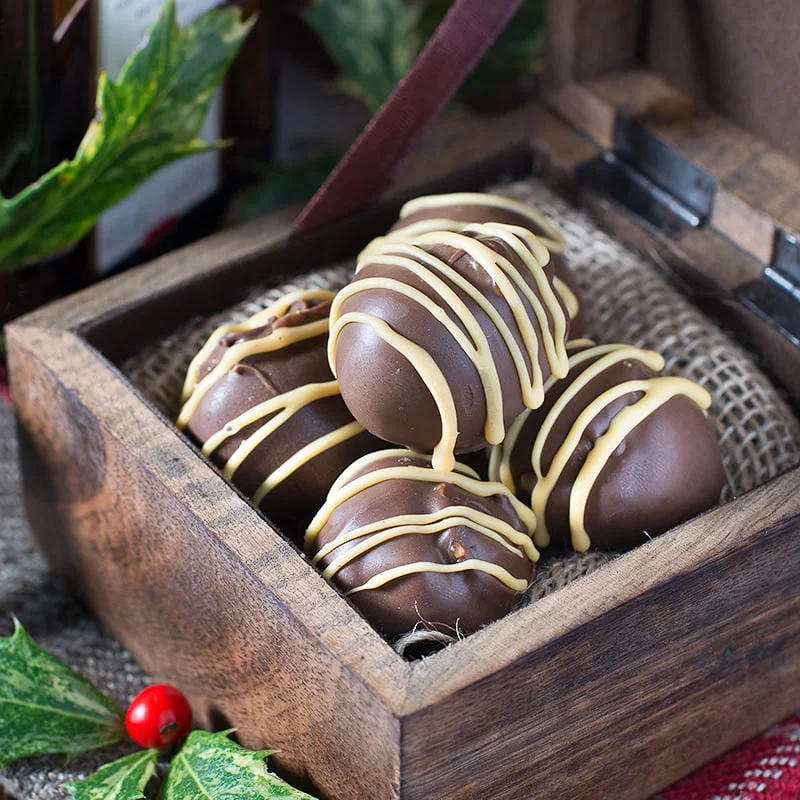
These orange liqueur truffles have a smooth chocolate-and-cream centre, a milk chocolate shell and a white chocolate drizzle. They take a little patience to chill and coat, but make an elegant homemade gift.
Ingredients
- 600 ggood-quality milk chocolate
- 100 mldouble cream
- 100 mlorange liqueur
- ¼ tsporange extract
- 25 gwhite chocolate
- to tasteorange gel food colouring
Instructions
- 1
Melt the chocolate
Break 400 g of the milk chocolate into pieces and warm gently in a saucepan until melted. Alternatively, melt it over a bain-marie or in a microwave.
- 2
Mix the ganache
Add the double cream, orange liqueur and orange extract to a large bowl. Pour in the melted chocolate and stir quickly until smooth and combined.
- 3
Chill the ganache
Refrigerate the mixture until firm enough to roll; this may take a couple of hours.
- 4
Roll the truffles
Shape the firm ganache into balls about 1 inch (2.5 cm) in diameter. Put them back in the fridge while you temper the chocolate.
- 5
Heat the chocolate
Break 150 g of the milk chocolate into a saucepan and warm gently until it reaches 45°C. Take it off the heat; if some pieces remain, keep stirring so they melt in the residual heat.
- 6
Cool the chocolate
Pour the melted chocolate into a large bowl. Stir in the remaining 50 g of milk chocolate, a couple of pieces at a time, until the temperature falls to 32°C.
- 7
Remove unmelted pieces
Take out any chocolate that has not melted.
- 8
Prepare the paper
Lay a large sheet of greaseproof paper on your work surface.
- 9
Coat the truffles
Take the ganache balls from the fridge. Drop one into the melted chocolate and move it around with a tablespoon until coated. Lift it out with the spoon, then carefully slide it onto the paper using the back of a fork. Repeat with the remaining balls.
- 10
Set the coating
Leave the chocolates for about 30 minutes, until the coating is set. They can set at room temperature if it is not too warm, or more quickly in the fridge.
- 11
Melt white chocolate
Bring a saucepan of water to the boil, then lower the heat to a gentle simmer. Set a bowl over the pan without letting it touch the water, and melt 15 g of the white chocolate in it until it reaches 45°C.
- 12
Colour and cool
Remove the bowl from the heat and transfer the chocolate to another bowl. Stir in a little orange gel colouring, then add the remaining 10 g of white chocolate a little at a time until the temperature falls to 32°C.
- 13
Drizzle and set
Transfer the white chocolate to a piping bag or bottle and drizzle it over the truffles. Alternatively, use a fork dipped in the chocolate. Leave the decoration to set.
What are chocolate truffles?
Chocolate truffles are small sweets traditionally made with a soft chocolate ganache centre. Their name comes from their resemblance to truffles, and they are often finished with a coating or dusting.
This version pairs milk chocolate with orange liqueur and extract, then adds a firm milk chocolate shell and a coloured white chocolate drizzle. The chilled centre is easier to shape and dip.
Nutrition and macros by portion
The nutrition label shows one serving as written: 130 calories, 1g protein, 10g carbs, 9g fat.
| Portion | Adjustment | kcal | Protein | Carbs | Fat |
|---|---|---|---|---|---|
| Lighter | Serve fewer truffles | 91 kcal | 1g | 7g | 6g |
| This serving | As written | 130 kcal | 1g | 10g | 9g |
| Hungry | Add a few more | 195 kcal | 2g | 15g | 13g |
The milk chocolate provides most of the carbohydrates and fat, while the cream adds further fat; the liqueur and orange flavourings contribute to the centre. Serve a few truffles with fruit or alongside a lighter dessert to balance their richness.
Choosing the chocolate
Milk chocolate: use good-quality chocolate that you enjoy eating on its own, as it supplies most of the flavour in both the ganache and coating.
White chocolate: reserve it for the decoration. Melt it gently, since overheating can make it thick and difficult to drizzle.
Getting the ganache right
Quick mixing: pour the melted chocolate into the cream and liqueur, then stir promptly until the mixture is even. Slow or hesitant mixing can leave the ganache uneven or grainy.
Firm chilling: give the ganache enough time in the fridge to hold its shape. If it is too soft to roll, chill it for longer rather than trying to coat it.
Rolling and coating
Even balls: aim for roughly 2.5 cm balls so they are similar in size and chill consistently. Keep them cold while preparing the coating.
Gentle handling: use a spoon to coat each ball and the back of a fork to transfer it to the greaseproof paper. This helps excess chocolate drip away without squashing the ganache.
Tempering cues
Milk chocolate: heat the first portion to 45°C, then stir in the reserved pieces gradually until it reaches 32°C. A thermometer makes these temperature changes easier to follow.
White chocolate: use the same heat-and-cool approach with the amounts specified in the method. Keep water out of the chocolate, as even a small amount can affect its texture.
Setting and serving
Room temperature: allow about 30 minutes for the milk chocolate coating to set, provided the room is not too warm. Refrigeration can speed this up.
Pairing: serve the truffles with coffee or tea, or add a few to a dessert platter alongside fresh orange segments. Their sweetness and liqueur flavour make a small serving go a long way.
Recipe notes & tips
- Chill the ganache until firm before attempting to roll it.
- Work quickly when mixing the melted chocolate into the cream and liqueur.
- Keep the rolled ganache balls refrigerated until you are ready to coat them.
- Use a thermometer to check the chocolate temperatures during tempering.
- Set the coated truffles on greaseproof paper so they can be lifted off easily.
- Add the orange gel colouring a little at a time until you reach the shade you want.
Variations
- More orange: add a little extra orange extract to the ganache, tasting as you go.
- Dark chocolate shell: use dark chocolate for the coating for a less sweet contrast.
- Citrus swap: try lemon extract instead of orange extract for a different citrus note.
- Plain finish: leave off the white chocolate drizzle for a simpler coating.
- Extra decoration: add a small amount of finely grated orange zest on the drizzle before it sets.
Common mistakes to avoid
- Soft ganache: chill it for longer before rolling so the balls hold their shape.
- Lumpy mixture: stir the melted chocolate rapidly into the cream and liqueur until fully combined.
- Overheated chocolate: use gentle heat and remove the pan from the heat at the stated temperature.
- Warm centres: return the ganache balls to the fridge while tempering the coating.
- Messy coating: let excess chocolate drip from the fork before sliding each truffle onto the paper.
- Thick drizzle: melt and cool the white chocolate carefully, keeping water away from it.
How to store
Store the set truffles in an airtight container in the fridge and use within about a week. Let them stand briefly at room temperature before serving for a softer centre.
Frequently asked questions
Can I make the ganache ahead?
Yes. Make it and chill it until firm, then roll the balls when you are ready to coat them. Keep the ganache refrigerated in the meantime.
Do I need a thermometer to temper the chocolate?
A thermometer is the clearest way to check the temperatures given in the method. Without one, it is harder to know precisely when the chocolate has reached the required stages.
Can I set the truffles in the fridge?
Yes. Refrigeration helps the coating set faster, though the truffles can also set at room temperature if the room is not too warm.
Why is my ganache too soft to roll?
It may need more time to firm up in the fridge. Chill it further, checking periodically, until it can be shaped into balls.
Can I use a fork instead of a piping bag?
Yes. Dip a fork into the coloured white chocolate and let it fall in a thin drizzle over the truffles.
How large should each truffle be?
The method suggests balls about 1 inch (2.5 cm) in diameter. Keeping them a similar size helps them chill and coat evenly.
Cook it from the original
This recipe comes from charlotteslivelykitchen.com. Their page has the author’s own photos, notes and tips — the best place to cook it from.
Open the recipe on charlotteslivelykitchen.com