
Dairy-Free Chocolate Buttercream
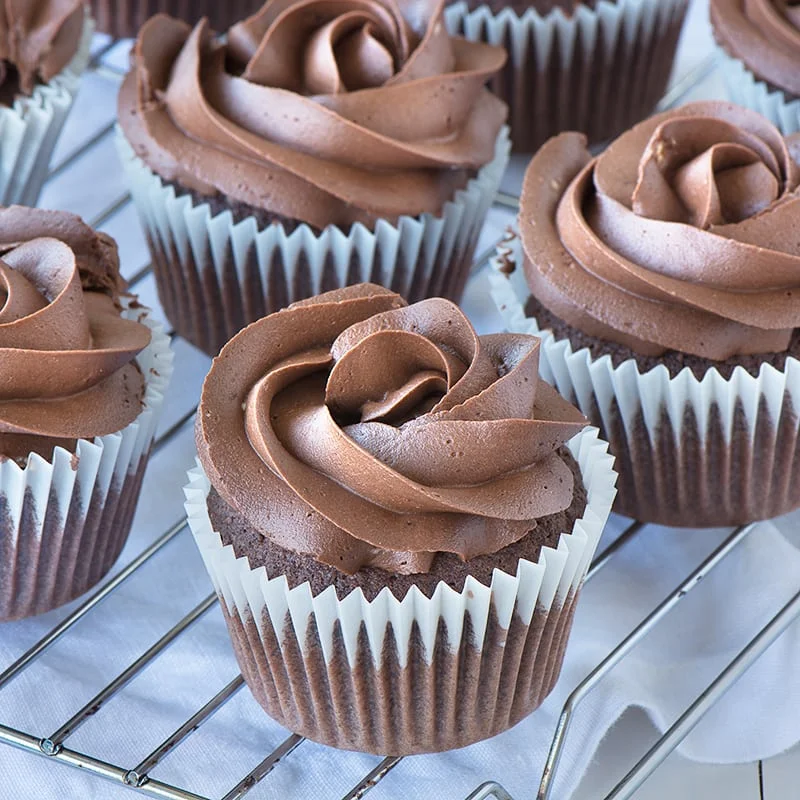
This smooth, rich chocolate buttercream uses dairy-free margarine, baking block and dark chocolate for a vegan icing. It makes enough to top 12 cupcakes or fill and coat a 2-layer 20 cm cake.
Ingredients
- 125 gdairy-free margarine
- 125 gbaking block, soft and at room temperature
- 250 gicing sugar
- 150 gdairy-free dark chocolate
- 40 gcocoa powder
- ¼ tspvanilla extract
Instructions
- 1
Melt the chocolate
Break the 150 g chocolate into pieces and melt it in short bursts in the microwave, stirring regularly; in a saucepan over the lowest heat, stirring constantly; or in a bain-marie, stirring constantly.
- 2
Cool the chocolate
Take the melted chocolate off the heat and pour it into another bowl so it can cool to room temperature before you mix it into the buttercream.
- 3
Beat the buttercream
Beat the 125 g dairy-free margarine and 125 g baking block until soft and smooth. Add the ¼ tsp vanilla extract, 40 g cocoa powder and 250 g icing sugar, preferably a spoonful at a time, and beat until fully combined.
- 4
Add the chocolate
When the chocolate has cooled to room temperature, pour it into the buttercream and beat until fully combined. It should be soft and spreadable; do not add the chocolate while it is warm, as it can melt the fats and make the icing runny.
- 5
Use the icing
The buttercream is ready to use on cupcakes or to fill and coat a 2-layer 20 cm round cake.
What is chocolate buttercream?
Chocolate buttercream is a whipped, spreadable icing made by beating fat with sugar and flavourings. This dairy-free version uses margarine and baking block instead of butter, with melted dark chocolate and cocoa for a deep chocolate taste.
Buttercream is used widely for decorating cakes and cupcakes, and this version keeps the familiar soft, rich texture without dairy. The combination of cocoa and melted chocolate gives it both flavour and a smooth finish.
Nutrition and macros by portion
The nutrition label shows one serving as written: 299 calories, 1g protein, 28g carbs, 20g fat.
| Portion | Adjustment | kcal | Protein | Carbs | Fat |
|---|---|---|---|---|---|
| Lighter | Use a thinner icing layer | 209 kcal | 1g | 20g | 14g |
| This serving | As written | 299 kcal | 1g | 28g | 20g |
| Hungry | Larger cupcake swirl | 449 kcal | 2g | 42g | 30g |
The icing sugar supplies most of the carbohydrates, while the margarine, baking block and chocolate contribute much of the fat. The recipe lists 1 g of protein per serving; use the buttercream as a topping and balance the plate with a piece of fruit or a less-rich cake base.
Choosing the fats
Dairy-free margarine: this contributes softness and helps the icing whip smoothly. Use a dairy-free variety.
Baking block: a firm block-style fat helps the finished buttercream hold its shape better than a soft spread. Let it come to room temperature so it beats evenly.
Melt and cool the chocolate
Gentle heat: melt the broken chocolate slowly, stirring often so it heats evenly and does not scorch. Stop as soon as it is melted.
Room-temperature chocolate: transfer it to another bowl to help it cool. It must no longer feel warm before it goes into the beaten fats, or the buttercream can turn runny.
Getting a smooth texture
Beat the fats: take time to beat the margarine and baking block until soft and smooth before adding the dry ingredients. This gives the icing a more even base.
Add gradually: put in the icing sugar and cocoa a spoonful at a time to reduce clouds of powder. Beat until no dry patches remain, then mix in the cooled chocolate.
When the buttercream is ready
Look for a soft, spreadable consistency with an even chocolate colour and no visible streaks of melted chocolate. If it is still lumpy, continue beating until the mixture smooths out.
Use it once combined to top 12 cupcakes or fill and coat a 2-layer 20 cm round cake. Spread gently so the icing stays smooth on the surface.
Serving ideas
For cupcakes, spread or pipe the buttercream over completely cooled cakes. Warm cupcakes can soften the icing and make it slide.
For a layer cake, use some between the layers and the rest to coat the top and sides. Its rich chocolate flavour pairs well with plain or chocolate sponge.
Recipe notes & tips
- Bring the margarine and baking block to room temperature before beating.
- Break the chocolate into small pieces so it melts evenly.
- Stir regularly when melting chocolate in the microwave, or constantly when using a saucepan or bain-marie.
- Add the icing sugar and cocoa a spoonful at a time to keep the work surface cleaner.
- Make sure the cakes are completely cool before icing them.
Variations
- Coffee note: replace the vanilla with a little strong, cooled coffee for a mocha-style flavour.
- Orange aroma: add finely grated orange zest for a chocolate-orange combination.
- Extra vanilla: increase the vanilla slightly for a more pronounced vanilla note.
- Cupcake finish: sprinkle the iced cupcakes with dairy-free chocolate shavings.
- Layer cake: spread the buttercream between two cake layers and coat the outside with the remainder.
Common mistakes to avoid
- Warm chocolate: it can melt the fats and loosen the icing; cool it to room temperature first.
- Overheating the chocolate: it may scorch; use gentle heat and stir often.
- Adding all the sugar at once: it can puff into the air; mix it in a spoonful at a time.
- Rushing the beating: lumps may remain; beat the fats until smooth before adding the other ingredients.
- Icing warm cakes: the buttercream can soften and slide; wait until the cakes are completely cool.
How to store
Keep the buttercream in an airtight container in the fridge for up to 5 days. Let it soften at room temperature, then beat briefly until spreadable before using; avoid heating it, as it can become too soft.
Frequently asked questions
Can I make this buttercream ahead?
Yes. Refrigerate it in an airtight container for up to 5 days, then let it soften and beat it briefly before spreading.
Why has my buttercream become runny?
The melted chocolate may have been too warm when added. Chill the mixture until firmer, then beat it again before using.
Can I use a soft dairy-free spread instead of baking block?
The recipe uses baking block because it is firmer than a soft spread. A softer substitute may make the buttercream looser and harder to pipe.
How much does this recipe make?
It makes enough to ice 12 cupcakes or to fill and coat a 2-layer 20 cm round cake.
Can I melt the chocolate in the microwave?
Yes. Use short bursts and stir regularly between them until the chocolate has just melted.
Cook it from the original
This recipe comes from charlotteslivelykitchen.com. Their page has the author’s own photos, notes and tips — the best place to cook it from.
Open the recipe on charlotteslivelykitchen.com