
Beef osso buco
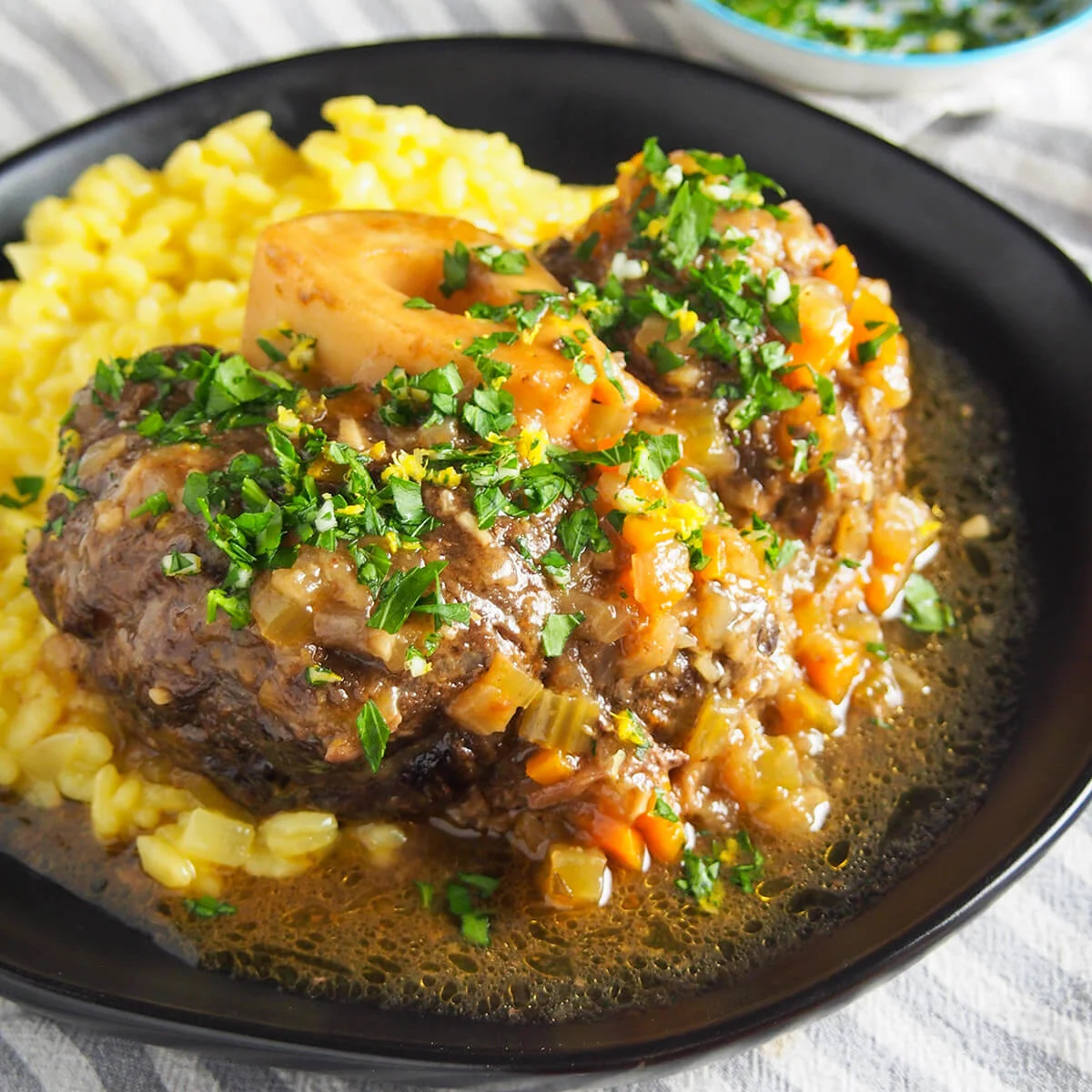
Beef osso buco is a comforting Italian braise of bone-in beef shank, slowly cooked until tender in a savoury wine and vegetable sauce. A fresh parsley, garlic and lemon gremolata lifts the rich, slow-cooked flavours.
Ingredients
- 907 g (2 lb), cut across the bone into pieces about 3 cm (1¼ in) thickbeef shank
- 1.25 ml (¼ tsp)salt
- 1.25 ml (¼ tsp)pepper
- 30 ml (2 tbsp), approximatelyplain flour
- 1 medium or smallonion
- 1 medium or smallcarrot
- 1celery stick
- 1 clovegarlic
- 15 ml (1 tbsp), approximately, plus a little more if neededolive oil
- 180 ml (¾ cup)white wine
- 15 ml (1 tbsp)tomato purée
- 480 ml (2 cups)chicken stock
- 1 sprigthyme
- 1bay leaf
- 22.5 ml (1½ tbsp), choppedparsley
- ½ clovegarlic
- Zest of ½ lemonlemon
Instructions
- 1
Season the beef
Pat the beef shanks dry with kitchen paper and season both sides with the salt and pepper. Lightly dust each side with flour, then shake off the excess.
- 2
Prepare the vegetables
Finely dice the onion, carrot and celery. Finely dice the garlic clove.
- 3
Heat the oil
Warm the oil over a medium-high heat in a pot wide enough to hold the shanks in one layer, but not much larger than necessary.
- 4
Brown the shanks
When the oil is hot, add the shanks and sear them on both sides, allowing them to brown well before turning. Turn them briefly to brown the edges too.
- 5
Set beef aside
Once browned all over, take the shanks out of the pot. If you like, tie kitchen twine around each one to help it hold together during cooking; this is optional.
- 6
Soften the vegetables
Lower the heat slightly and add the onion, carrot and celery, adding a little more oil if needed. Cook for about 5 minutes, stirring occasionally, until softened and the onion is turning translucent. Add the garlic and cook for a couple more minutes.
- 7
Reduce the wine
Pour in the wine and bring it to a simmer. As it simmers for a couple of minutes, scrape the browned bits from the bottom of the pot.
- 8
Add the stock
Let the wine reduce by about half or more, until nearly syrup-like. Stir in the tomato purée, stock, thyme and bay leaf, breaking up the purée, then bring the mixture back to a simmer and return the shanks to the pot.
- 9
Braise the shanks
Cover the pot and turn the heat to low, keeping the liquid at a gentle simmer. Cook for 2 hours, checking from time to time; if any shanks sit partly above the liquid, turn them about every half hour.
- 10
Check and reduce
After about 2 hours, gently pull at the meat with a fork to check that it is tender. If it is not, cook for a little longer. Once tender, remove the lid and simmer gently for a further 30–40 minutes to reduce the sauce slightly.
- 11
Mix the gremolata
As the shanks finish cooking, finely chop the parsley and garlic. Mix them with the lemon zest until evenly combined.
- 12
Serve the osso buco
Serve the shanks with the sauce spooned over them and sprinkle with gremolata. They are traditionally served over risotto alla Milanese or saffron risotto.
What is beef osso buco?
Osso buco is an Italian dish made by braising cross-cut shanks until the meat turns tender. The name refers to the bone at the centre of the cut, which remains in the dish as it cooks.
This version builds flavour by browning the beef, softening a finely diced vegetable base and reducing white wine before the slow braise. A lively lemon, parsley and garlic gremolata adds a fresh contrast at the end.
Nutrition and macros by portion
The nutrition label shows one serving as written: 648 calories, 68g protein, 28g carbs, 21g fat.
| Portion | Adjustment | kcal | Protein | Carbs | Fat |
|---|---|---|---|---|---|
| Lighter | Smaller shank portion | 454 kcal | 48g | 20g | 15g |
| This serving | As written | 648 kcal | 68g | 28g | 21g |
| Hungry | Larger risotto portion | 972 kcal | 102g | 42g | 32g |
Beef supplies most of the protein, while the flour, vegetables and wine contribute carbohydrates; olive oil and the beef contribute fat. Serve with vegetables or salad alongside the traditional risotto to make a more balanced plate.
Choosing the shanks
Cut thickness: Pieces about 3 cm thick give the meat time to become tender during the long, gentle cook. Ask your butcher for beef shank cut across the bone.
Keeping shape: The shanks may loosen or break up as they cook. Kitchen twine can help them hold together, but it is optional.
Building flavour in the pot
Light flour coating: Dust the seasoned shanks lightly and shake away excess flour. This helps brown the surface without leaving a thick coating.
Browned base: Let the beef develop colour on both sides and briefly on the edges. Scrape the browned bits from the pot when the wine goes in; they contribute flavour to the sauce.
The slow braise
Gentle simmer: Keep the covered pot at a low, steady simmer for 2 hours rather than letting it boil vigorously. Turn the shanks about every half hour if they are partly above the liquid.
Tenderness check: The meat should yield when gently pulled with a fork. If it still feels firm, continue cooking before moving on to the uncovered stage.
Finishing the sauce
Wine reduction: Reduce the wine by about half or more before adding the stock and tomato purée. It should look nearly syrup-like, concentrating its flavour in the braising liquid.
Uncovered simmer: Once the beef is tender, cook without the lid for another 30–40 minutes. The sauce should reduce slightly while the shanks finish cooking.
Making the gremolata
Fine chop: Chop the parsley and garlic finely so they mix evenly with the lemon zest and are easy to scatter over the meat.
Last-minute finish: Add the gremolata when serving rather than during the braise. Its fresh citrus and herb notes balance the rich beef and sauce.
What to serve alongside
Classic pairing: Serve the shanks and sauce over risotto alla Milanese or saffron risotto, as suggested for this dish. The rice makes a natural base for the braising liquid.
Simple sides: For a less rich plate, serve with plainly cooked vegetables or a crisp green salad alongside the shank.
Recipe notes & tips
- Dry the beef thoroughly before seasoning so the surface can brown properly.
- Use a pot that holds the shanks in one layer without leaving too much empty space.
- Give the beef time to brown before turning it.
- Keep the braising liquid at a gentle simmer rather than a rolling boil.
- Turn any shanks that sit partly above the liquid about every half hour.
- Make the gremolata while the shanks finish cooking and sprinkle it on just before serving.
Variations
- Use veal shanks: Swap the beef shank for veal shank cut across the bone.
- Add orange zest: Replace the lemon zest in the gremolata with orange zest for a different citrus note.
- Use red wine: Substitute red wine for the white wine for a deeper-flavoured sauce.
- Add rosemary: Use a sprig of rosemary in place of the thyme during the braise.
- Serve with polenta: Spoon the shanks and sauce over soft polenta instead of risotto.
Common mistakes to avoid
- Turning too soon: The beef may not brown well; leave it in place until a good sear forms before turning.
- Skipping the scrape: Browned bits can stick to the pot; loosen them with the wine as it simmers.
- Boiling hard: A vigorous boil can make the braise less gentle; lower the heat until the liquid simmers steadily.
- Rushing the tenderness check: Firm meat needs more time; continue cooking until it yields easily to a fork.
- Reducing too far: The sauce can become overly concentrated; simmer gently and stop when it has reduced slightly.
- Adding gremolata too early: It loses its fresh finish in the braise; sprinkle it over the dish at serving.
How to store
Cool leftovers and refrigerate them in a covered container for up to 3 days. Reheat gently in a covered pot over a low heat until piping hot, adding a splash of stock or water if the sauce has thickened.
Frequently asked questions
Can I make beef osso buco ahead?
Yes. Cook it through, cool it and refrigerate it in its sauce, then reheat gently before serving. Add the gremolata just before serving.
How do I know when the shanks are tender?
Gently pull at the meat with a fork; it should yield readily. If it still feels firm, continue the covered braise and check again.
Do I need to tie the shanks?
No. Twine can help them keep their shape, but the recipe works without it if you do not mind the meat breaking up slightly.
Can I use a different pot?
Yes. Use a heavy pot with a lid that holds the shanks in a single layer without being much larger than needed.
What can I serve with it?
Risotto alla Milanese or saffron risotto is the traditional pairing. You can also serve it with vegetables or a green salad.
Can I skip the gremolata?
You can, but it gives the finished dish a fresh parsley, garlic and lemon lift. It is quick to mix while the shanks finish cooking.
Cook it from the original
This recipe comes from carolinescooking.com. Their page has the author’s own photos, notes and tips — the best place to cook it from.
Open the recipe on carolinescooking.com