
Almond Crusted Tilapia
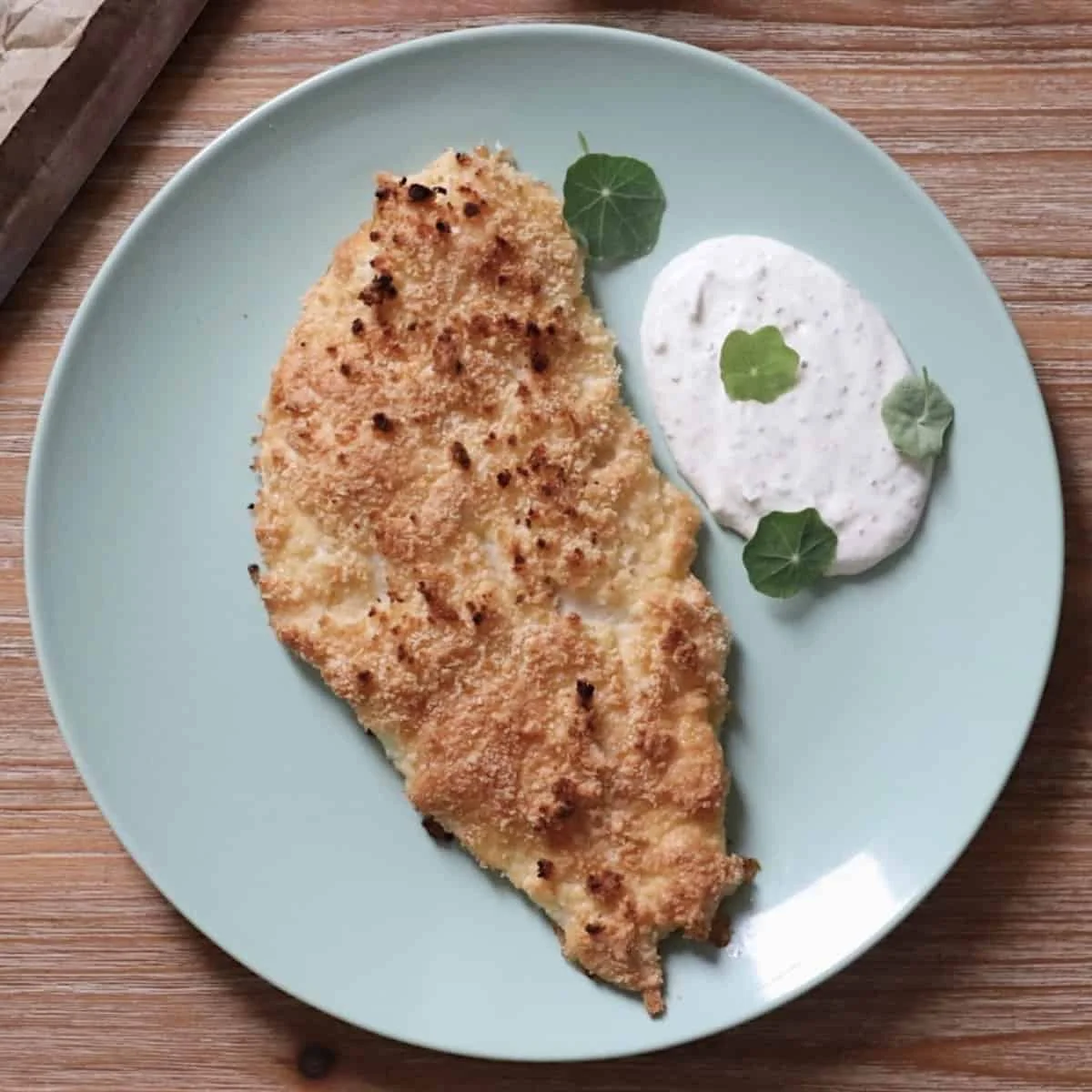
Tilapia gets a crisp double coating of almond flour and Parmigiano-Reggiano, then bakes until flaky. Serve it with a tangy, savoury sauce made with cream cheese, Dijon mustard, anchovies, capers and lemon.
Ingredients
- 2tilapia fillets
- 75 g (¾ cup)almond flour
- 50 g (½ cup)grated Parmigiano-Reggiano cheese
- 2eggs
- to tastesea salt
- 198 g (7 oz)cream cheese
- 2anchovy fillets
- 4–5small capers
- 2 tablespoonsDijon mustard
- juice of ½ lemonlemon juice
Instructions
- 1
Heat the oven
Preheat the oven to 200°C (400°F) and line a baking tray with baking paper.
- 2
Coat the fish
Dip each tilapia fillet into the almond flour and Parmigiano-Reggiano mixture, covering both sides.
- 3
Add a second coating
Dip the fillets in beaten egg, coating both sides. Return them to the almond and cheese mixture, pressing gently so a second layer adheres to the first and the fish is fully coated.
- 4
Arrange on tray
Place the double-coated fillets on the prepared baking tray.
- 5
Bake until flaky
Bake for about 20–25 minutes, until the crust is golden and the fish is cooked through and flakes easily with a fork.
- 6
Blend the sauce
While the fish bakes, blend the Dijon mustard, capers, anchovy fillets and lemon juice in a blender or food processor until smooth. Add the cream cheese gradually and continue blending. Taste and adjust the seasoning if needed.
- 7
Rest the fish
Take the cooked tilapia out of the oven and leave it to rest for a minute.
- 8
Plate and serve
Serve the fillets with the mustard cheese sauce. If you like, garnish with fresh lemon zest or microgreens.
What is almond-crusted tilapia?
Tilapia is a mild-tasting fish that is often baked or pan-cooked with a crisp coating. This recipe pairs it with an almond flour and Parmigiano-Reggiano crust, then serves it with a tangy, savoury cream cheese sauce.
The recipe’s character comes from the contrast between the crisp coating, tender fish and sharp, salty sauce. The double coating helps build a more substantial crust in the oven.
Nutrition and macros by portion
The nutrition label shows one serving as written: 462 calories, 33g protein, 8g carbs, 35g fat.
| Portion | Adjustment | kcal | Protein | Carbs | Fat |
|---|---|---|---|---|---|
| Lighter | Use less sauce | 323 kcal | 23g | 6g | 25g |
| This serving | As written | 462 kcal | 33g | 8g | 35g |
| Hungry | Add a side portion | 693 kcal | 50g | 12g | 53g |
The almond flour supplies most of the carbohydrate, while the almond flour, cheese and cream cheese contribute much of the fat. Tilapia and eggs provide protein, with additional fat and protein from the dairy and coating. Pair a fillet with vegetables or salad to add freshness and balance the plate.
The coating ingredients
Almond flour: it forms the base of the crust and gives the coating a fine texture. Mix it with the grated cheese so each fillet picks up both ingredients.
Parmigiano-Reggiano: its savoury flavour complements the mild fish and adds to the golden crust. Use finely grated cheese so it coats evenly.
Getting the coating to stick
First layer: coat both sides of each fillet in the almond and cheese mixture. Then dip it in beaten egg before returning it to the dry mixture for the second layer.
Gentle pressure: press the coating onto the fish without crushing the fillet. Check that the sides are coated too, so the crust is not limited to the top.
Checking the fish is done
Colour: the recipe gives a baking time of about 20–25 minutes at 200°C (400°F), with a golden crust as a visual cue. Start checking as the end of that range approaches.
Texture: cooked tilapia should flake easily when tested with a fork. Avoid relying on the crust colour alone; check the fish itself before serving.
Blending the mustard cheese sauce
Flavour base: blend the Dijon mustard, capers, anchovies and lemon juice until smooth before adding the cream cheese. This brings the punchy ingredients together first.
Cream cheese: add it gradually while blending, then taste the finished sauce and adjust the seasoning if needed. Its tangy, savoury flavour is a rich counterpoint to the mild fish.
How to serve it
Serve the fillets alongside the sauce so the crust stays crisp until it reaches the plate. A little fresh lemon zest or microgreens can be added as an optional garnish.
For a more balanced meal, add a fresh salad or steamed vegetables. Keep the sauce on the side so each person can choose how much to use.
Recipe notes & tips
- Pat the tilapia dry before coating so the egg and dry mixture adhere more readily.
- Grate the Parmigiano-Reggiano finely for an even coating.
- Press the second coating on gently to help it stay in place.
- Blend the sauce until smooth, adding the cream cheese gradually.
- Check that the fish flakes easily with a fork before taking it out of the oven.
- Serve the sauce alongside the fish to help preserve the crust’s texture.
Variations
- Add herbs: mix chopped parsley into the almond and cheese coating.
- Boost the lemon: add a little fresh lemon zest to the sauce before serving.
- Make it milder: use fewer capers for a less briny sauce.
- Serve with greens: pair the fish with a crisp salad or steamed green vegetables.
- Change the fish: use another mild white fish fillet and check it for doneness as it bakes.
Common mistakes to avoid
- Skipping the egg dip: the second layer may not adhere well; dip the first coating in beaten egg before returning it to the dry mixture.
- Uneven coating: exposed patches can leave the crust inconsistent; cover both sides and the edges of each fillet.
- Using coarse cheese: larger pieces can make the coating uneven; grate the Parmigiano-Reggiano finely.
- Judging by colour alone: a golden crust does not confirm the fish is cooked; check that it flakes easily with a fork.
- Adding cream cheese all at once: the sauce may blend less smoothly; add it gradually while blending.
- Leaving the sauce on the fish too soon: it can soften the crust; serve it alongside the fillets.
How to store
Refrigerate leftover fish and sauce separately in covered containers and use within 2 days. Reheat the fish in an oven until hot to help restore some crispness; stir the sauce and serve it cold or gently warmed.
Frequently asked questions
Can I make the sauce without a blender?
A blender or food processor is the method given for a smooth sauce. Without one, finely chop the anchovies and capers, then mix them thoroughly with the mustard, lemon juice and cream cheese.
How do I know when the tilapia is cooked?
The recipe’s cue is that the fish flakes easily with a fork. The crust should also be golden after about 20–25 minutes at 200°C (400°F).
Can I prepare the sauce ahead?
Yes. Blend it ahead and keep it covered in the fridge until serving. Stir it before serving and avoid putting it on the fish too early, as that can soften the crust.
Can I use another type of fish?
A mild white fish fillet can be used in place of tilapia. Its thickness may differ, so check for the flaky texture cue rather than relying only on the stated time.
What can I serve with almond-crusted tilapia?
A fresh salad or steamed vegetables make simple accompaniments. Serve the mustard cheese sauce on the side.
Cook it from the original
This recipe comes from castironketo.net. Their page has the author’s own photos, notes and tips — the best place to cook it from.
Open the recipe on castironketo.net