
French Crème Brûlée
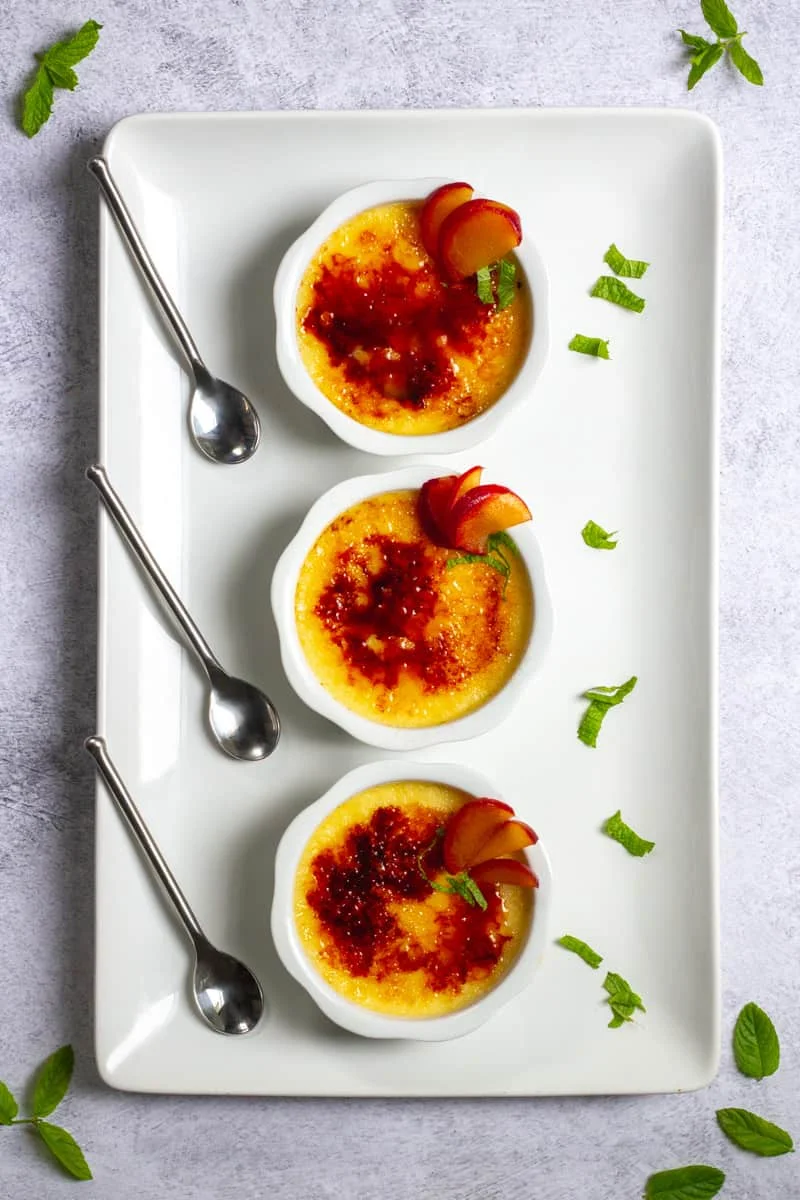
French crème brûlée is a vanilla-and-citrus custard finished with a thin, crackly layer of caramelised sugar. Make the custards ahead, then torch or grill the tops just before serving for a special-occasion dessert.
Ingredients
- 1 quart (946 ml), approximatelywater, for the water bath
- 1 1/4 cups (300 ml)double cream
- 1/2 cup (120 ml)whole milk
- 3egg yolks
- 1/3 cup (about 67 g)sugar
- 2 teaspoons (10 ml)vanilla extract
- 1lemon or orange, zest only
- 4 tablespoons (about 50 g), or more; use about 1 tablespoon per ramekinsugar
- Optional, to tastefresh berries or sliced stone fruit
Instructions
- 1
Heat and zest
Heat the oven to 150°C. Start boiling the water in a kettle or small pan. Finely zest the lemon or orange, taking care not to include the white pith. Put the cream and milk in a pan, heat over medium heat until boiling, then take the pan off the heat.
- 2
Whisk the yolks
In a large bowl, whisk the egg yolks with the sugar, vanilla extract and citrus zest until combined, taking care not to make the mixture foamy.
- 3
Temper the mixture
Gradually pour the warm milk mixture into the egg mixture, whisking constantly as you pour to help prevent the eggs from cooking.
- 4
Fill the ramekins
Set 4–6 ramekins in a large baking dish and divide the custard mixture between them. Skim off any large bubbles. Carefully pour the hot water into the baking dish, avoiding splashes into the ramekins, until it reaches halfway up their sides.
- 5
Bake and chill
Bake for about 50–60 minutes, until the centres are set. If the ramekins are very shallow, start checking after 35–40 minutes. Lift the custards out of the water bath and leave them to cool to room temperature, then refrigerate for at least 3 hours or up to 2 days. The custard should be cold for the sugar to caramelise well.
- 6
Caramelise the sugar
Just before serving, sprinkle about 1 tablespoon of sugar evenly over each custard. For the torch method, move a kitchen torch slowly over the surface until the sugar darkens and bubbles. Let the bubbles subside and the sugar harden for a minute or two before serving. For the grill method, you can set the custards in a shallow pan of ice to keep them cold. Position an oven rack about 10 cm below the grill and heat it to high. Grill the custards, watching closely, until the sugar browns and bubbles; timing varies by oven, with gas grills taking seconds and electric grills potentially taking several minutes. Remove them immediately.
- 7
Add fruit
If you like, top with fresh berries or sliced stone fruit. Serve the crème brûlée immediately.
What is crème brûlée?
Crème brûlée is a French dessert of smooth baked custard covered with a brittle layer of caramelised sugar. This version flavours the custard with vanilla and lemon or orange zest.
The contrast between the cool, creamy centre and the crisp top is what makes it distinctive. Baking the custard gently in a water bath helps it cook evenly.
Nutrition and macros by portion
The nutrition label shows one serving as written: 435 calories, 5g protein, 33g carbs, 32g fat.
| Portion | Adjustment | kcal | Protein | Carbs | Fat |
|---|---|---|---|---|---|
| Lighter | Use smaller ramekins | 305 kcal | 4g | 23g | 22g |
| This serving | As written | 435 kcal | 5g | 33g | 32g |
| Hungry | Add a larger portion | 653 kcal | 8g | 50g | 48g |
The sugar supplies most of the carbohydrates, while the cream and egg yolks provide much of the fat; the yolks also contribute some protein. For a more balanced plate, serve a ramekin with fresh berries or sliced stone fruit.
The cream and milk
Cream: double cream gives the custard its rich, silky texture.
Milk: whole milk lightens the mixture slightly while keeping it creamy. Heat both together, then take them off the heat once they reach a boil.
Building the custard
Yolks: whisk them with the sugar, vanilla and zest until just combined. Keeping air out of the mixture helps avoid a foamy surface.
Warm dairy: pour it in gradually while whisking continuously. This tempering step brings the eggs up in temperature gently rather than cooking them in one hot pour.
Why use a water bath?
Water bath: the hot water around the ramekins buffers the custard from the oven’s direct heat. Pour carefully so none splashes into the custard.
Doneness: look for centres that have set rather than relying on the stated time alone. Shallow ramekins may be ready earlier, so start checking them after 35–40 minutes.
Chilling before serving
Cooling: let the ramekins reach room temperature before refrigerating them. Chill for at least 3 hours, or make them up to 2 days ahead.
Cold custard: a thoroughly chilled surface is important when you caramelise the sugar, as it helps keep the custard cool while the topping browns.
Getting the caramelised top
Torch: move it steadily across the sugar rather than holding it in one spot. Stop when the surface is dark and bubbling, then let it harden before serving.
Grill: watch constantly, since the sugar can brown quickly and the timing depends on the appliance. An ice-filled pan is optional and helps keep the custards cold under the grill.
Serving ideas
Fruit: fresh berries or sliced stone fruit are optional toppings that add a fresh contrast to the rich custard.
Timing: caramelise the tops immediately before serving so the sugar stays crisp. Bring the ramekins straight to the table once the topping has hardened.
Recipe notes & tips
- Use a fine grater and stop before reaching the bitter white pith.
- Whisk constantly while adding the warm dairy to the yolks.
- Pour the water bath slowly to keep water out of the ramekins.
- Start checking shallow ramekins after 35–40 minutes.
- Chill the custards thoroughly before adding the topping.
- Stay beside the grill while the sugar browns, as it can change quickly.
Variations
- Citrus choice: use lemon or orange zest to give the custard a different aromatic note.
- Fruit topping: add fresh berries just before serving for a fresh contrast.
- Stone fruit: serve with sliced stone fruit instead of berries, or leave the custards plain.
- Torch finish: use a kitchen torch for direct, controlled caramelisation.
- Grill finish: brown the sugar under a hot grill, watching the ramekins closely.
Common mistakes to avoid
- Including the pith: zest only the coloured peel, as the white layer can taste bitter.
- Pouring dairy in too quickly: add it gradually while whisking to help stop the yolks from cooking.
- Splashing the water bath: pour carefully around the ramekins so water does not dilute the custard.
- Overbaking: check for set centres and begin earlier if your ramekins are shallow.
- Caramelising warm custard: chill it for at least 3 hours first so the topping browns well.
- Walking away from the grill: keep watching and remove the ramekins as soon as the sugar browns and bubbles.
How to store
Cover and refrigerate the baked custards without the caramelised topping for up to 2 days. Add sugar and caramelise just before serving; the finished topping is best eaten immediately and does not reheat well.
Frequently asked questions
Can I make crème brûlée ahead?
Yes. Bake and chill the custards for at least 3 hours or up to 2 days. Caramelise the sugar just before serving.
How do I know when the custards are done?
They should be set in the centres. Begin checking shallow ramekins after 35–40 minutes, even though deeper ones may need about 50–60 minutes.
Can I make the topping without a kitchen torch?
Yes. Use the grill on high, with the oven rack about 10 cm below it. Watch closely because browning time varies.
Why does the custard need to be cold before caramelising?
A cold custard helps the sugar brown without warming the centre too much. Chilling also helps the topping set into a crisp layer.
Can I use lemon instead of orange?
Yes. The recipe allows either lemon or orange zest; remove only the coloured zest and avoid the white pith.
When should I add the berries or stone fruit?
Add them just before serving, after caramelising the sugar. They are optional.
Cook it from the original
This recipe comes from champagne-tastes.com. Their page has the author’s own photos, notes and tips — the best place to cook it from.
Open the recipe on champagne-tastes.com