
Mango Habanero Salsa
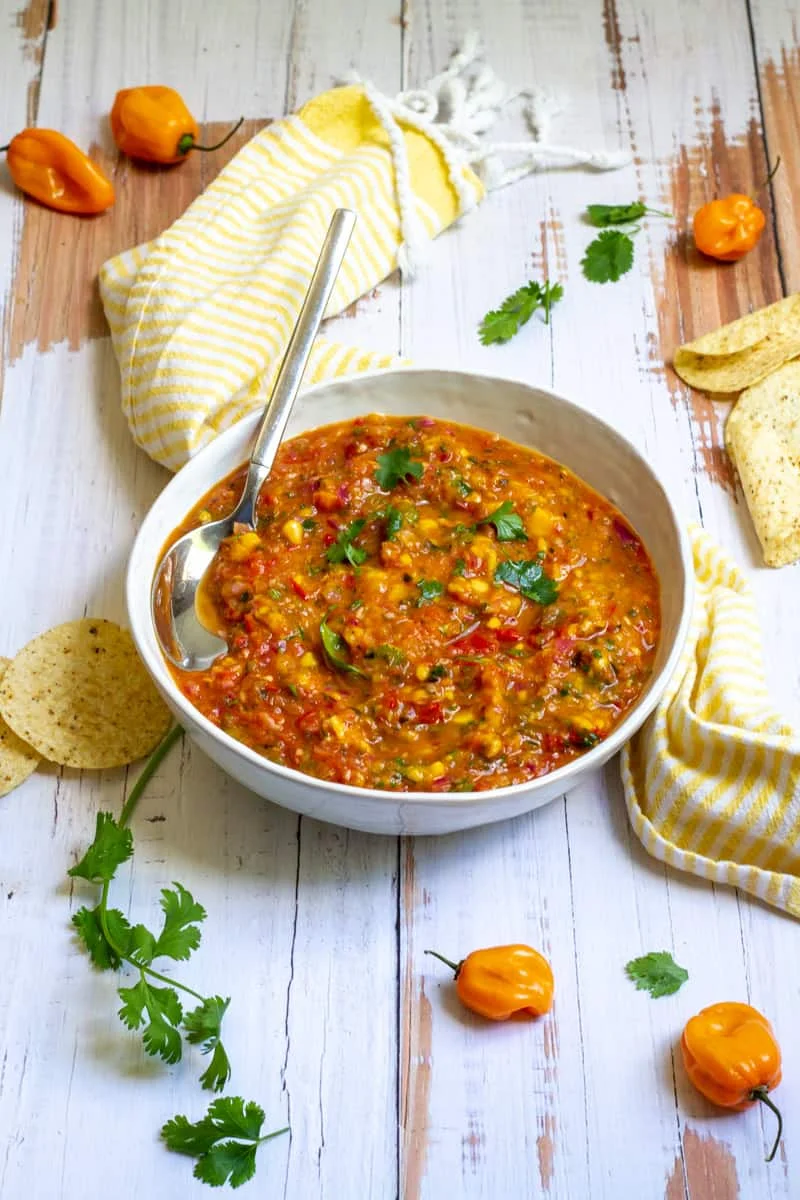
This mango habanero salsa combines sweet fruit with charred tomatoes, peppers, onion and garlic, then gets brightness from citrus and fresh herbs. It is a colourful make-ahead dip for summer snacking, with the heat easy to adjust to taste.
Ingredients
- 330 g (2 cups)diced mango, cut into roughly 1.25 cm cubes, fresh or frozen
- 454 g (1 lb)Roma tomatoes, cored and halved
- 1red onion, peeled and cut into 6–8 wedges
- 1poblano pepper, stem and seeds removed, halved lengthways; use a sweet pepper for less heat
- 1habanero pepper, whole and stem removed; use 2–3 for more heat
- 4garlic cloves, unpeeled; use more or less as desired
- 30 ml (2 tablespoons)avocado oil, or another high-smoke-point oil such as rapeseed oil
- 1lime or lemon, juiced
- 15 g (¼ cup)fresh coriander, removed from the stems and roughly chopped, or fresh oregano
- 1 teaspoonground cumin (optional)
- ½ teaspoon, or more to tastesea salt
Instructions
- 1
Prepare the tray
If using frozen mango, take it out of the freezer to start thawing. Position an oven tray about 7.5–10 cm from the grill and preheat the grill to high. Arrange the tomatoes, onion and poblano cut-side down in one layer on a baking sheet; add the whole habanero and unpeeled garlic, then drizzle the oil over the vegetables.
- 2
Char the vegetables
Before grilling, ventilate the kitchen: switch on the extractor fan and consider opening a window to clear the habanero fumes. Grill the vegetables for 5–10 minutes, until they begin to blacken and char, checking them often. Grill strength varies, and gas grills may cook faster; use metal tongs to remove vegetables that cook quickly or move them farther from the heat.
- 3
Peel the vegetables
Take the charred vegetables out of the oven. Remove as much skin as possible from the poblano; a sweet pepper does not need peeling. Peel the garlic, leaving the tomato skins on. For a milder salsa, halve the habanero and remove its seeds and membrane, wearing gloves while handling it.
- 4
Chop the salsa
Put the mango and charred vegetables, including their juices, into a food processor and use the chop setting until finely chopped and combined. If the bowl is too small, work in batches and transfer each batch to a large bowl. Without a food processor, finely dice the vegetables by hand and combine them in a bowl, wearing gloves when handling the habanero. To control the heat, start with about half the peppers, taste, then add the rest if you wish.
- 5
Season and rest
Transfer the salsa to a bowl and stir in the lime or lemon juice, coriander, cumin and salt. Taste and add more salt if desired. The salsa can be served straight away, but its flavour benefits from resting in the fridge for 24 hours.
What is mango habanero salsa?
Salsa is a broad family of sauces and dips, and this American-style version pairs fresh mango with roasted vegetables and chilli. The fruit brings sweetness, while citrus and herbs keep the mixture bright.
Charred tomatoes, onion, poblano and garlic give this version a savoury, smoky base. The habanero supplies the heat, so you can adjust its amount or remove its seeds and membrane.
Nutrition and macros by portion
The nutrition label shows one serving as written: 40 calories, 1g protein, 6g carbs, 2g fat.
| Portion | Adjustment | kcal | Protein | Carbs | Fat |
|---|---|---|---|---|---|
| Lighter | Use less avocado oil | 28 kcal | 1g | 4g | 1g |
| This serving | As written | 40 kcal | 1g | 6g | 2g |
| Hungry | Serve a larger scoop | 60 kcal | 2g | 9g | 3g |
Mango and tomatoes provide most of the carbohydrates, while avocado oil contributes most of the fat. The small amount of protein comes mainly from the vegetables and herbs; pair a serving with beans, fish or another protein-rich food to make a more balanced plate.
Choosing the ingredients
Mango: Fresh or thawed frozen mango both work; use fruit that is ripe enough to taste sweet but still holds together when chopped.
Peppers: Poblano adds a mild pepper flavour, while habanero is much hotter. A sweet pepper can replace the poblano, and starting with only part of the habanero makes the heat easier to manage.
Getting an even char
Arrange the tomatoes, onion and poblano cut-side down in a single layer so they meet the heat directly. Keep an eye on the tray because different vegetables may char at different rates.
The recipe uses the grill on high rather than a set oven temperature. The 5–10 minute window is a guide; take out individual pieces as they char instead of waiting for everything to cook at the same pace.
Handling the habanero
Habanero fumes can irritate, so ventilate the kitchen before grilling and avoid leaning over the tray. Wear gloves when cutting or seeding the pepper, and wash your hands and utensils afterwards.
For a gentler salsa, remove the seeds and membrane before blending, or begin with about half the pepper. Add more only after tasting the chopped mixture.
Texture and seasoning
Use the food processor's chop setting to make a finely chopped salsa rather than a smooth purée. If you prefer a chunkier result, pulse briefly and check the texture as you go.
Stir in the citrus, coriander, cumin and salt after chopping. Taste before adding extra salt, since the vegetables and fruit may need different amounts.
Why let it rest?
The salsa is ready to eat as soon as it is seasoned, but chilling it for 24 hours gives the flavours time to mingle. This is useful when making it ahead for a gathering.
Serve it with tortilla chips, spoon it over tacos, or use it alongside grilled vegetables or fish. Keep the salsa chilled until serving.
Recipe notes & tips
- Thaw frozen mango before adding it to the food processor.
- Switch on the extractor fan before grilling the habanero.
- Check the tray frequently, since the vegetables may char at different speeds.
- Use metal tongs to move or remove vegetables that brown ahead of the others.
- Start with half the habanero if you are unsure about the heat.
- Chill the salsa for 24 hours for a more blended flavour.
Variations
- Use sweet pepper: Replace the poblano with a sweet pepper for a milder vegetable flavour.
- Change the herb: Use fresh oregano instead of coriander.
- Adjust the chilli: Add 2–3 habaneros for more heat, or remove the seeds and membrane for less.
- Choose the citrus: Use either lime or lemon juice to season the salsa.
- Skip the cumin: Leave out the optional ground cumin for a simpler seasoning.
Common mistakes to avoid
- Crowding the tray: The vegetables may char unevenly; arrange them in a single layer.
- Leaving the grill unattended: Some pieces can blacken quickly; check often and move or remove them with tongs.
- Handling habanero bare-handed: Wear gloves when cutting or seeding it.
- Blending too long: The salsa can lose its chopped texture; use the chop setting and check as you work.
- Adding all the chilli at once: The heat may be too strong; begin with about half and taste before adding more.
How to store
Store the salsa in a covered container in the fridge and use it within 3–4 days. Serve it chilled; if it has been sitting out, return it to the fridge promptly rather than leaving it at room temperature.
Frequently asked questions
Can I use frozen mango?
Yes. Take it out of the freezer at the start of preparation so it can begin thawing before you chop the salsa.
How can I make the salsa less spicy?
Use a sweet pepper instead of the poblano if desired, and remove the habanero's seeds and membrane. You can also start with about half the habanero and add more only after tasting.
Do I need to peel the tomatoes?
No. The method leaves the tomato skins on after grilling. Peel the poblano as thoroughly as you can and remove the garlic skins.
Can I make it without a food processor?
Yes. Finely dice the vegetables with a knife, then mix them with the mango in a bowl. Wear gloves when handling the habanero.
Can I serve it straight away?
Yes, it can be served as soon as it is seasoned. Chilling it for 24 hours is recommended for the flavours to mingle.
What can I serve with mango habanero salsa?
Serve it with tortilla chips or alongside tacos, grilled vegetables or fish.
Cook it from the original
This recipe comes from champagne-tastes.com. Their page has the author’s own photos, notes and tips — the best place to cook it from.
Open the recipe on champagne-tastes.com