
Teriyaki Glazed Salmon
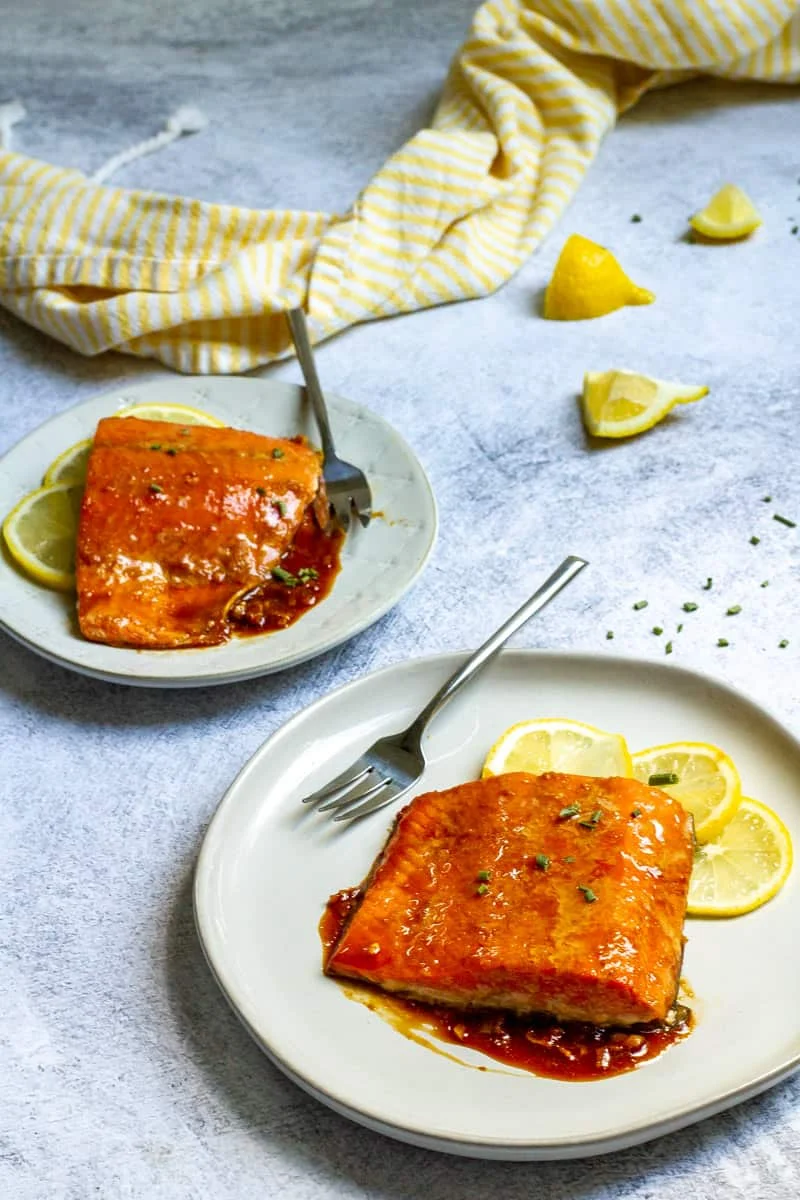
Baked salmon is coated in a quick homemade teriyaki-style sauce made with soy, rice vinegar, ginger and garlic. It is an easy Japanese-inspired dinner that comes together in about 30 minutes, with extra sauce to serve at the table.
Ingredients
- 227 g (8 oz)salmon (2 fillets)
- 60 ml (¼ cup)rice vinegar
- 60 ml (¼ cup)soy sauce or tamari (use certified gluten-free if needed)
- 1 tablespoonshaved ginger or ginger paste
- 2garlic cloves, minced
- 1 teaspoonwasabi or horseradish
- 2 teaspoonswhite or brown sugar
- 1 tablespoonolive oil
Instructions
- 1
Mix and marinate
Whisk or blend the rice vinegar, soy sauce, ginger, garlic, wasabi or horseradish, and sugar. Add the salmon and marinate in the refrigerator for 15–30 minutes.
- 2
Bake the salmon
Preheat the oven to 200°C (400°F). Brush the olive oil over an oven-safe pan or casserole dish. Use your fingers to brush the marinade off the salmon and transfer the fillets to the prepared dish, reserving the marinade. Bake for about 10 minutes per 2.5 cm (1 inch) of thickness, or until the fish flakes easily with a fork. Thinner fillets will cook sooner. Do not turn the fish halfway through.
- 3
Simmer the sauce
While the salmon bakes, pour the reserved marinade into a small pot. Bring it to the boil over medium heat, then simmer for 2–3 minutes, lowering the heat if needed. Remove from the heat and cover to keep warm.
- 4
Glaze and serve
When the salmon is cooked, remove it from the oven and brush the teriyaki sauce over the fish. Divide the remaining sauce between the plates, serve it on the side or drizzle it over accompaniments such as rice or vegetables. Serve the salmon immediately.
What is teriyaki glazed salmon?
Teriyaki is a Japanese cooking style associated with food glazed in a sweet, savoury sauce. This recipe applies those flavours to oven-baked salmon, using soy sauce, sugar, ginger and garlic, with rice vinegar adding acidity.
The homemade sauce doubles as a brief marinade and a finishing glaze. Baking the fish keeps the method straightforward, while simmering the reserved marinade gives you extra sauce for serving.
Nutrition and macros by portion
The nutrition label shows one serving as written: 274 calories, 26g protein, 7g carbs, 14g fat.
| Portion | Adjustment | kcal | Protein | Carbs | Fat |
|---|---|---|---|---|---|
| Lighter | Add vegetables, less rice | 192 kcal | 18g | 5g | 10g |
| This serving | As written | 274 kcal | 26g | 7g | 14g |
| Hungry | Add rice and vegetables | 411 kcal | 39g | 11g | 21g |
The salmon supplies most of the protein and some of the fat, while the sugar contributes carbohydrates; the soy sauce also adds sodium. Pair a fillet with vegetables and a measured serving of rice for a balanced plate.
Choosing the salmon
Even fillets: Similar thickness helps the two portions cook at roughly the same pace. If one piece is thinner, check it earlier rather than waiting for the thicker fillet.
Fresh ginger: Shaved ginger gives the sauce a lively, aromatic flavour; ginger paste is a convenient alternative. Mince the garlic finely so it blends into the marinade.
Marinating for flavour
Chilled rest: Keep the salmon in the refrigerator while it marinates for 15–30 minutes. This gives the surface time to take on the sauce without adding much preparation time.
Before baking: Brush excess marinade from the fish and reserve it for the pot. This helps the salmon bake cleanly and means the sauce can be simmered separately before serving.
Getting the bake right
Thickness matters: Use about 10 minutes per 2.5 cm (1 inch) of thickness as a guide, and begin checking thinner fillets sooner. The recipe’s main doneness cue is fish that flakes easily with a fork.
Leave it in place: Bake the salmon without turning it halfway through. This keeps the method simple and avoids breaking up the fillets.
Simmering the marinade
Bring the reserved marinade to the boil, then simmer it for 2–3 minutes. Reduce the heat if it boils too vigorously, and cover the pot off the heat to keep the sauce warm until the fish is ready.
Brush some sauce over the cooked salmon and serve the rest alongside. The sauce also works as a drizzle for rice or vegetables served with the fish.
What to serve with it
Rice: Plain rice is a simple match for the savoury-sweet glaze and can be served with some of the extra sauce.
Vegetables: Add steamed or roasted vegetables for a fresh, colourful accompaniment. Serve them alongside the salmon rather than covering the fish, so its glaze stays distinct.
Recipe notes & tips
- Use fillets of similar thickness so they finish cooking at a similar time.
- Refrigerate the salmon while it marinates.
- Brush off excess marinade before baking and reserve it for the sauce.
- Start checking thinner fillets before the 10-minute-per-inch estimate.
- Simmer the reserved marinade for 2–3 minutes, adjusting the heat as needed.
- Brush the glaze on just before serving and bring extra sauce to the table.
Variations
- Use tamari: Choose certified gluten-free tamari if you need a gluten-free alternative to soy sauce.
- Choose the heat: Use wasabi for a sharper kick or horseradish for a different pungent note.
- Use brown sugar: Swap in brown sugar for a deeper sweetness.
- Add rice: Serve with rice and spoon some of the extra sauce over it.
- Add vegetables: Pair with steamed or roasted vegetables for a simple side.
Common mistakes to avoid
- Skipping the fridge: Marinate the salmon in the refrigerator, not at room temperature.
- Using all the marinade on the raw fish: Set it aside so you can simmer it for serving.
- Baking by time alone: Check the thickness and look for fish that flakes easily with a fork.
- Turning the fillets: Leave them in place while they bake, as directed.
- Boiling too hard: Lower the heat after the sauce comes to the boil and simmer it gently for 2–3 minutes.
How to store
Refrigerate leftover salmon and sauce in a covered container and use within 2 days. Reheat gently until hot, or enjoy the salmon cold; avoid prolonged heating, which can dry it out.
Frequently asked questions
Can I use tamari instead of soy sauce?
Yes. Use the same amount of tamari, and choose a certified gluten-free product if that is needed.
How long should I marinate the salmon?
Marinate it in the refrigerator for 15–30 minutes, as directed.
How can I tell when the salmon is done?
The recipe’s cue is that the fish flakes easily with a fork. Check thinner fillets earlier, since they cook faster.
Do I need to turn the salmon while it bakes?
No. Bake it without flipping it halfway through.
Can I make the sauce ahead?
You can prepare the marinade ahead, but keep it refrigerated with the salmon. Simmer the reserved marinade for 2–3 minutes before using it as sauce.
What should I serve with teriyaki salmon?
Rice and vegetables both pair well with the salmon. The extra sauce can be served on the side or drizzled over the accompaniments.
Cook it from the original
This recipe comes from champagne-tastes.com. Their page has the author’s own photos, notes and tips — the best place to cook it from.
Open the recipe on champagne-tastes.com