
Chinese oven steamed fish
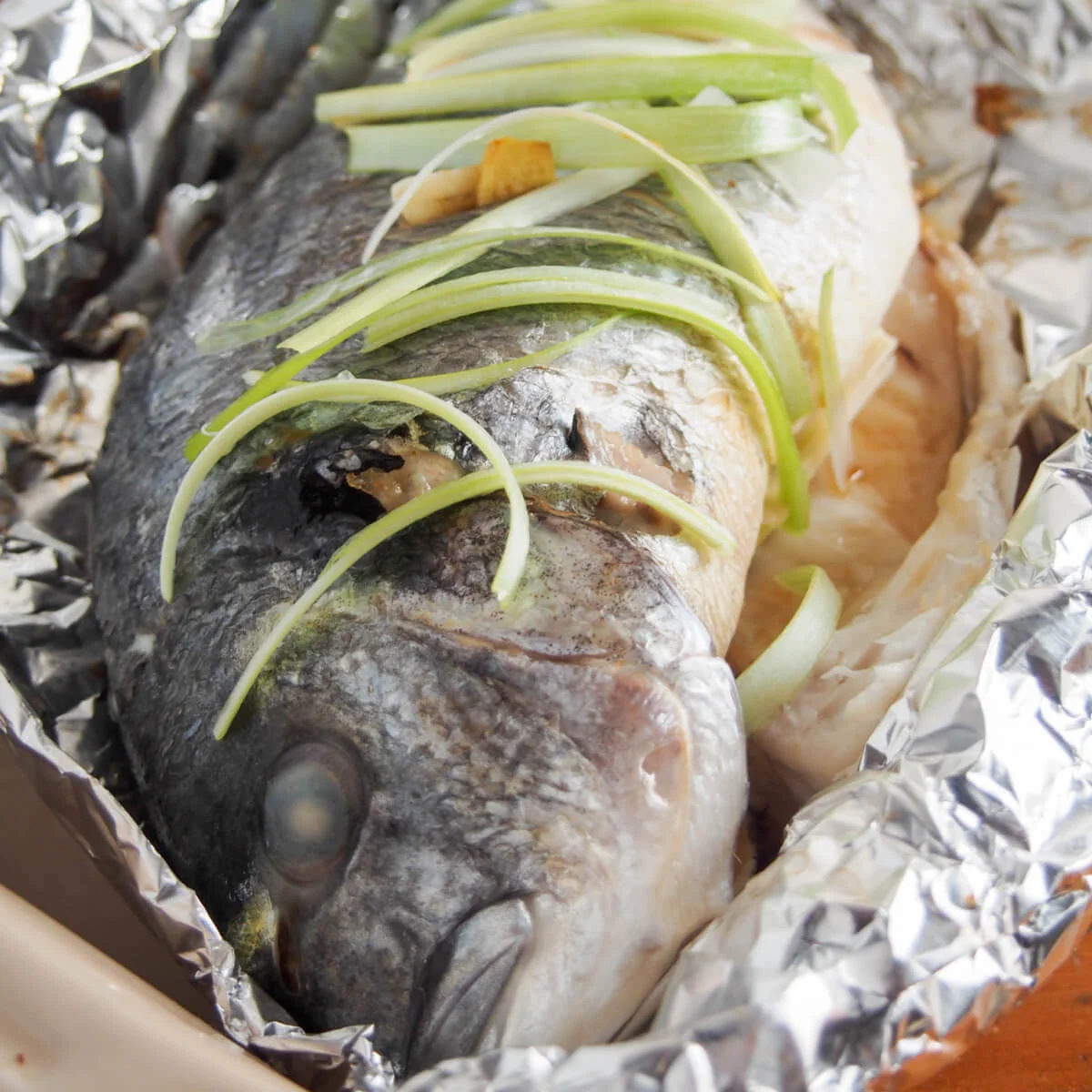
Chinese oven-steamed fish is a whole white fish cooked in a sealed foil parcel with spring onions, ginger, garlic and a light soy dressing. It makes an impressive centrepiece with very little hands-on preparation.
Ingredients
- 680 g (1 1/2 lb; approximately 700 g)sea bream, or another whole white fish (one large or two small)
- 3spring onions
- 1 clovegarlic
- 6 slices (from a piece about 2.5 cm / 1 inch long)ginger
- 1 tbspsoy sauce
- 1/2 tbspsesame oil
- 1/2 tbsprice vinegar
Instructions
- 1
Preheat the oven
Heat the oven to 200°C (400°F).
- 2
Prepare the aromatics
Trim the ends from the spring onions and remove any rough outer layer. Cut them into 5–7 cm lengths, then halve each piece lengthways. Slice the ginger thinly, and peel and slice the garlic.
- 3
Line the dish
Line a baking dish large enough for the fish with foil, leaving enough overhang to fold and seal around it. Arrange roughly one spring onion’s worth in a layer on the foil, then add a couple of slices each of garlic and ginger.
- 4
Prepare the fish
Make two cuts on each side of the fish and set it on the onion, garlic and ginger. Put a couple more pieces of onion, ginger and garlic in the cavity. Cut the remaining garlic and ginger into smaller pieces and tuck them into the cuts, or simply lay them on top. Keep around one spring onion back for serving.
- 5
Make the parcel
Stir together the soy sauce, sesame oil and rice vinegar, then drizzle the mixture over the fish. Fold the foil over the fish and roll the edges together to seal the parcel.
- 6
Bake until cooked
Bake for around 25 minutes, or a little longer if the fish is larger or thicker, until cooked through. Serve with the reserved spring onion on top.
What is Chinese oven-steamed fish?
Steaming fish with aromatics is a familiar approach in Chinese cooking, where the mild flavour of the fish is complemented rather than overwhelmed. This oven version seals the fish in foil, trapping its moisture and the fragrance of spring onion, ginger and garlic.
Whole fish: Sea bream works well here, but another whole white fish can be used. The cuts in the sides help the aromatics and dressing sit close to the flesh.
Nutrition and macros by portion
The nutrition label shows one serving as written: 388 calories, 60g protein, 2g carbs, 13g fat.
| Portion | Adjustment | kcal | Protein | Carbs | Fat |
|---|---|---|---|---|---|
| Lighter | Less sesame oil | 272 kcal | 42g | 1g | 9g |
| This serving | As written | 388 kcal | 60g | 2g | 13g |
| Hungry | Add steamed rice | 582 kcal | 90g | 3g | 20g |
The fish supplies most of the protein, while the small amount of sesame oil contributes most of the fat. The spring onion and dressing provide very little carbohydrate; serve with rice and a vegetable if you want a more substantial, balanced plate.
The aromatics in the parcel
Spring onions: A layer beneath the fish keeps it slightly raised from the foil, and reserved pieces add a fresh finish. Cut the onions lengthways so they fit neatly in the parcel.
Ginger and garlic: Slices go beneath and inside the fish, while smaller pieces can be tucked into the cuts. Their flavour infuses the fish as the parcel heats.
Sealing the foil
Room to fold: Use a piece of foil large enough to cover the fish with extra around the edges. Roll the edges together securely so the parcel holds in steam and cooking juices.
Even base: Spread the spring onion and aromatics in a reasonably even layer before setting the fish on top. This helps keep the fish supported in the parcel.
How to tell when the fish is done
Timing: The recipe gives around 25 minutes at 200°C, with extra time possible for a larger or thicker fish. Keep the parcel sealed during cooking so the steam stays inside.
Doneness: Check the thickest part of the fish; the flesh should be opaque and separate readily from the bone. If it is not there yet, reseal the foil and return it to the oven for a little longer.
The soy and sesame dressing
Mix the soy sauce, sesame oil and rice vinegar before pouring them over the fish, so the seasoning is distributed across the parcel. The small amount of dressing brings savoury, toasted and tangy notes without masking the fish.
Pour carefully: Keep the dressing over the fish and aromatics as you fold the foil. Any juices collected in the parcel can be spooned over the fish when serving.
What to serve with it
Rice: Plain steamed rice is a straightforward accompaniment and catches the cooking juices. Serve it alongside the fish rather than inside the foil parcel.
Vegetables: Add a simple green vegetable or another lightly cooked side for a more rounded plate. Keep the sides gently seasoned so the fish remains the focus.
Recipe notes & tips
- Choose a baking dish that holds the fish without forcing the foil parcel into a tight shape.
- Ask the fishmonger to clean the fish if you would rather not prepare it yourself.
- Keep the pieces of spring onion and aromatics that go beneath the fish in a single layer.
- Make the cuts in the fish carefully so the aromatics can sit in them without tearing the flesh.
- Open the foil cautiously after baking, as hot steam will escape.
- Serve the fish promptly with the reserved spring onion on top.
Variations
- Use another white fish: Choose a whole fish of a similar size and allow extra baking time if it is thicker.
- Add chilli: Tuck a few slices of fresh chilli into the parcel for a sharper, hotter flavour.
- Use coriander: Scatter fresh coriander over the fish when serving for a herbal finish.
- Add citrus: Put a few thin slices of lemon in the parcel for a brighter aroma.
- Serve with rice: Add steamed rice on the side to make the meal more filling.
Common mistakes to avoid
- Loose foil seal: Steam can escape; fold and roll the foil edges together firmly.
- Crowded aromatics: A thick pile can make the fish sit unevenly; spread the onion and slices into a layer.
- Skipping the side cuts: The aromatics may not sit close to the flesh; make two cuts on each side as directed.
- Relying only on the timer: Fish thickness varies; check the thickest part and bake longer if needed.
- Opening the parcel too quickly: Hot steam can burn; open it carefully and keep your face clear.
How to store
Refrigerate leftover fish in a covered container once cooled, and eat within 1–2 days. Reheat gently until piping hot throughout, taking care not to dry out the fish.
Frequently asked questions
Can I use two small fish instead of one?
Yes. The recipe allows for two small whole fish in place of one larger one. Check them for doneness, as smaller fish may cook sooner.
Can I use a different fish?
Yes, use another whole white fish. A thicker or larger fish may need more than the suggested 25 minutes.
Do I need to turn the fish during cooking?
No. The fish cooks in a sealed foil parcel, so it does not need turning.
How do I know the fish is cooked through?
The flesh should be opaque and come away readily from the bone at the thickest part. If it is still translucent or resists separating, reseal the parcel and cook it a little longer.
Can I prepare the parcel in advance?
You can assemble it shortly before baking and keep it covered in the fridge. For best results, bake it soon after preparing.
What can I serve with the fish?
Steamed rice and a simply cooked green vegetable go well with the fragrant cooking juices.
Cook it from the original
This recipe comes from carolinescooking.com. Their page has the author’s own photos, notes and tips — the best place to cook it from.
Open the recipe on carolinescooking.com