
Oven Pot Roast Recipe
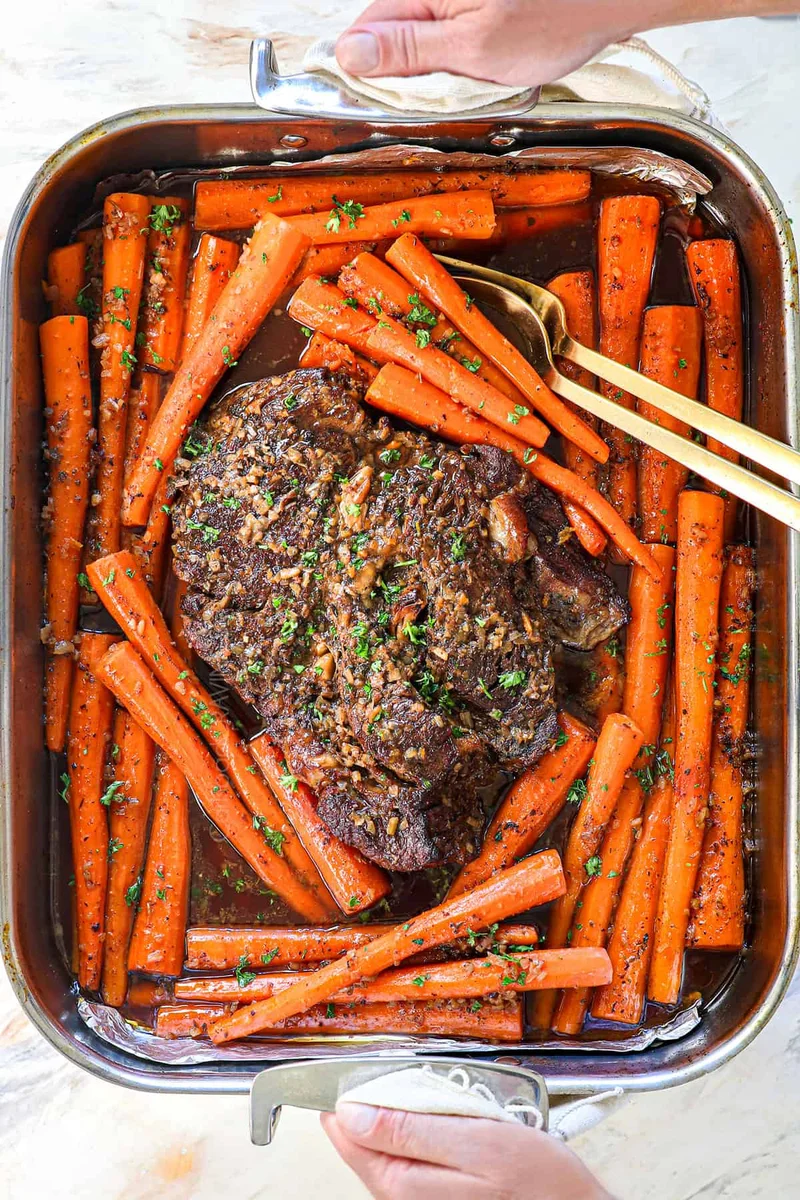
This oven pot roast is slow-braised until tender enough to pull apart, with carrots and a savoury gravy made from the cooking juices. The long, gentle roast takes time but little hands-on work, making it a comforting centrepiece for a family meal.
Ingredients
- 1.36–2.27 kg (3–5 lb)chuck roast, trimmed of excess fat
- 45 ml (3 tablespoons)vegetable oil
- 6garlic cloves, peeled
- As desiredcarrots
- 710 ml (3 cups)low-sodium beef broth
- 30 ml (2 tablespoons)Worcestershire sauce
- 30 ml (3 tablespoons)dried minced onion
- 30 ml (2 tablespoons)beef bouillon
- 5 ml (1 teaspoon)onion powder
- 5 ml (1 teaspoon)garlic powder
- 5 ml (1 teaspoon)salt
- 2.5 ml (½ teaspoon) eachdried oregano, dried basil, dried thyme and pepper
- 1bay leaf
- 475 ml (2 cups), or less depending on the remaining cooking juiceslow-sodium beef broth
- 4 tablespoonsfat or drippings from the roasting pan, or butter
- 31 g (¼ cup)plain flour
Instructions
- 1
Preheat the oven
Heat the oven to 220°C (425°F).
- 2
Sear the roast
Heat the vegetable oil over a high heat in a large cast-iron or heavy-based frying pan. Use tongs to brown the meat lightly on all sides, then transfer it to a shallow roasting tin. Tuck the whole garlic cloves into crevices in the roast, often found along a seam of fat, and arrange the desired amount of carrots around it.
- 3
Mix the seasoning
In a medium bowl, whisk together the 710 ml (3 cups) beef broth, Worcestershire sauce, dried minced onion, beef bouillon, onion powder, garlic powder, salt, oregano, basil, thyme, pepper and bay leaf. Pour the mixture over the roast and carrots.
- 4
Roast briefly
Cover the tin tightly with foil and roast for 30 minutes at 220°C (425°F).
- 5
Roast until tender
Turn the roast over and cover the tin again. Lower the oven temperature to 150°C (300°F) and continue roasting for a further 4–5 hours, until the meat is tender enough to fall apart.
- 6
Rest the roast
Take the roast and carrots out of the oven and transfer them to a serving platter. Leave the roast to rest for 30 minutes before carving so it can reabsorb its juices.
- 7
Prepare the juices
Remove excess liquid from the roasting tin and strain off the fat. Add enough of the 475 ml (2 cups) beef broth to the remaining juices to make 475 ml (2 cups) in total. Set aside.
- 8
Make the gravy
Put 4 tablespoons of fat or drippings in a small saucepan, or melt 4 tablespoons of butter over a medium heat. Whisk in the flour to make a roux and cook for about 1–2 minutes, whisking, until lightly browned. Gradually stir in the 475 ml (2 cups) of juices and broth, then bring the gravy to a simmer and cook until thickened. Add more broth if needed to thin it, and season to taste with extra salt and pepper.
What is oven pot roast?
Pot roast is a method of cooking a substantial cut of beef slowly with liquid until it becomes tender. It is associated with home-style braising traditions, where a covered pot or roasting tin keeps the meat moist over a long cook.
This version starts by browning the chuck roast, then cooks it covered with seasoned broth, garlic and carrots. The strained cooking juices form the base of a simple gravy.
Nutrition and macros by portion
The nutrition label shows one serving as written: 700 calories, 54g protein, 12g carbs, 47g fat.
| Portion | Adjustment | kcal | Protein | Carbs | Fat |
|---|---|---|---|---|---|
| Lighter | Trim fat, use less gravy | 490 kcal | 38g | 8g | 33g |
| This serving | As written | 700 kcal | 54g | 12g | 47g |
| Hungry | Serve a larger portion | 1050 kcal | 81g | 18g | 71g |
Beef supplies most of the protein and fat, while flour contributes some carbohydrates; the carrots add further carbohydrates. The gravy’s fat content depends on how much drippings or butter you use. Serve with vegetables and a moderate portion of potatoes to make a more balanced plate.
Why chuck roast works
Chuck comes from a well-worked part of the animal and has connective tissue that softens during a long, slow cook. That makes it a good choice for the recipe’s fall-apart texture.
Trim only excess surface fat before cooking; the remaining fat and connective tissue help keep the meat succulent as it braises.
Build flavour before roasting
Browning: Sear the roast on all sides in hot oil before it goes into the tin. This adds colour and a savoury base to the cooking juices.
Seasoning: Whisk the broth with Worcestershire sauce, bouillon, dried onion, herbs and spices so it is evenly distributed around the meat. Tucking garlic into the roast’s seams puts it close to the beef as it cooks.
Keep the roast covered
A tight foil cover holds in steam and helps the meat cook gently in the broth. Check that the foil seals around the edges of the tin before it goes into the oven.
The recipe begins at 220°C (425°F) for 30 minutes, then drops to 150°C (300°F) for 4–5 hours. The lower temperature and longer cook give the chuck time to become tender.
Check for tenderness
The stated cooking time is a guide; the roast is ready when it is tender enough to fall apart. If it still feels firm when tested, cover it again and continue cooking until it reaches that cue.
Rest the meat for 30 minutes on the serving platter before carving. This is part of the method and gives the juices time to settle back through the roast.
Turn the juices into gravy
Measure the strained cooking juices and top them up with beef broth to make 475 ml (2 cups). Removing excess fat first helps keep the finished gravy from becoming greasy.
Cook the flour with drippings or butter for 1–2 minutes, then add the liquid gradually while whisking. Simmer until thickened, adding more broth if you prefer a looser gravy.
Serve it as a full meal
Serve slices or pulled pieces of beef with the cooked carrots and plenty of gravy. Mashed potatoes are a natural accompaniment for soaking up the sauce.
For a contrasting side, add steamed greens or a crisp salad. Keep any extra gravy warm and pass it at the table.
Recipe notes & tips
- Use a roasting tin that holds the roast and carrots without crowding them.
- Sear the meat in batches if needed so it browns rather than steams.
- Seal the foil tightly to keep moisture in during the long roast.
- Check the roast for tenderness after 4 hours, then continue cooking if it is still firm.
- Whisk the broth into the roux gradually to help keep the gravy smooth.
- Taste the gravy before adding extra salt, as the bouillon and cooking juices may already be well seasoned.
Variations
- Add more carrots: Arrange extra carrots around the roast before adding the broth mixture.
- Use butter: Melt 4 tablespoons of butter for the roux if you do not have enough drippings.
- Thin the gravy: Stir in additional beef broth a little at a time until it reaches your preferred consistency.
- Use fresh herbs: Replace the dried herbs with fresh herbs, keeping the seasoning balanced to taste.
- Serve with potatoes: Add mashed or boiled potatoes at the table to make the meal more substantial.
Common mistakes to avoid
- Skipping the sear: Brown the meat on all sides first to develop colour and savoury flavour.
- Loose foil: Seal the roasting tin tightly so the meat stays covered during cooking.
- Cooking by the clock alone: Continue roasting if the beef is not yet tender enough to fall apart.
- Adding broth too quickly: Whisk it into the roux gradually to reduce the chance of lumps.
- Over-salting the gravy: Taste it before seasoning, since the broth and bouillon contribute salt.
How to store
Refrigerate leftover beef, carrots and gravy in covered containers within 2 hours, and use within 3–4 days. Reheat gently until piping hot, adding a splash of broth if the gravy has thickened. The cooked beef and gravy can also be frozen for up to 3 months.
Frequently asked questions
How do I know when the pot roast is ready?
It should be tender enough to fall apart when tested. If it is still firm after 4 hours at 150°C (300°F), cover it again and continue cooking.
Can I use a different cut of beef?
Chuck roast is the cut specified for this recipe and is suited to long, slow cooking. A different braising cut may need a different cooking time, so use tenderness as your guide.
Can I make the gravy without pan drippings?
Yes. The method allows you to melt 4 tablespoons of butter in the saucepan instead. Make the roux with the butter and flour, then whisk in the measured juices and broth.
Why does the recipe cook at two oven temperatures?
The roast first cooks for 30 minutes at 220°C (425°F), then the oven is lowered to 150°C (300°F) for the longer, gentler cooking period.
Can I prepare the roast ahead?
You can cook it ahead and refrigerate the meat and gravy separately. Reheat them gently until piping hot, adding broth to loosen the gravy if needed.
Cook it from the original
This recipe comes from carlsbadcravings.com. Their page has the author’s own photos, notes and tips — the best place to cook it from.
Open the recipe on carlsbadcravings.com