
Homemade Shortbread Fingers
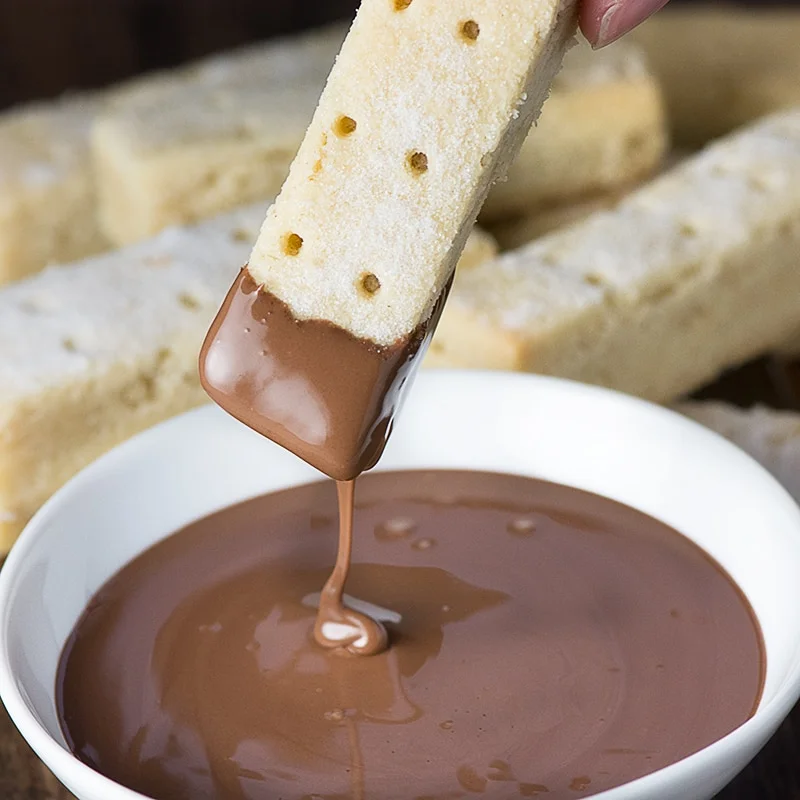
These buttery British shortbread fingers have a tender, melt-in-the-mouth crumb, with rice flour adding a delicate crispness. Chill the shaped dough before baking to help the fingers hold their edges, then enjoy them with a cup of tea or dip them in melted chocolate.
Ingredients
- 200 g, at room temperaturebutter
- 100 g, plus a little extra for sprinklingcaster sugar
- 200 gplain flour
- 100 grice flour
- 1 tspvanilla extract
Instructions
- 1
Cream butter and sugar
Cream together the 200 g butter and 100 g caster sugar.
- 2
Make the dough
Sift the 200 g plain flour and 100 g rice flour into the butter mixture, then add the 1 tsp vanilla extract. Mix just until combined; with an electric mixer, use a low to medium setting for about 1 minute. By hand, squeeze the mixture together, then knead lightly until it forms a soft dough.
- 3
Roll the dough
Roll the dough to about 2 cm thick and place it on baking parchment in a baking tray. A rectangle about 16 cm long and 12.5 cm wide can be cut into 10 fingers, though you can choose another shape. To make rolling and transferring easier, place the dough on cling film, flatten it a little, then lay baking parchment on top and roll it to size. Flip the dough onto the tray so the parchment is underneath, then remove the cling film.
- 4
Chill the dough
Put the tray in the fridge for at least 30 minutes so the dough is better able to keep its shape during baking.
- 5
Prepare for baking
When ready to bake, preheat the oven to 180°C/160°C. Remove the tray from the fridge and take off the cling film. Prick the dough all the way through at regular intervals with a skewer or fork. For neater portions, mark or cut the shapes first so you can space the holes accordingly; the pictured pieces were 2.5 cm wide, 2 cm tall and 8 cm long.
- 6
Bake the shortbread
Bake the dough for 18–25 minutes, depending on how long it has been chilled; longer chilling may mean a longer bake. Take it out when the edges are turning golden and the centre is still pale.
- 7
Cut and cool
Leave the shortbread in the tray for 10–15 minutes after baking, then cut it into your chosen shapes. If you cut it before baking, go over the cuts again while it is warm, as some pieces may have joined together. Transfer the biscuits to a cooling rack and leave until completely cool.
- 8
Add the sugar
Sprinkle a little caster sugar over the top.
What are shortbread fingers?
Shortbread is a traditional British biscuit made with a simple, buttery dough. Its familiar tender texture comes from keeping the mixing gentle and letting the butter-rich dough bake without browning too deeply.
This version combines plain flour with rice flour for a delicate, crisp crumb, and shapes the dough into fingers that are easy to serve with tea or dip in chocolate.
Nutrition and macros by portion
The nutrition label shows one serving as written: 245 calories, 3g protein, 27g carbs, 14g fat.
| Portion | Adjustment | kcal | Protein | Carbs | Fat |
|---|---|---|---|---|---|
| Lighter | Serve a smaller portion | 172 kcal | 2g | 19g | 10g |
| This serving | As written | 245 kcal | 3g | 27g | 14g |
| Hungry | Add another finger | 368 kcal | 4g | 40g | 21g |
Butter is the main source of fat, while caster sugar and the two flours provide most of the carbohydrate. The recipe contains a small amount of protein from the flours; serve a finger or two alongside fruit or yoghurt if you want a more balanced snack.
Why use two flours?
Plain flour: it gives the dough structure and helps the biscuits hold their shape.
Rice flour: it lends a finer, slightly crisp texture. Sift both flours together so they are evenly distributed before mixing.
Keep the mixing gentle
Stop mixing as soon as the ingredients come together into a soft dough. Too much working can make the shortbread less tender.
By hand, squeeze the mixture together first, then knead lightly rather than treating it like bread dough.
Chilling helps the shape
The rest in the fridge firms the butter and helps the rolled dough keep its outline in the oven. Chill it for at least 30 minutes, as directed.
Prick the dough at regular intervals before baking. If you want evenly sized fingers, mark or cut the portions first so the holes can be placed neatly.
Look for pale centres
The shortbread is ready when its edges are turning golden while the middle remains pale. The suggested bake is 18–25 minutes, so begin checking towards the earlier end of that range.
The biscuits will still be fragile when hot. Let them rest in the tray for 10–15 minutes before cutting or recutting, then cool them completely on a rack.
Serving ideas
Serve the fingers with tea or coffee, or dip them in warm melted chocolate as suggested in the recipe description.
For a simple finish, sprinkle caster sugar over the biscuits once they have cooled. The recipe does not specify an amount, so use just enough to lightly cover the tops.
Recipe notes & tips
- Bring the butter to room temperature so it creams more easily with the sugar.
- Mix only until the dough comes together to help keep the biscuits tender.
- Use baking parchment to make rolling and transferring the dough easier.
- Chill the rolled dough for at least 30 minutes before baking.
- Check for golden edges rather than waiting for the centre to brown.
- Let the biscuits cool fully on a rack before storing them.
Variations
- Chocolate dip: dip the cooled fingers in melted chocolate and leave them to set.
- Different shapes: cut the dough into rounds or another shape instead of fingers.
- Citrus note: add finely grated lemon zest to the butter and sugar mixture.
- Spiced shortbread: mix a little ground cinnamon into the sifted flours.
- Simple finish: leave off the extra sugar for a less sweet topping.
Common mistakes to avoid
- Overworking the dough: mix only until combined, then stop.
- Skipping the chill: refrigerate the rolled dough for at least 30 minutes to help it keep its shape.
- Uneven thickness: roll the dough to about 2 cm so the pieces bake at a similar pace.
- Waiting for a golden centre: take the tray out when the edges turn golden and the middle is pale.
- Cutting while piping hot: rest the shortbread in the tray for 10–15 minutes before cutting.
- Moving the biscuits too soon: transfer them to a rack only after their initial tray rest.
How to store
Once completely cool, store the shortbread in an airtight container at room temperature. The recipe does not give a storage duration; keep the container dry and check the biscuits before serving. If you want to warm them, use a low oven briefly and let them cool before eating.
Frequently asked questions
Can I make the dough ahead?
Yes. The recipe already calls for chilling the rolled dough for at least 30 minutes. Keep it covered while it chills, and bake it once firm.
How do I know when the shortbread is baked?
Look for edges that are beginning to turn golden while the centre remains pale. The stated baking time is 18–25 minutes.
Why did my fingers spread or lose their shape?
The dough may not have been chilled for long enough, or it may have become too warm before baking. Chill the tray for at least 30 minutes and handle the dough gently.
Should I cut the biscuits before or after baking?
Either works. You can mark or cut the shapes before baking, then recut while warm if pieces have joined, or cut the slab after its 10–15 minute rest in the tray.
Can I use only plain flour?
Rice flour is part of this recipe and contributes to its delicate texture. Replacing it with plain flour may change the crumb.
Can I dip the shortbread in chocolate?
Yes. The description suggests dipping the fingers in warm melted chocolate; let the biscuits cool first so they are easier to handle.
Cook it from the original
This recipe comes from charlotteslivelykitchen.com. Their page has the author’s own photos, notes and tips — the best place to cook it from.
Open the recipe on charlotteslivelykitchen.com