
Pumpkin risotto
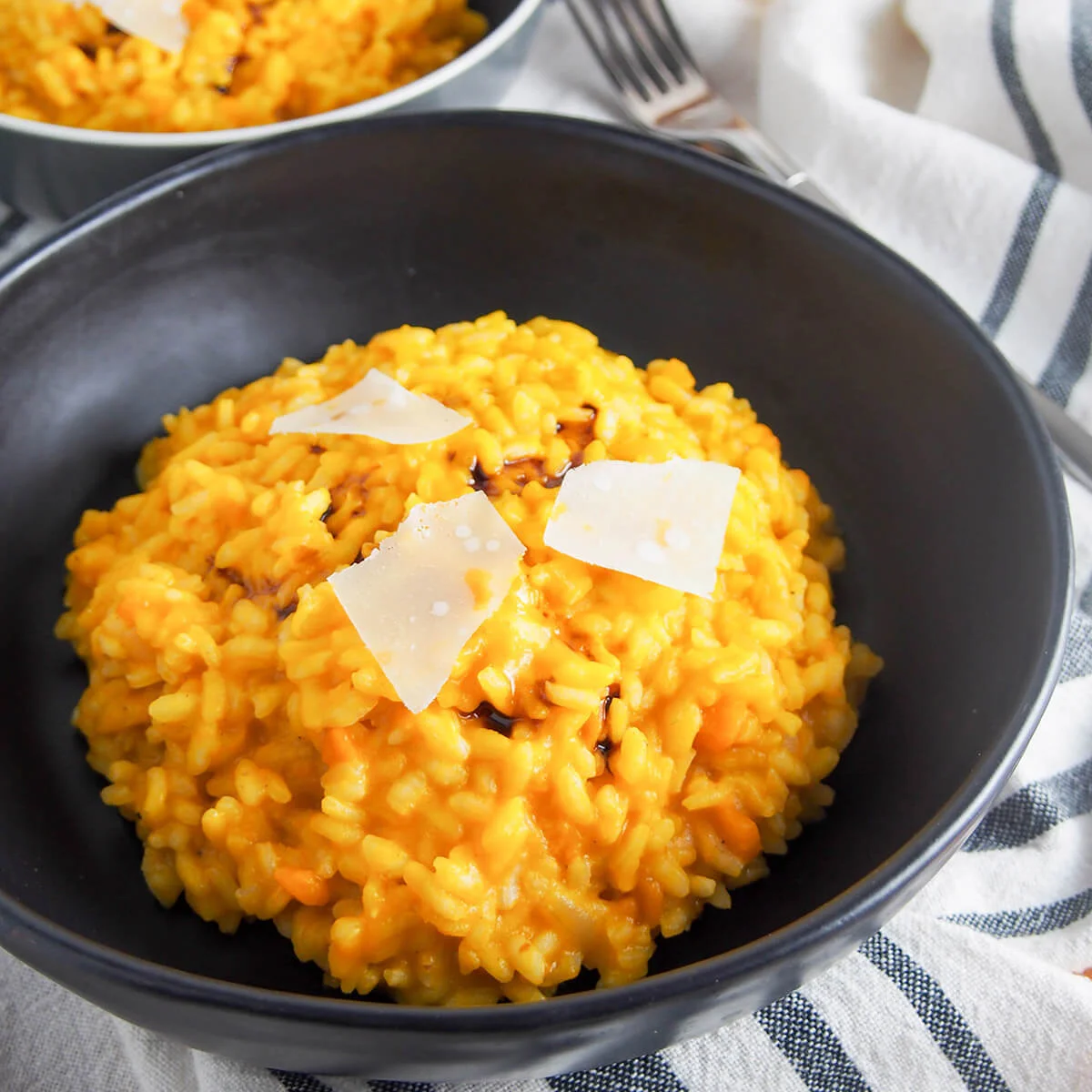
This Italian-style pumpkin risotto is creamy, comforting and full of autumn flavour. Pumpkin softens into the rice as it cooks, while Parmesan and a little aged balsamic bring savoury depth and brightness.
Ingredients
- 340 gpumpkin, peeled and deseeded (or red kuri, butternut or honeynut squash)
- 1 small or mediumonion
- 1 clovegarlic
- 15 ml (1 tbsp)olive oil
- 15 g (1 tbsp)butter
- 300 g (1½ cups)arborio rice
- 710 ml (3 cups)light vegetable or chicken stock
- 75 g (¾ cup), approximatelyfreshly grated Parmesan, lightly packed
- 1 pinchnutmeg
- 1 pinchpepper
- 5 ml (1 tsp), approximatelyaged balsamic vinegar, to serve
Instructions
- 1
Prepare the vegetables
If needed, peel and deseed the pumpkin or squash, then cut it into small dice. Peel and dice the onion and garlic.
- 2
Soften the onion
Warm the olive oil and butter in a medium pan over a medium heat. Add the onion and cook for around 5 minutes, until soft but not browned; lower the heat or add a little more butter if necessary.
- 3
Cook the pumpkin
Add the garlic and pumpkin or squash and cook for a few more minutes, around 5 minutes depending on the variety and size of the pieces, until softened. Cover the pan to help the vegetables sweat if useful, then mash the pumpkin roughly.
- 4
Cook the rice
Add the rice and cook for a minute or two. Pour in enough stock to cover it, then keep adding more as it is absorbed, around 120–240 ml (½–1 cup) at a time. Stir occasionally at first and more often towards the end to prevent sticking.
- 5
Finish and serve
When the rice is cooked and the stock absorbed, stir in the Parmesan, nutmeg and pepper. Adjust the seasoning to taste, then serve with a drizzle of aged balsamic and a few shavings of Parmesan.
What is pumpkin risotto?
Risotto is a northern Italian rice dish cooked gradually with stock until the grains release starch and the mixture turns creamy. This version uses pumpkin or squash, which softens into the rice for a mellow, autumnal flavour.
Arborio rice, a little butter and olive oil, and a final stir of Parmesan make the texture rich without needing cream. A small drizzle of aged balsamic adds a sharp, sweet contrast.
Nutrition and macros by portion
The nutrition label shows one serving as written: 556 calories, 16g protein, 94g carbs, 13g fat.
| Portion | Adjustment | kcal | Protein | Carbs | Fat |
|---|---|---|---|---|---|
| Lighter | Less Parmesan and butter | 389 kcal | 11g | 66g | 9g |
| This serving | As written | 556 kcal | 16g | 94g | 13g |
| Hungry | Larger portion | 834 kcal | 24g | 141g | 20g |
Most of the carbohydrates come from the arborio rice, with some from the pumpkin; the Parmesan contributes protein, while the olive oil, butter and cheese provide most of the fat. Pair a serving with a green salad or other vegetables to add freshness and balance the plate.
Choosing the pumpkin
Pumpkin or squash: use the prepared weight of 340 g, with the skin and seeds removed. Red kuri, butternut and honeynut squash are suggested alternatives.
Build the base gently
Onion: cook it slowly in the oil and butter until soft, keeping it pale rather than browned. This gives the risotto a sweet, savoury base.
Pumpkin: allow the diced pieces to soften before roughly mashing them. Covering the pan can help them sweat and cook through.
Add the stock gradually
Stock: begin with enough to cover the rice, then add more in small batches as the liquid is absorbed. The recipe allows for vegetable stock or chicken stock if the dish does not need to be vegetarian.
Stirring: stir occasionally at first and more often near the end, when the rice is thicker and more likely to catch on the pan.
Look for a creamy finish
Rice: follow the texture as well as the timing; the grains should be cooked and the stock absorbed before you add the cheese. The finished risotto should be creamy, with the pumpkin roughly blended through it.
Seasoning: add Parmesan, nutmeg and pepper at the end, then taste and adjust. Finish with aged balsamic and a few Parmesan shavings.
Serve it simply
The risotto is a substantial meal on its own, or you can serve it with a crisp green salad for contrast. If serving it as part of a larger meal, keep sides simple so the pumpkin and Parmesan remain the focus.
Recipe notes & tips
- Cut the pumpkin into similarly sized small pieces so it softens evenly.
- Keep the onion pale by lowering the heat if it starts to brown.
- Cover the pan while the pumpkin cooks if you want to help it soften.
- Add stock in stages rather than all at once, waiting for each addition to be absorbed.
- Stir more often as the risotto thickens towards the end of cooking.
- Taste before serving and adjust the seasoning after adding the Parmesan.
Variations
- Use butternut: swap it for the pumpkin, keeping the same prepared weight.
- Choose vegetable stock: use it to keep the dish vegetarian.
- Use chicken stock: choose it if the risotto does not need to be vegetarian.
- Adjust the cheese: add a little less Parmesan for a milder finish.
- Change the finish: add the aged balsamic just before serving for a sweet-sour accent.
Common mistakes to avoid
- Browning the onion: lower the heat so it softens without taking on colour.
- Large pumpkin pieces: dice them small so they soften within the cooking time.
- Adding all the stock at once: pour it in gradually as the rice absorbs each addition.
- Letting the rice stick: stir more frequently as the mixture thickens.
- Adding the Parmesan too early: stir it in once the rice is cooked and the stock has been absorbed.
How to store
Cool leftovers promptly and store them in an airtight container in the fridge for up to 2 days. Reheat thoroughly in a pan, stirring in a splash of stock or water if the risotto has thickened.
Frequently asked questions
Can I use squash instead of pumpkin?
Yes. Red kuri, butternut and honeynut squash are listed alternatives; use 340 g after peeling and deseeding.
Which stock should I use?
Use light vegetable stock for a vegetarian version, or chicken stock if you do not need the dish to be vegetarian.
How much stock should I add at a time?
Start with enough to cover the rice, then add around 120–240 ml (½–1 cup) at a time as the previous amount is absorbed.
How do I know when the rice is cooked?
The recipe gives no fixed cooking time for the rice, so check its texture as you add stock. Once it is cooked and the stock has been absorbed, stir in the Parmesan and seasonings.
Can I make this risotto vegetarian?
Yes. Choose vegetable stock rather than chicken stock.
What can I serve with pumpkin risotto?
Serve it on its own or with a simple green salad or vegetables for a fresh contrast.
Cook it from the original
This recipe comes from carolinescooking.com. Their page has the author’s own photos, notes and tips — the best place to cook it from.
Open the recipe on carolinescooking.com