
Shrimp Fra Diavolo
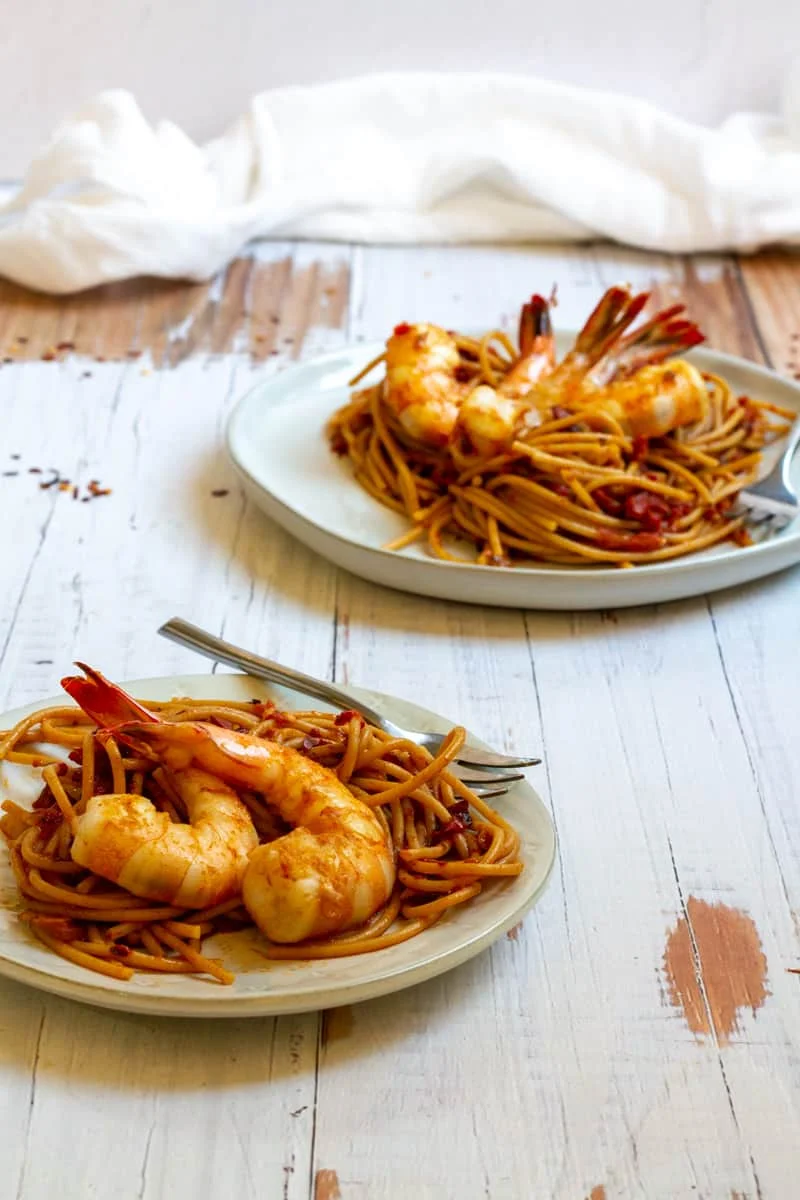
Shrimp Fra Diavolo pairs spaghetti and tender shrimp with a homemade tomato sauce flavoured with garlic and chilli. It makes a fiery, satisfying dinner for two, with the heat easy to adjust to taste.
Ingredients
- 60 ml (¼ cup)olive oil
- 1onion, diced
- 2 teaspoonsred chilli flakes (use less for a milder sauce)
- ¼ teaspoonsea salt
- 4 clovesgarlic, diced
- 907 g (2 lb) fresh tomatoes, diced, or 794 g (28 oz) tinned diced or crushed tomatoestomatoes
- 240 ml (1 cup)water
- 1 teaspoondried oregano
- 227 g (½ lb)spaghetti (use gluten-free spaghetti if needed)
- 227 g (8 oz; 4 oz per person)shrimp, peeled and deveined, tails on or off as desired
- 15 ml (1 tablespoon)olive oil
- ¼ teaspoongarlic powder
- ¼ teaspoonpaprika
- ¼ teaspoonsea salt
Instructions
- 1
Cook the aromatics
In a large, shallow pan, heat the first measure of olive oil with the onion, chilli flakes and salt over a medium heat. Cook until the onion starts to brown, about 5 minutes. Add the garlic and cook for 1 more minute, until fragrant.
- 2
Add the tomatoes
Stir the tomatoes, water and oregano into the pan. Turn the heat up to medium-high and bring the mixture to a simmer.
- 3
Reduce the sauce
Simmer for 20–25 minutes, until most of the water has evaporated and the sauce has thickened. Taste and add more chilli flakes, salt or oregano if desired; simmer for a further 1–2 minutes if you add more seasoning.
- 4
Cook the spaghetti
While the sauce simmers, bring a large pan of salted water to a rolling boil. Cook the spaghetti according to the packet directions, then add it to the sauce and toss to coat.
- 5
Cook the shrimp
Heat the second measure of olive oil in a pan over a medium-high heat. Toss the shrimp with the garlic powder, paprika and salt. Add them to the pan and cook for 1–2 minutes per side, until opaque.
- 6
Plate and serve
Divide the pasta between two plates, then share the shrimp between them. Serve immediately.
What is shrimp fra diavolo?
Fra diavolo is an Italian-American name for a spicy tomato-based sauce, often served with seafood and pasta. The phrase means “brother devil”, a nod to the chilli heat.
This version builds flavour by cooking onion, garlic and chilli before adding tomatoes, then simmers the sauce until thick. The shrimp are cooked separately and added at the end, so they stay distinct from the pasta and sauce.
Nutrition and macros by portion
The nutrition label shows one serving as written: 956 calories, 43g protein, 111g carbs, 39g fat.
| Portion | Adjustment | kcal | Protein | Carbs | Fat |
|---|---|---|---|---|---|
| Lighter | Use less olive oil | 669 kcal | 30g | 78g | 27g |
| This serving | As written | 956 kcal | 43g | 111g | 39g |
| Hungry | Add more spaghetti | 1434 kcal | 65g | 167g | 59g |
The spaghetti and tomatoes provide most of the carbohydrates, while the olive oil contributes much of the fat. Shrimp supplies the protein, with additional fat from the oil used in both the sauce and the pan. For a more balanced plate, serve a portion with a side of vegetables or salad.
Building the sauce
Chilli flakes: their heat develops as they cook with the onion in oil. Start with the stated amount, or use less if you prefer a gentler sauce.
Tomatoes: fresh diced tomatoes or tinned diced or crushed tomatoes both work here. The water helps the sauce simmer, and the long reduction thickens it.
Timing the pasta
Sauce first: let the tomatoes simmer for 20–25 minutes while you prepare the pasta water. The sauce is ready when most of the added water has evaporated and it has thickened.
Pasta water: cook the spaghetti according to its packet directions. Drain or transfer it as needed, then toss it through the sauce while both are ready to serve.
Keeping the shrimp tender
Seasoning: toss the shrimp with garlic powder, paprika and salt just before cooking so the coating is distributed evenly.
Doneness: cook for 1–2 minutes per side, stopping when the shrimp are opaque. They cook quickly, so check them promptly rather than leaving them in the pan while plating.
Choosing the right pan
A large, shallow pan gives the sauce room to simmer and makes it easier to stir in the spaghetti. Avoid using a pan so small that the sauce is crowded or difficult to toss.
Cook the shrimp in a separate pan as directed. This lets you judge their doneness without overcooking them in the tomato sauce.
Serving the dish
Serve the pasta straight away, with the shrimp divided between the two plates. A simple green salad or a side of vegetables can round out the meal.
The finished sauce is spicy and tomato-rich, so offer extra chilli only to diners who want more heat. Keep any side dishes simply seasoned to complement rather than compete with it.
Recipe notes & tips
- Use a large, shallow pan so there is room to simmer the sauce and toss in the spaghetti.
- For a milder sauce, reduce the chilli flakes rather than changing the other seasonings.
- Let the sauce reduce until visibly thick before adding the cooked spaghetti.
- Pat the shrimp dry if they are wet after thawing so they are easier to season evenly.
- Cook the shrimp just until opaque, checking each side after 1 minute.
- Serve as soon as the pasta and shrimp are ready for the best texture.
Variations
- Milder sauce: use fewer chilli flakes for less heat.
- Gluten-free pasta: use gluten-free spaghetti if needed.
- Tinned tomatoes: swap fresh tomatoes for the specified amount of diced or crushed tinned tomatoes.
- More herbs: add extra oregano to taste and simmer the sauce for 1–2 minutes afterwards.
- Tail-on shrimp: leave the tails on or remove them before cooking, as preferred.
Common mistakes to avoid
- Small pan: the sauce can be awkward to stir; use a large, shallow pan.
- Rushing the sauce: it may remain thin; simmer for 20–25 minutes until most of the water has evaporated.
- Too much chilli: the sauce can become hotter than intended; use less to begin with and taste before adding more.
- Overcooking the shrimp: they can lose their tender texture; remove them once opaque, after 1–2 minutes per side.
- Cooking pasta by guesswork: it may be too soft or firm; follow the packet directions.
How to store
Refrigerate leftover pasta and shrimp in a covered container and use within 2 days. Reheat gently in a pan until hot throughout; the shrimp may become firmer on reheating.
Frequently asked questions
Can I use tinned tomatoes?
Yes. Use 794 g (28 oz) of diced or crushed tinned tomatoes in place of the fresh tomatoes.
How can I make the sauce less spicy?
Use fewer red chilli flakes. You can taste the sauce as it simmers and add more seasoning if you want extra heat.
How do I know when the sauce is ready?
It should be thickened, with most of the added water evaporated. This usually takes 20–25 minutes of simmering.
How do I know when the shrimp are cooked?
They should be opaque after 1–2 minutes per side. Take care not to leave them cooking longer than needed.
Can I make this with gluten-free pasta?
Yes. Use gluten-free spaghetti and cook it according to the packet directions.
Cook it from the original
This recipe comes from champagne-tastes.com. Their page has the author’s own photos, notes and tips — the best place to cook it from.
Open the recipe on champagne-tastes.com